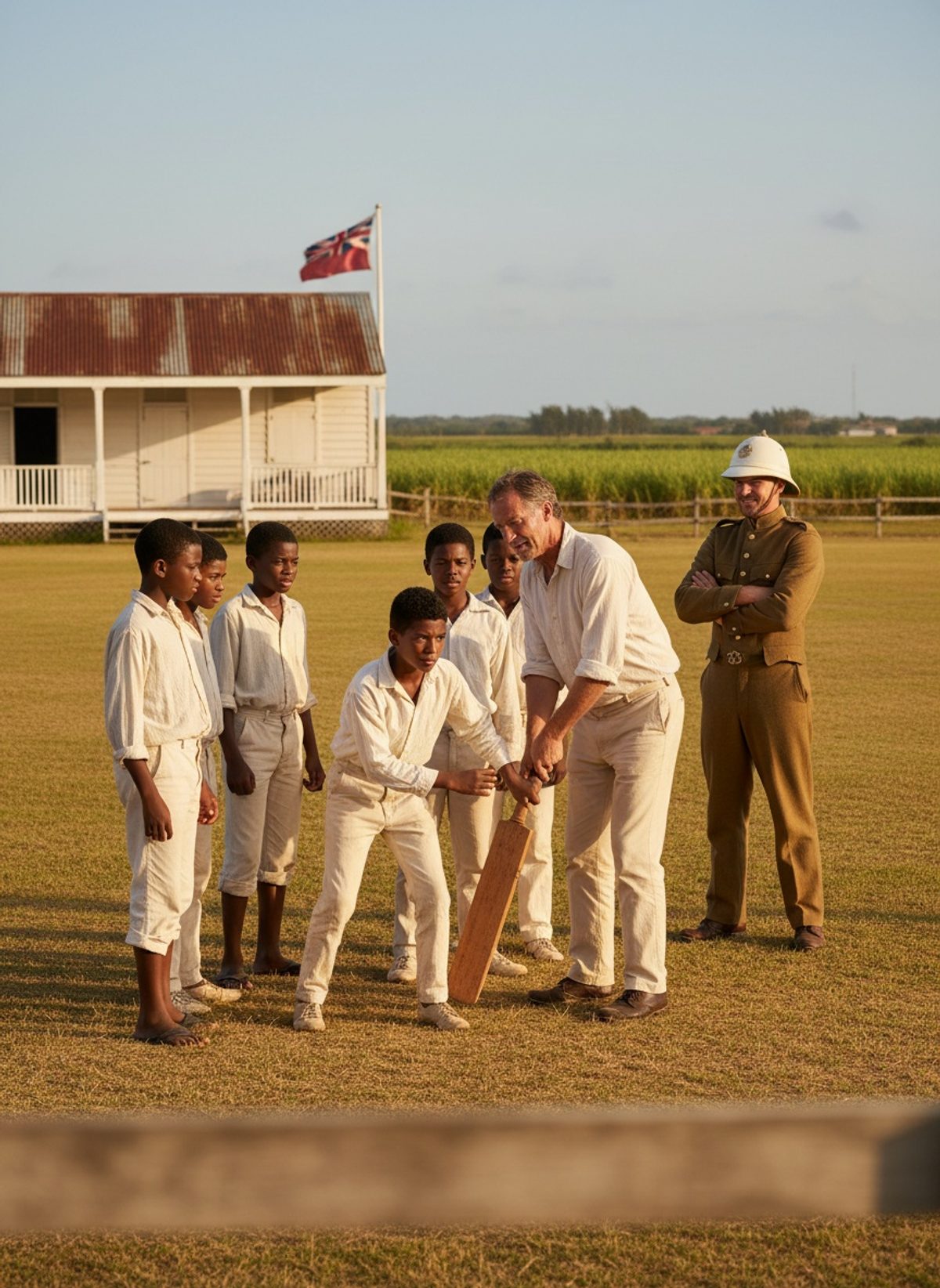
The Barbados sun hung high in the sky, casting sharp shadows across the dusty playing field. The air was thick with humidity, the tropical breeze offering little relief from the sweltering heat. On a makeshift cricket pitch, carved from the bare earth, a group of barefoot boys skillfully swung their home-carved bats. The laughter and shouts of play mingled with the distant sound of waves crashing onto the Caribbean shore. Here, on an island steeped in history, the seeds of a sporting revolution were being sown. Cricket, the cherished pastime of the British Empire, had taken root. Yet, in the fertile soil of the West Indies, it was to grow into something extraordinary and unforeseen.
The Arrival of the Gentleman’s Game
As the 19th century drew to a close, the British Empire was at its zenith, its global influence unparalleled. To the colonies, it brought with it customs, governance, and, most intriguingly, sports. It was on the sun-baked grounds of Barbados and the wider Caribbean that British sailors and garrison soldiers introduced the game of cricket. For the empire's soldiers, playing cricket was not merely a pastime but a thread of continuity to their faraway homeland. For the local population, watching these games sparked curiosity and eventually a passionate engagement with the sport.
The early Caribbean cricketers had little in the way of formal equipment. Wooden bats were often carved by hand from local trees, and the balls, at times, were nothing more than tightly wound bundles of cloth. Yet, it was not the handcrafted equipment or makeshift pitches that defined these early games. It was the spirit and joy that the game inspired under the tropical sun. The boys of Barbados, and others like them throughout the islands, played with a raw energy that slowly began to eclipse the imperial influences that had brought the sport to their shores. Through days of fierce competition and nights spent recounting heroic matches, cricket was indelibly etched into the cultural fabric of the West Indies.
Forging a Cultural Identity
The transformation of cricket from a colonial import to a defining element of Caribbean identity is a melding of effort, passion, and defiance. As the twentieth century progressed, cricket became a stage on which the people of the West Indies could not only display their athletic skill but also challenge the very society that had subjugated them. On these grounds, carved from jungle and field alike, cricket became more than a sport; it was a symbol of social progress and national pride.
Read next: When English Law Gave the World Its Courtroom, 1215
With a combination of innate talent and strategic innovation, the Caribbean cricketers developed a distinctly different way of playing the game. Contrasting the storied, often staid technique of their colonial instructors, West Indian players infused their approach with flair and audacity. Batting was marked by explosive power and audacious strokes, while bowling was characterized by an aggressive, relentless pace. Matches were not merely competitions; they were theatrical displays of skill and strength, revered by enthusiastic crowds that filled every conceivable perch around the fields.
The code of cricket, with its origins in English civility, found new expression in the music of steel drums and the vibrant colors of the islands. The game provided an arena for the assertion of local identity, a chance to prove that the West Indies were not merely willing patrons of the empire’s pastimes but potent adversaries, capable of exceeding the talents of their imperial counterparts.
The Blossoming of a Cricketing Powerhouse
By the mid-20th century, the reverberations of this transformation were felt across the cricketing world. The once-modest exchanges on dusty fields blossomed into riveting contests on international stages. In 1928, the West Indies made their debut in Test cricket facing England in a series that marked their formal entry into the traditional bastion of international competition. Through perseverance and unwavering enthusiasm, the islands gradually forged a reputation for excellence.
The pinnacle of this remarkable ascension came in the latter half of the 20th century when the West Indies cricket team emerged not just as fierce competitors but as the game’s indisputable dominators. From the late 1970s through the 1980s, they established an illustrious era, crushing teams from the very foundations of the sport, including a humbled England, the country where cricket began. With luminaries whose names became legendary, they turned the gentleman’s game into a ruthless demonstration of athletic prowess and tactical brilliance.
Read next: When English Common Law Became the Voice of Hong Kong, 1842
This era was not merely about victories; it was about the embodiment of a cultural renaissance. A cricket team, representing a patchwork of cultures and ethnic backgrounds, instilled pride across disparate island nations. Coaching strategies evolved, young talents blossomed, and cricket redefined notions of class, race, and power through triumph on the field.
A Legacy Beyond Cricket
As the Caribbean sun set over the cricket pitches of the West Indies, the shadows cast by a century of extraordinary cricketing heritage stretched far beyond the confines of a cricket field. The story of English cricket taking root in the West Indies is more than a mere sporting narrative; it stands as a cultural saga of transformation and identity. Cricket provided a lens through which societies formerly under the yoke of colonial rule could view their own potential for greatness on a world stage.
While the players of the 1900s could scarcely have imagined the seismic impact their games would have, their legacy is enshrined in the movement they birthed. The story of West Indian cricket serves as a powerful reminder of the unexpected ways an introduced tradition can evolve, echoing a broader narrative of change. This tale illuminates how simple acts of play beneath a tropical sun altered not only the course of a sport but reshaped the cultural identity of an entire region, giving voice and purpose to generations of West Indians who would come to see cricket not merely as an adopted pastime, but as a celebration of who they are.