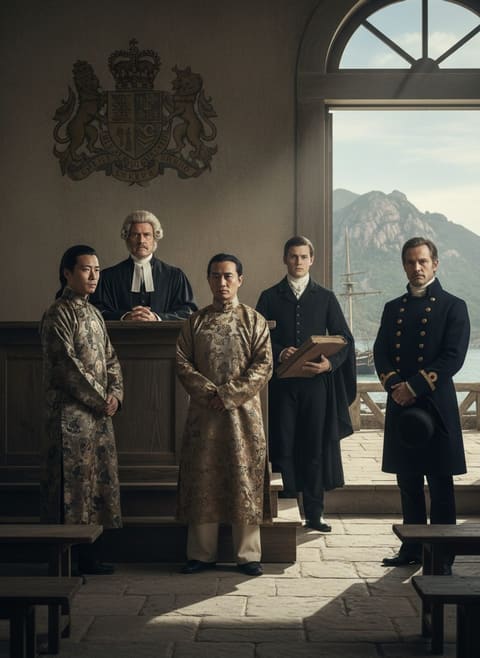
He was not a sailor, but the ocean had defined his fate. Samuel Ajayi Crowther stood before a Yoruba king, armed not with a sword, but with words. His voice, once muted by slavery, now resonated across continents.
The Chains That First Bound
Samuel Ajayi Crowther’s life began in a small Yoruba village, a place so intimately tied to its people’s traditions and stories that to be cut from it was like being severed from one’s own heartbeat. In 1821, his serene childhood shattered when he was captured during a raid and sold into the brutal world of slavery. Taken to the coast, he was crammed into the belly of a Portuguese slave ship, a bleak vessel bound for the Americas. Yet, fate interceded in the form of a British naval patrol, a beacon of light in the dark enterprise of human trafficking. Crowther, alongside hundreds of others, was liberated when the Royal Navy seized the ship.
Delivered to Sierra Leone, known for its community of freed slaves, Crowther began anew. Here, Crowther was introduced to the English language and Western education. Driven by an insatiable curiosity and a profound sense of purpose, he embraced Christianity, a faith that would become the cornerstone of his mission. He was baptized in 1825, taking on the name Samuel Ajayi Crowther, a symbolic rebirth for a boy who had lost everything but his essence. It was here that the seeds of his future influence were sown. As he delved into theology, Crowther's promise was unmistakable. In 1841, he returned to his homeland—this time not as a captive, but as a man on a mission to bridge continents and cultures.
The Words That Freed
By the mid-1850s, Crowther had emerged not merely as a clergyman but as a cultural ambassador. His greatest contribution was his tireless work in language—a true pillar of any culture. Recognizing that the Gospel could only truly be understood if delivered in the tongue of the listener, Crowther embarked on the Herculean task of translating the Bible into Yoruba. This was more than linguistic work; it was an act of reclamation. For centuries, the Yoruba language had been shunned in favor of colonial tongues, and its speakers were often perceived as uncivilized by imperial standards.
Read next: When English Common Law Crossed the Ocean, 1607
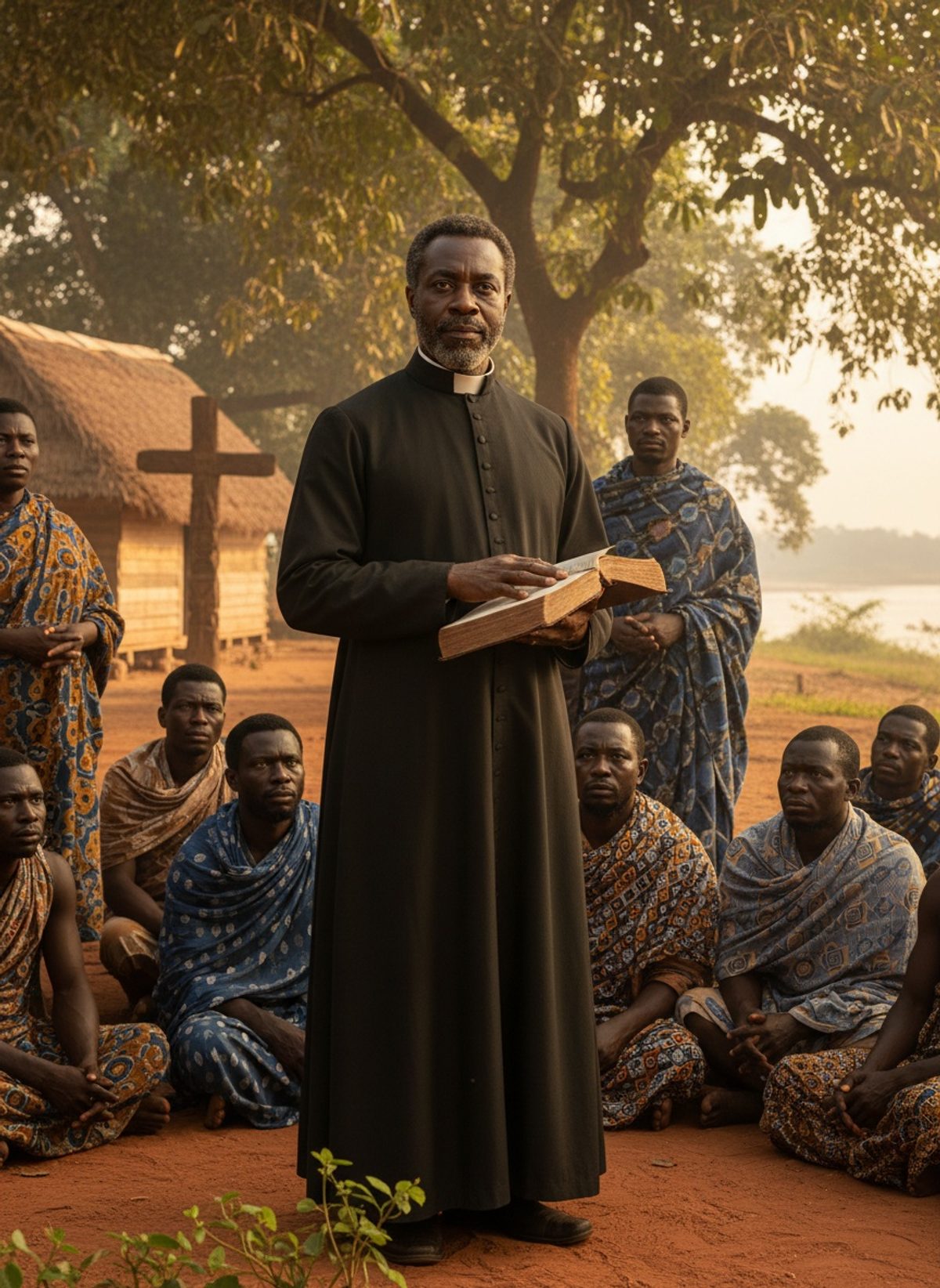
With each translated word, Crowther was not just conveying biblical verses, he was weaving together threads of identity that had been threatened with erasure. The impact was profound. Scriptures, previously the domain of English, now resonated in the innate rhythms and sounds familiar to anyone who called the Yorubaland home. When Crowther stood before a Yoruba king and read the Gospel in its newfound voice, it wasn't only scripture being delivered; it was validation that their culture lived and breathed within these sacred texts.
His influence reached the corridors of the Church of England, where in 1864, Crowther was ordained as the first African bishop of the Anglican Church. In this role, he championed indigenous ministries, rebuilding trust damaged by colonial condescension. To the Yoruba people, and indeed to much of Africa, Crowther was more than a religious figure—he was a testament to the power of resilience and the enduring strength of cultural identity.
Read next: When Rammohun Roy Walked Into Parliament and Changed Everything
The Echoes of a Legacy
As Crowther’s voice grew stronger, so too did the sphere of his influence. When he preached, it wasn’t only the Yoruba who listened; his message crossed tribal and colonial boundaries, resonating with the vast tapestry of Africa. His life's work was not only spiritual but deeply integrated with the socio-political fiber of a continent in the throes of transformation. Crowther's deep respect for African traditions and his vision of a culturally inclusive, autonomous church left an indelible mark on Christian communities, fostering a sense of ownership among African believers.
The legacy of Crowther’s translations extended beyond the religious; they sowed seeds of linguistic preservation at a critical juncture. His translations are credited with standardizing the Yoruba language, bolstering educational frameworks, and nurturing a sense of pride in African linguistic heritage. For a people who had endured the sting of cultural denigration, Crowther’s work was nothing short of redemptive.
Yet, even as Crowther’s influence waned under the weight of a colonial system unwilling to fully embrace cultural equality, his story offers a lens through which we can understand the complexities of empire. The narrative of Samuel Ajayi Crowther is a robust reminder that within the expanse of an empire, human hearts and spirits remain unbounded by its imposed chains. Through his life's work, Crowther reminded the world that identity cannot be stripped away, so long as there are those willing to give a voice to the silenced, a courthouse to the displaced, and hope to the historically undervalued. His story is one the textbooks may gloss over, but its echoes endure, a testament to the indomitable will to preserve and uplift the human spirit.