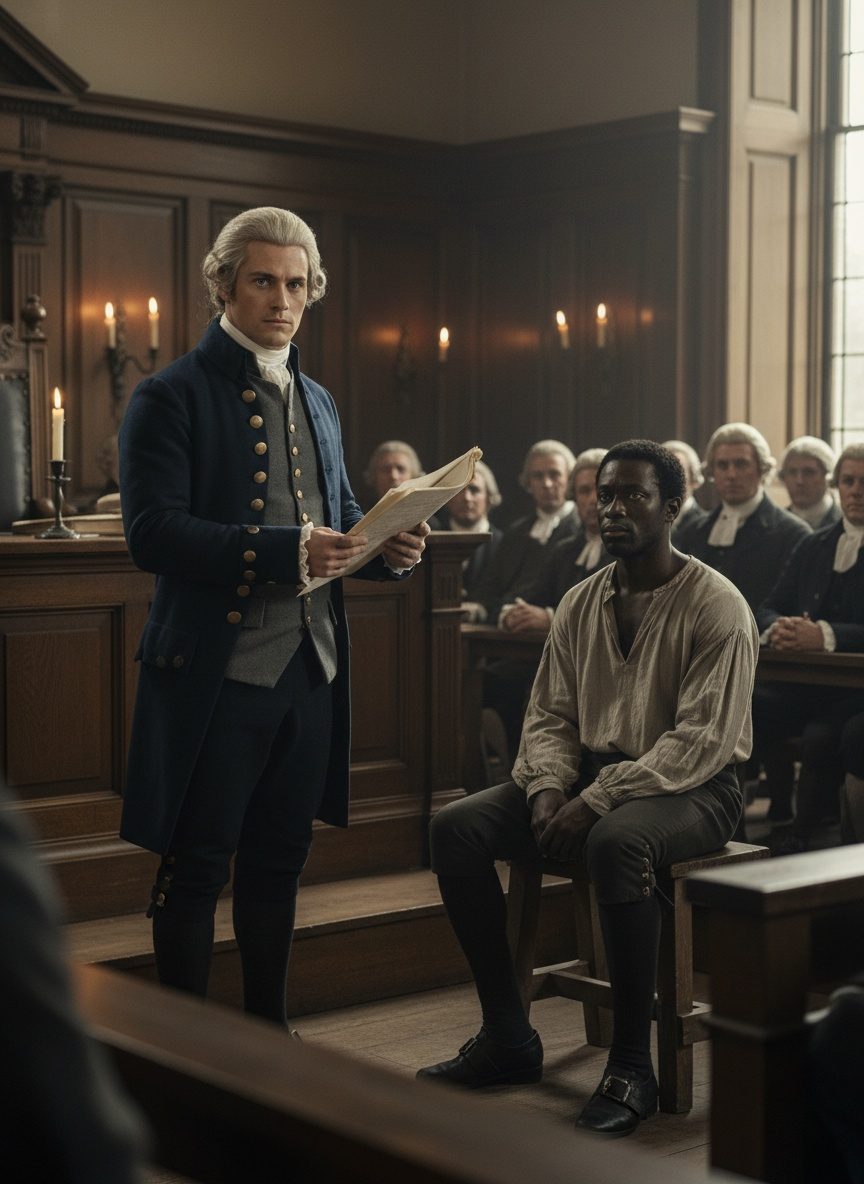
The chill of a typical London morning in 1772 settled over the docks, with the Thames sluggish under dawn's pale light. The sounds of the city beginning to stir—a distant clatter of carriage wheels, the muted conversations of dockworkers—were punctuated only by the cry of seagulls sweeping across the river. In the shadowy recesses of one ship, shackled in the belly of its hold, lay James Somerset, a man clinging to the frail threads of life. His captors intended for him to board a vessel bound for the plantations of Jamaica, a journey that would almost certainly end in his death.
It was into this scene that Granville Sharp, a man not of the law but of fierce morality, stepped with determination that would alter the course of history. Sharp, although just a clerk, possessed a profound sense of justice and an unyielding belief that no man should claim ownership over another. He embodied this philosophy, challenging society's casual acceptance of human bondage, a belief that Britain itself stood for liberty.
James Somerset was not originally from London. Born across the Atlantic in Africa, he had been uprooted and sold into bondage, transported to the American colonies like countless others. However, his tale took a turn when his owner brought him to England—a land boasting principles that, as Sharp realized, might protect him from being forced back into enslavement. When Somerset attempted to seize his freedom by escaping, his recapture set the stage for one of history's pivotal legal battles.
The particulars of the case were unprecedented. Sharp embarked on the journey to fight for Somerset’s cause without formal legal training, driven by moral compass and rigorous self-education in legal theory. His efforts attracted the attention of noted abolitionists and supporters sympathetic to the anti-slavery cause. The case reached all the way to the Court of King’s Bench, capturing public attention and engaging the minds of the era's foremost legal thinkers, culminating in a trial before Lord Chief Justice Mansfield.
Read next: When English Law Gave the World Its Courtroom, 1215
Lord Mansfield, a man known for both his legal acumen and his conservative inclinations, found himself at the crossroads of Justice. The case presented before him was not merely a question of Somerset's fate, but one that had the potential to disrupt and redefine the legality of slavery on English soil. Throughout courtroom arguments, Sharp's camp emphasized the "air of England" theory—that no slave could breathe English air and remain a slave.
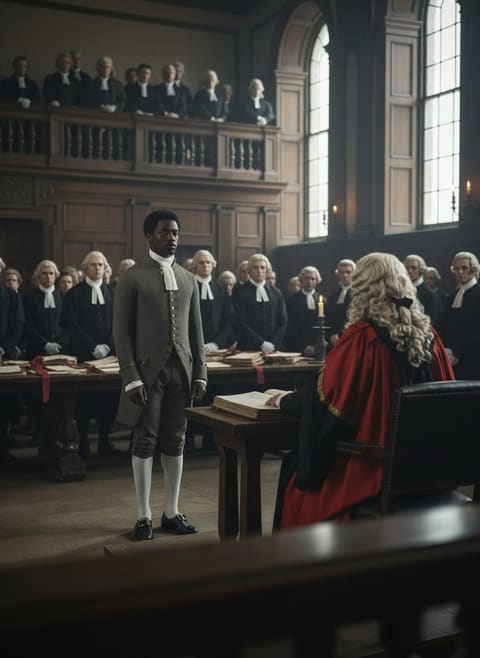
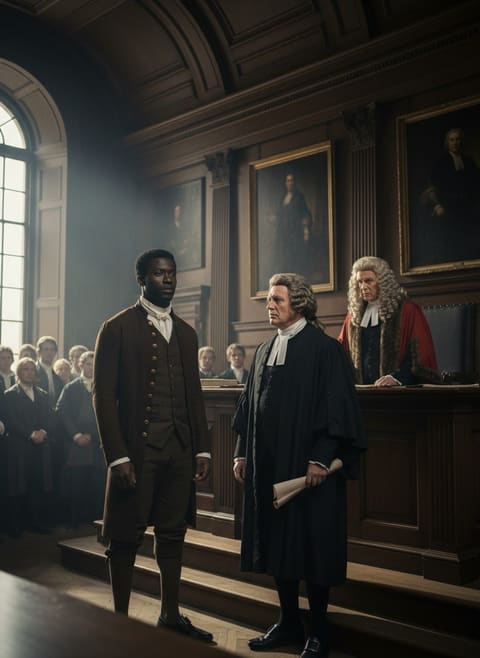
Within the grand halls of the court, the significance of the moment was not lost. The gallery was filled with spectators, clergymen, and writers, all eager to witness the unfolding historical drama. Arguments and counterarguments ricocheted off the ornate wooden architecture, intertwining the room's decor with the gravitas of the moment. The tension between tradition and evolution occupied every crevice.
Lord Mansfield, in his considered judgement, would assert that coercive force to remove a person from England could not be justified. His ruling declared Somerset free; although he sidestepped a universal judgment on slavery, he laid an indelible marker against its practice in England. In rendering his decision, Mansfield cautiously navigated the socio-economic complexities tied to slavery, yet he did so with a profound sense of what was ethically imperative.
Read next: When English Common Law Became the Voice of Hong Kong, 1842
The reverberations of the case were immense. At its core, the verdict became a catalyst for the burgeoning movement against the transatlantic slave trade. Somerset's case was more than a singular victory; it was a symbolic rupture in the institution of slavery, a thread unravelling a system woven deeply into the fabric of British commerce and empire.
As Granville Sharp walked from the courtroom, the cool clarity of dawn breaking over London's streets matched the definable shift in societal consciousness. Without training or title, Sharp had leveraged his resolve and belief in justice to impact change. Indeed, the story of James Somerset and Granville Sharp was not only about the literal chains of one man but also a defiance of an entire mechanism of suffering and subjugation that imposed chains on humanity itself.
This narrative of compassion and conviction is one they left out of the textbooks, a reminder not just of Somerset's freedom but of how the tireless persistence of a single individual— an ordinary clerk—can invoke extraordinary transformation. It stands testament to the power of moral courage in reshaping the world and the bright ember of hope against a towering darkness. As we continue to seek justice today, let the tale of a dying man brought to court inspire us to challenge injustices we encounter. Little by little, it reaffirms that chains, though sturdy, are not unbreakable.