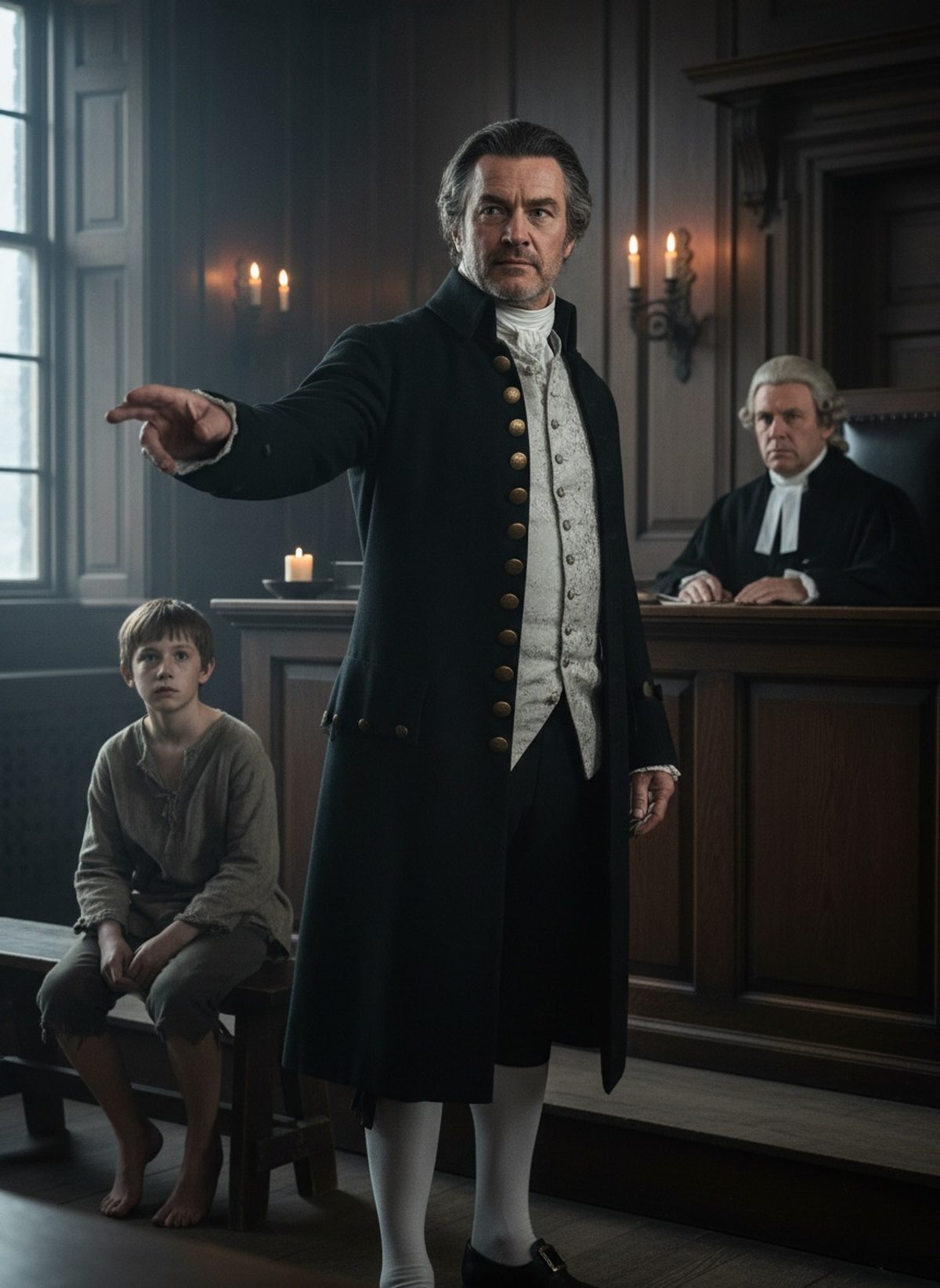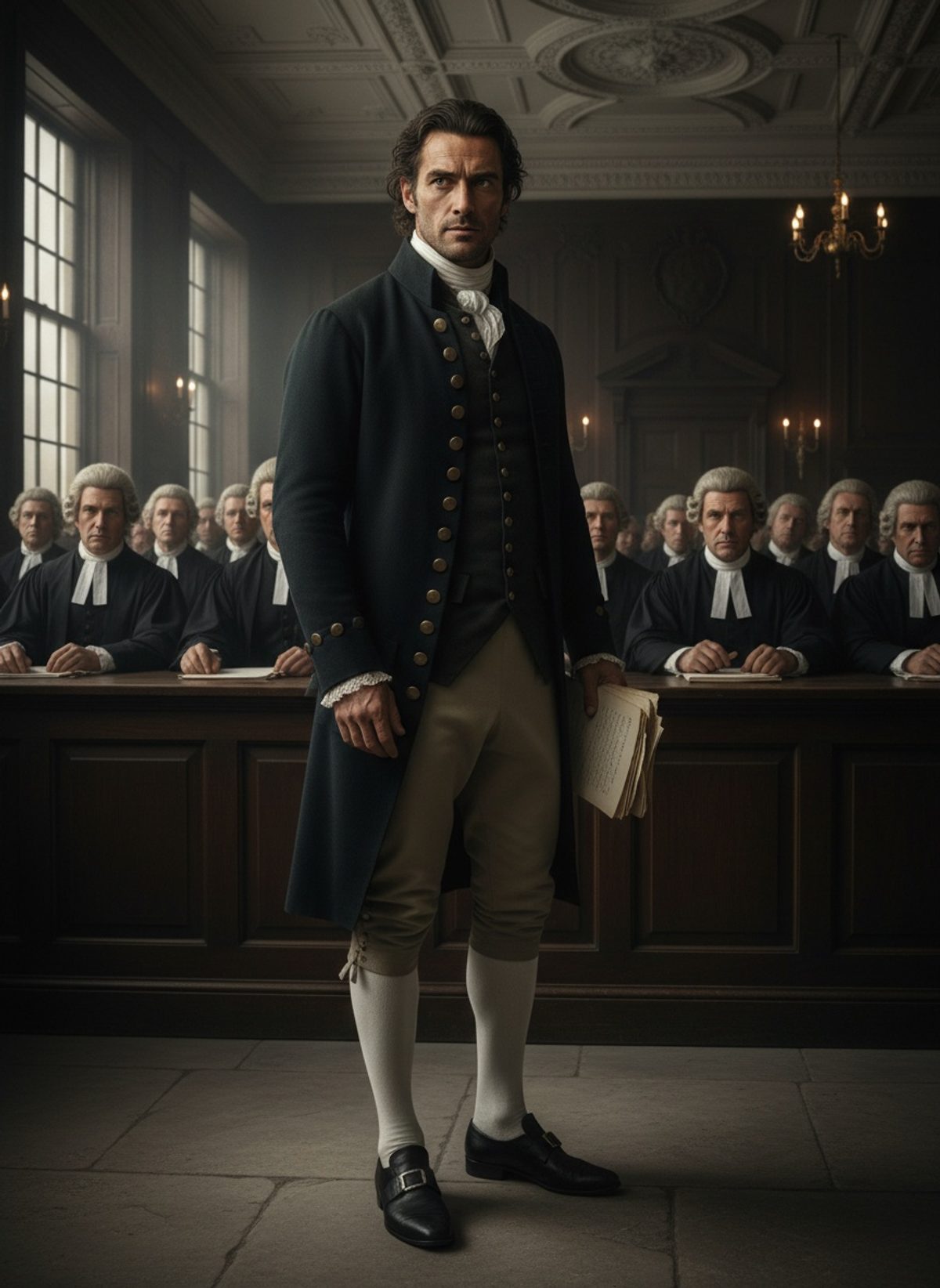
Granville Sharp didn't set out to change history. Yet, the ripples from his actions in 1772 reached every corner of the British Empire.
The Unlikely Champion
To understand Granville Sharp’s improbable journey to the front lines of the abolitionist movement, one must begin in the unremarkable lanes of London in the late 18th century. Born into modest circumstances as the son of a London shoemaker, Sharp’s future might have followed the predictable path of trade. However, fate had different plans, steering him into the service of justice. What distinguishes Sharp is not the allure of power or wealth — he had neither — but a fiercely kindled sense of duty to defend the defenseless, regardless of societal expectations.
In 1772, Sharp stood in a tense courtroom, eyes set on his opponent, fully aware that the matter at hand reached far beyond the delicate confinement of that room. Before him was the case of James Somerset, an African man spirited away from his homeland and, like so many others, rendered voiceless and invisible through enslavement. Chained and condemned for deportation back to the plantations of America, Somerset’s plight found a sliver of hope in Sharp’s unyielding resolve.
Sharp's entry into the legal fray was accidental rather than deliberate. With no formal legal training, and driven by what many deemed impetuous idealism, his earlier efforts had involved tedious hours at the British Museum, acquainting himself with statutes and laws. Yet it was this self-taught tenacity that equipped him to face the formidable legal minds of the time, arguing that no legal ground existed for slavery on English soil. How could it, in a nation priding itself on liberty?
Read next: The Paratrooper Who Held Goose Green With Twelve Men
This principle — radical in its simplicity — reached the ears and hearts of the 18th-century British public, a populous largely ignorant of the truth behind the empire’s wealth. Nonetheless, to the establishment, these musings came across as a mere quibble from a newfangled solicitor littler than his ambitions. Indeed, they underestimated Sharp's impeccable logic and unwavering moral compass.
The Courtroom's Echo
The Old Bailey was more than just a courthouse; it was an arena, and Sharp, an outsider, would have to battle entrenched notions of property and economy to see justice done. The stakes were daunting — overturning societal norms that propagated human beings as chattel. As each argument unfolded before the judge, Lord Mansfield, spectators realized the true magnitude of the deliberations. This was beyond one man's freedom; it ventured into the heart of British values.
Though Sharp had no personal deficiencies to heal by combating slavery, the same could not be said for the plantocracy whose very existence relied on human bondage. How then, they argued, could Sharp fault their rights to property? Yet within this tumult lay the sheer drama of human empathy and resolve against the calculated barriers of cold economics.
Understating the potential fallout was impossible. A judgment in favor of Somerset would not only undermine the understood legality of slavery but could also crumble the economic foundations of colonies far and wide. Pomposity and pity intermingled as Sharp, risking everything, laid bare the fundamental notion of human liberty against the convenience of disregarding it as a luxury.
Echoes of this struggle reached beyond the hushed recesses of the courtroom. It became a public spectacle, capturing the imagination of those who had long accepted the status quo. The media of the day, pamphlets and treatises, scattered seeds of controversy and debate, perhaps igniting more fires for the coming revolution in thought and race relations.
A Verdict That Resounded
In the summer of 1772, the soft-spoken judge made a declaration that shattered the chains of enslavement ostensibly locked tight around Somerset but figuratively on every enslaved person in England. No individual could be removed from England into bondage. Yet, contrary to common belief, the ruling did not eradicate slavery completely; it simply placed its practice beyond the jurisdiction of English law, marking it as untenable on national soil.
This decision stirred the very marrow of British sensibility. Though the ruling was only directed to the case at hand, its implications unwound the threads supporting the vast tapestry of colonial slavery. Paradoxically, it became emblematic proof for the abolitionists of their just cause.
Granville Sharp stood quietly in the courtroom, his heart kindled not by accolades but by the profound sense of having faced and stayed true to justice. With no pecuniary reward gained, his contribution was a chapter in the broader story of humanity's inexorable march towards equality — a relentless query of conscience with answers yet to fully unfold.
This landmark judgment had subtle, albeit potent ramifications, setting precedents that crackled like distant thunder across the leadership and populace, a pivotal fulcrum that the abolitionist movements around the world leveraged in sermons and secret assemblies alike. It provided the missing linguistic to those yearning for meaningful change and emboldened voices worldwide to question inherited injustices.
The courtroom lights dimmed, but the illumination of justice continued to blaze across the expanse of an empire — showcasing why, in retrospect, one shoemaker’s son’s presence in the courtroom mattered as much as any royal decree.