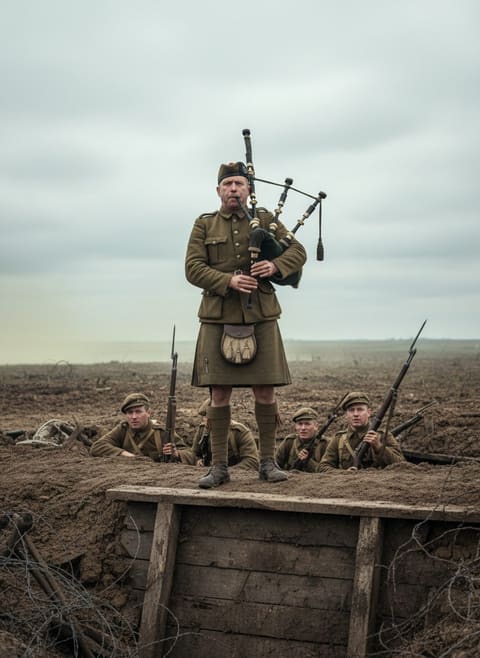
November 11, 1918. The fields of Europe lay scarred and silent after four years of relentless mechanized war.
The Horse That Refused to Fall
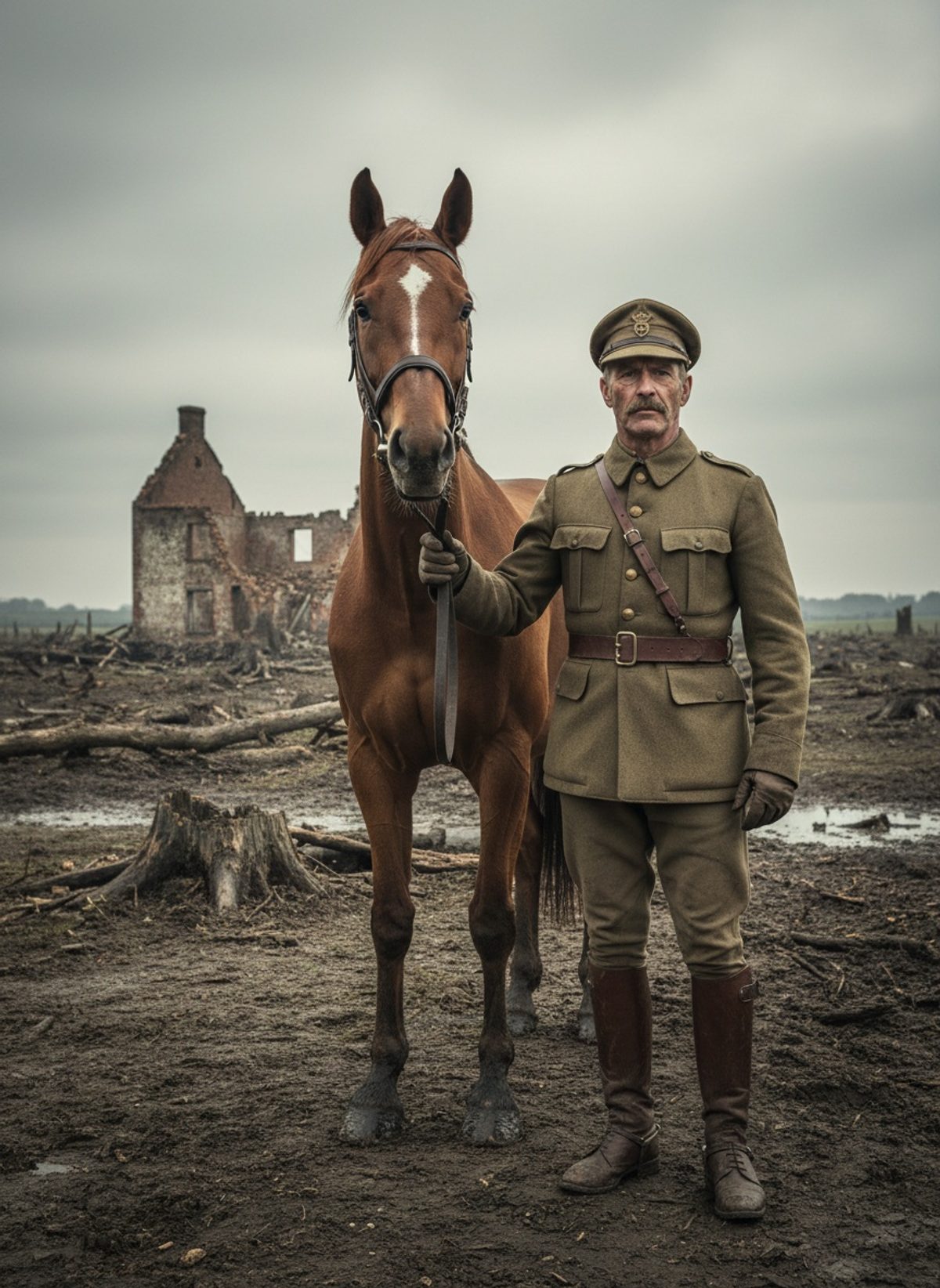
In the brutal theater of World War I, over a million horses were pressed into service by Britain, their sinew and muscle straining under the desperate burdens of war. Amidst this vast equine legion stood Warrior, a bay gelding entrusted to General Jack Seely. Time and again, Warrior was thrust into the fray, hauling artillery and carrying officers through the mire and smoke, navigating landscapes transformed into hellish tableaux of barbed wire and craters.
Warrior was more than a mere pack animal; to many, he embodied resilience. Under relentless artillery fire and confronted with the specter of chemically enhanced warfare, many horses succumbed to panic or injury. Yet Warrior displayed an unyielding fortitude. During the notorious Battle of the Somme in 1916, Warrior was struck by shrapnel but staggered back to his feet, inspiring troops whose spirits had been all but shattered. "The horse the Germans could not kill," Seely would later call him, a title that evoked both admiration and wonder.
A Friendship Forged in Fire
General Jack Seely was not just another officer overseeing military operations. His bond with Warrior was personal, stemming from the fields of the Isle of Wight where Warrior was foaled in 1908. Seely, himself a figure of adventure and daring, described his companion as possessing an uncommon valor. This partnership was not one-way; Warrior responded to Seely's calls with an understanding that seemed uncannily human.
Read next: He Was 58, Dying, and He Still Led the Charge
Seely and Warrior twice charged through No Man’s Land during the war. Amidst the chaos, their partnership became legendary, a narrative of loyalty echoing through the ranks. What set them apart was the very notion of survival; while officers were rotated, their horses often met grim fates or were left to languish in foreign fields.
Amidst the unending grind of war, Seely became a tireless advocate for his equine partners, ensuring Warrior’s survival despite the odds that were staggeringly against him. He fought to give the tale of his brave companion its due place, eventually leading Warrior on a path back home—a path all but foreclosed to countless others.
The Decision That Changed the Voyage
As the Armistice of 1918 brought with it the onset of peace, a somber realization took hold: scarcity and disease meant the majority of Britain's horses would not return home. Over the course of the war, nearly half a million horses had been lost to battlefield deaths and disease. The mud-caked survivors faced a grim fate: sold where they stood, often to slaughterhouses set on foreign soil or to local farmers seeking cheap labor.
Warrior was marked for home as a result of Seely’s persistence. In December 1918, arrangements were made for Warrior to return to England—a singular victory against a backdrop of diplomatic and logistical impossibility. The return trip, aboard the bustling decks of a military transport ship, was far removed from the fields of France. Yet, for Warrior, it was a triumph against the same fate that had claimed so many of his kindred spirits.
Read next: He Stepped Forward in Lucknow and Offered His Life
Homecoming and Honor
Warrior’s return in 1919 was met with a mixture of joy and disbelief. He was among the scant few to step once more upon British soil, a living relic bearing witness to the war's heaviest trials. Where many might have faded into anonymity, Warrior returned to the Isle of Wight, again grazing peacefully amidst the familiar hedgerows. His saga soon resurfaced in publications across the nation, serving as a living testament to the unseen sacrifices that had carried empires through the war.
His legacy gained further prominence in 1919 as Warrior became a celebrated figure, representative of the honored service of animals during wartime. Lives had been irrevocably changed, societies reshaped—and Warrior stood, as ever, the quiet hero of his own lived story.
What Warrior Taught Us
Warrior’s journey from the battlefields of Europe back to the pastoral landscapes of home encapsulates a narrative of survival not only of body but of spirit—a narrative that resonated profoundly with a nation seeking healing. While history often focuses its lens on the human cost of conflict, the ordeal faced by millions of animals remains, too often, an overlooked chapter. Warrior’s survival defied the odds, but more importantly, it illuminated a path of compassion that persisted amid the dehumanizing storm of war.
In contemplating Warrior’s journey, we find reflections on resilience, loyalty, and the enduring bonds that challenge our assumptions about what it means to be heroic. These traits, embodied in a bay gelding, resonate beyond the theater of war, reminding us of the countless untold stories that warrant our remembrance and respect. The tale of Warrior is not just the story of a horse; it is a broader narrative, hinting at moments that remain relevant today, moments that speak to the enduring spirit that can rise above the chaos of human conflict.