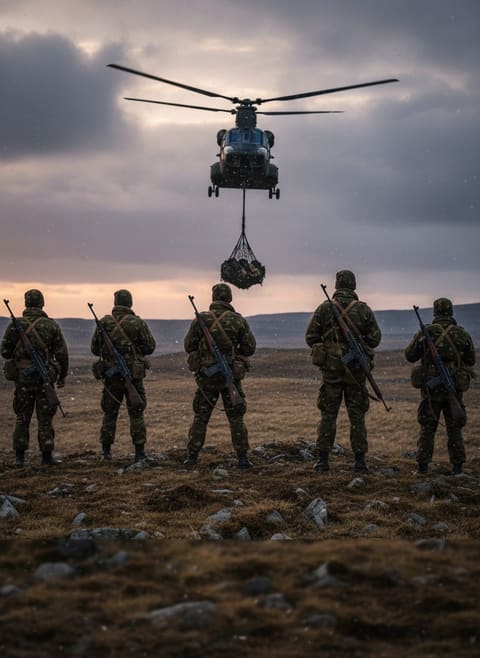
June 13, 1982. By dusk, the chill of the South Atlantic had settled in, a biting wind sweeping over the bleak terrain of the Falkland Islands. Amidst this harsh and unforgiving landscape, the 2nd Battalion of the Parachute Regiment, known as 2 Para, prepared to advance on a pivotal objective: Wireless Ridge. Just two weeks prior, they'd endured heavy losses at Goose Green, a battle that cost them around 80 casualties, including their commanding officer, Lieutenant Colonel H. Jones. Now, under new leadership, they were poised to attack once more, carrying with them the lessons of hard-won experience.
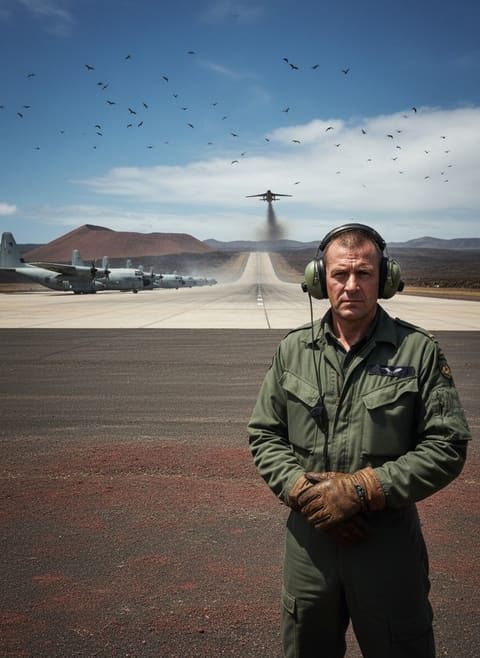
Lieutenant Colonel David Chaundler, who had taken the helm after Goose Green's toll, was a man of staunch resolve. He had arrived in the Falklands after an arduous eighteen-hour journey from England, marked by two in-flight refuellings over the vast Atlantic. Upon his arrival, he literally dove into the sea to be picked up by helicopter, a prelude to the baptism of fire awaiting him at Wireless Ridge. Briefed on HMS Hermes by Admiral Sandy Woodward and later at Major General Jeremy Moore's headquarters, Chaundler assessed the grim aftermath of Goose Green and vowed that such a price would not be paid again without assured support.
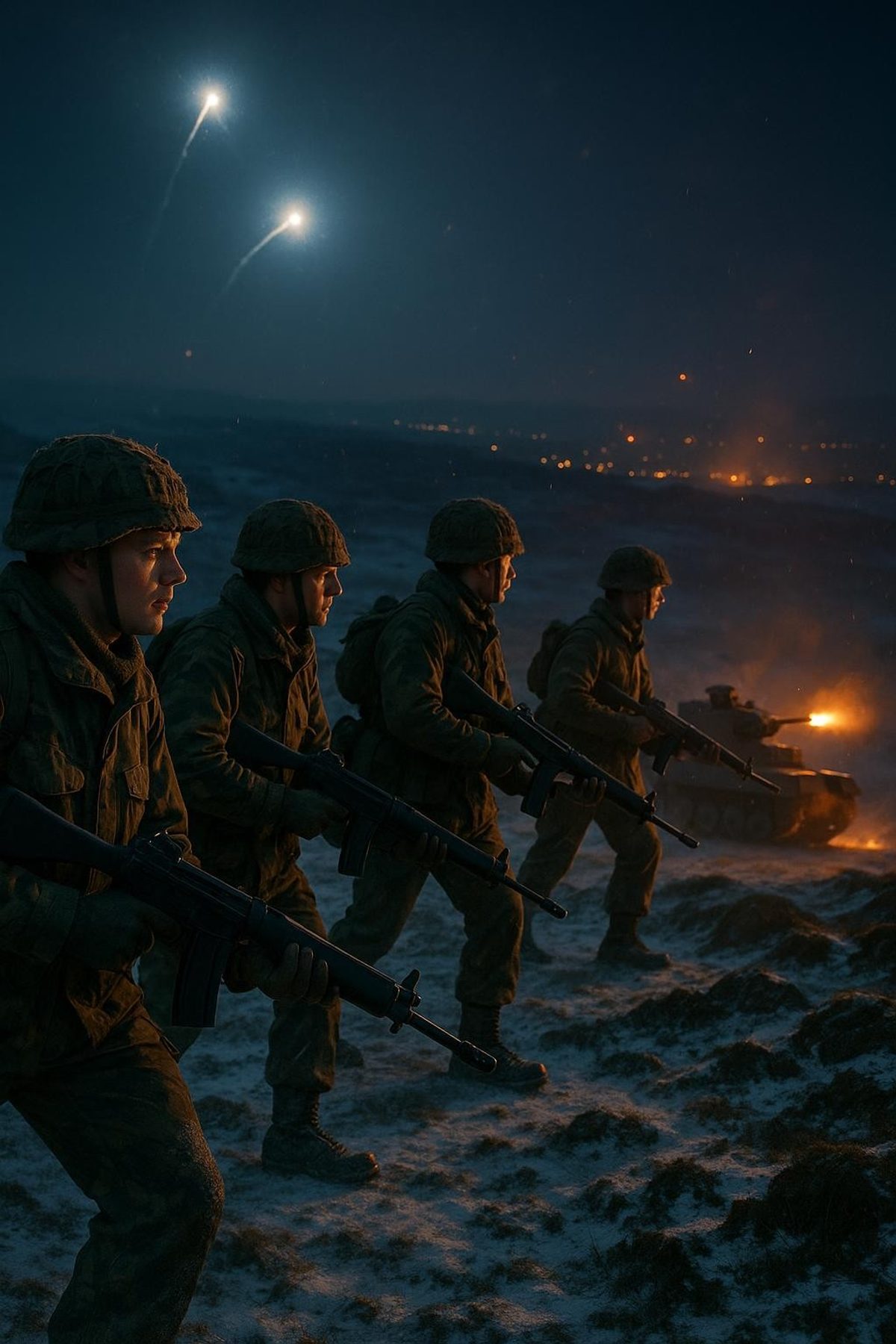
The approach to Stanley, the focal point of British ambitions for retaking the Falklands, required the capture of seven strategic hills. Each perched ominously within five miles of the capital. Wireless Ridge was the prize that would soon fall to 2 Para. The Paratroopers were not alone in their endeavor; they had marshaled significant firepower to ensure their success. A troop of the Blues and Royals bolstered their force, bringing two FV101 Scorpion and two FV107 Scimitar light tanks into the fray. Alongside, two batteries of 29 Commando Regiment Royal Artillery prepared to unleash their might, supported further by the formidable 4.5-inch gun of HMS Ambuscade stationed offshore.
On the night of June 13, under the cover of darkness, an incessant barrage began to pound Wireless Ridge. British artillery fired relentlessly, delivering six thousand rounds to soften Argentine positions. The naval gunfire and the combined firepower of the light tanks intensified the onslaught. Lieutenant Colonel Omar Giménez, who led the Argentine defense, later recounted the terrifying bombardment. He narrowly escaped death multiple times, as shells rained down with devastating precision.
Read next: When Napoleon's Old Enemy Held a Wall Against Him, 1799
D Company of 2 Para was the first to move, advancing towards the ominously named Rough Diamond. To their relief, they found it abandoned, the bombardment having driven the Argentine C Company of the 7th Infantry Regiment to retreat. But it was a Pyrrhic calm. As the paratroopers consolidated their gains, the Argentines launched a fierce counter-strike from Wireless Ridge, targeting Mount Longdon and inflicting further casualties upon 3 Para, already scarred by the campaign's toll.
A and B Companies soon followed in their step, emboldened by the fierce display of firepower they believed had banished the enemy. But this confidence would be tested. As they moved towards the aptly nicknamed Apple Pie, they were met with a harrowing reception. Heavy Argentine machine-gun fire raked their advance, forcing the British soldiers to fall back behind the cover of peat-laden earth and call for another artillery bombardment to claw back their position.
The combined efforts of British machine-gunners and the guns from the Blues and Royals light tanks eventually broke the Argentine resolve. A and B Companies edged forward to claim Apple Pie, as C Company pushed from the north, encountering an abandoned Argentine platoon position—an eerie testament to the day's fierce resolve and the toll exacted by the unrelenting British assault.
Lieutenant Colonel Giménez, confronted with the disarray of his forces and their shattered provisions for defense, recognized the gravity of the situation. "Communications are lost," he would later say. "My whole regiment is finished." Still, remnants fought on. A small force, a desperate counter-attack of two platoons from the Argentine 10th Armoured Cavalry Reconnaissance Squadron, launched themselves into the fray. They took advantage of the rocky terrain covering the western expanse of Wireless Ridge to strategically engage British positions, momentarily changing the tempo of the fight.
The two-hour confrontation that ensued was fierce, both sides drawing every ounce of resilience they could muster. Despite the formidable British firepower at play—tanks, Milan anti-tank systems, and experienced machine gun platoons—the determined Argentinians inflicted significant disruptions. Two of the British light tanks found themselves in craters and required extraction the following day, a testament to the chaos that reigned under fire.
Meanwhile, D Company, facing their own patch of resistance, pressed forward. They weathered a brutal engagement with Argentine paratroopers led by 2nd Lieutenant Gustavo Alberto Aimar. Tragically, the clashes claimed the lives of Privates David Parr and Francis Slough, the former struck down by British artillery that landed short of its mark—a stark reminder of the war's capricious nature.
Read next: When a British Soldier Survived on Jungle Roots in Burma, 1944
As dawn breached the horizon of June 14, the field below unfolded the grim tapestry of Wireless Ridge's costly fall. The embers of conflict settled amid the rocks and peat, marking a victory woven from lessons, heartache, and unyielding tenacity. Later that day, the capitulation of Argentine forces on the islands was announced—a culmination of resolute strategy, somber sacrifice, and the iron resolve of men who had faced immeasurable odds.
The Battle of Wireless Ridge, while a crucial step toward the cessation of hostilities, remains more than just a historical footnote. It highlights the intricate balance of leadership, courage, and adaptability required in modern warfare. The South Atlantic wind has long since dulled the echoes of artillery, but the ridge stands, a silent witness to the unflagging human spirit and the delicate art of war that swayed the course of history that June night in 1982.
Earlier this month, around 150 British paratroopers and local reservists marched 20 miles to Goose Green, where 2 Para's war began.
Part 16 of 24: One Falklands story a day until Remembrance Sunday