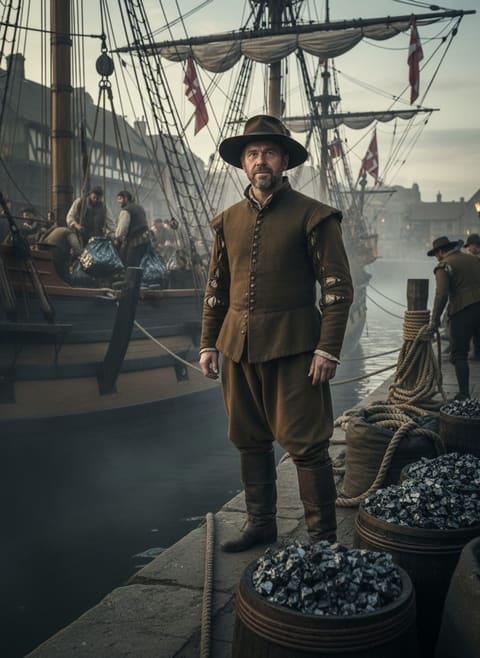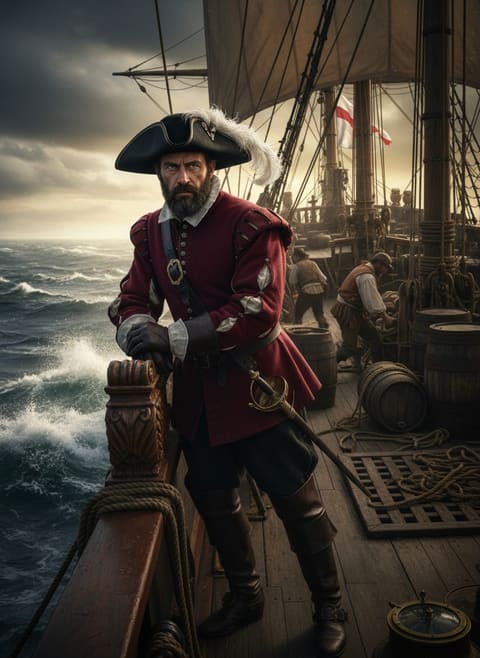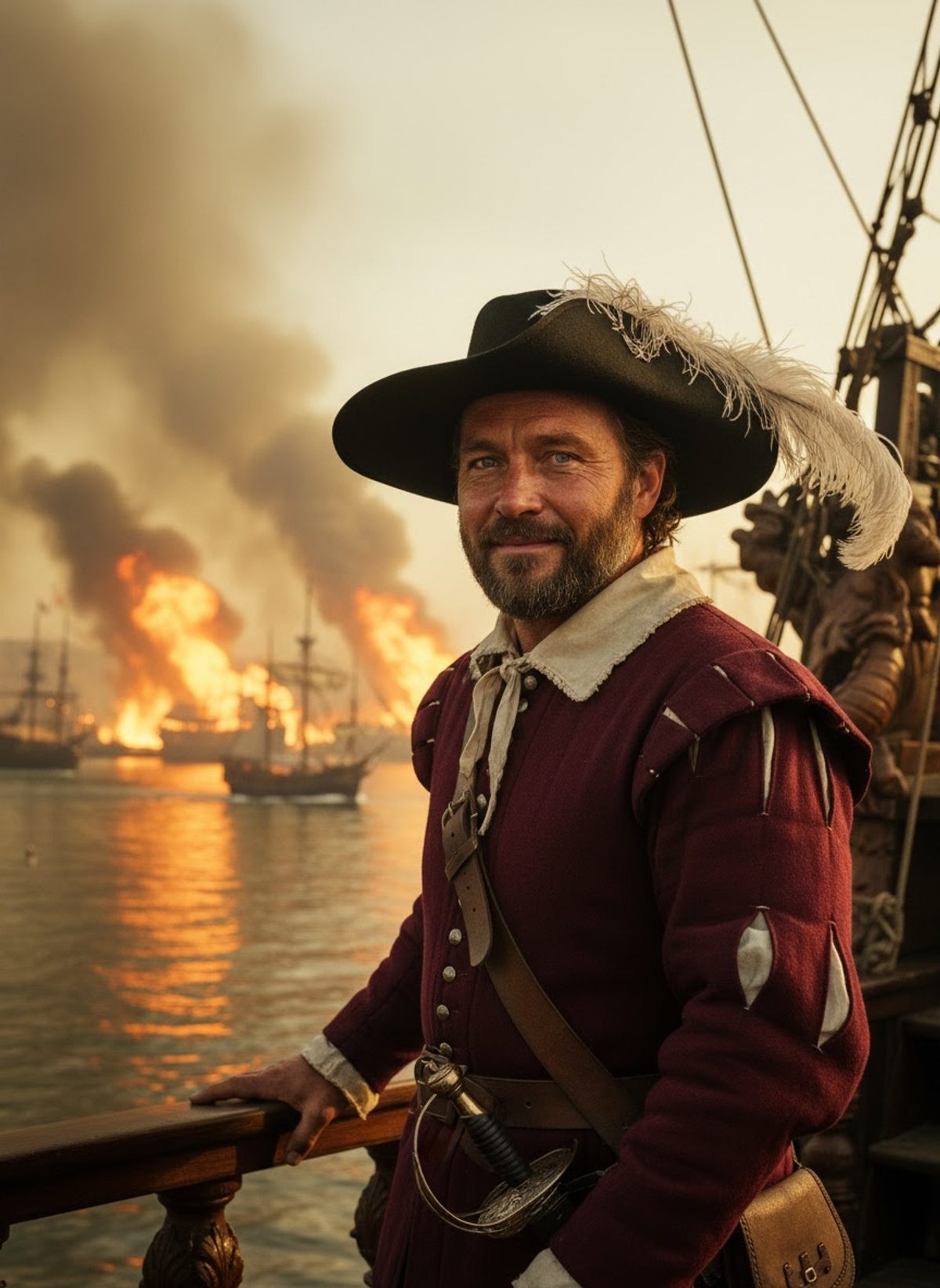
April 1587. The chill breeze carried the tang of salt through the narrow streets of Cadiz.
The Shadow of the Armada
The late 16th century saw the Spanish Empire thriving, its vast territories stretching across continents, fueled by the riches of the New World. Driven by a Catholic zeal and the ambition of King Philip II, Spain’s power seemed unshakable. Yet, lurking across the Channel, Protestant England refused to bow down. Tensions simmered beyond trade disputes or religious differences; they boiled into something sharper, more personal. A time had come when words were no longer enough.
In the heart of Spain, Cadiz was a bustling hub, teeming with galleons, bristling with armaments. By 1587, its harbor was a beehive of activity, as shipbuilders and soldiers toiled under orders to assemble a fleet that promised to change the course of history—the Spanish Armada. King Philip II had spent years crafting this leviathan, an invincible force set to crush England and extinguish Protestant fire for good.
However, the English had a deviant eye watching the coastlines. Sir Francis Drake, privateer turned naval commander, was a figure crafted from legends of the age. Known for his audacity and a flair for the dramatic, he was precisely the kind of man England needed. Drake knew of the Spanish plans and understood that waiting to be attacked was not an option. The weave of fate was not crafted by fence sitters; it favored the bold.
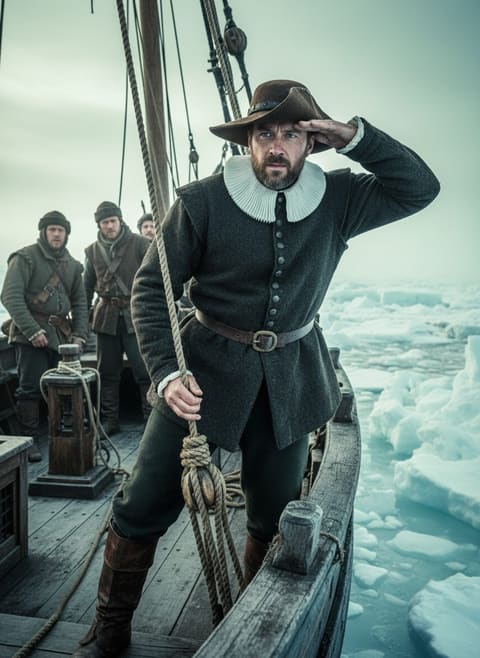
Read next: When Hugh Willoughby Sailed Into the Arctic and Never Came Back, 1553
On a day like any other, Drake's ship and a small fleet entered the enemy’s den. A vice grip of tension hung over the air like an impending storm, as his eyes reckoned with the massive Armada looming ahead. It was more than wood, sail, and gunpowder. This was the embodiment of the Spanish dream of conquest.
Singeing the King’s Beard
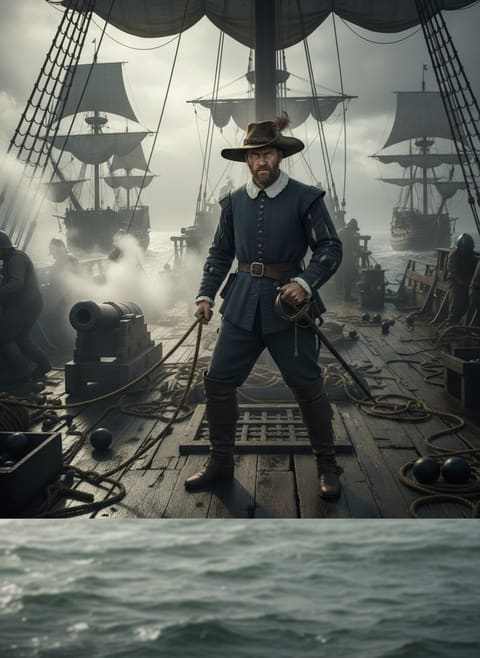
With a determination rivalling the most committed warrior, Drake seized the reins of the situation. The quiet of the harbor shattered as cannonballs clawed through wood. Orchestrated mayhem painted the waters red, as Drake worked with surgical precision over two frantic days. Thirty-seven ships were reduced to charred remains. Mastering the element of surprise, he left a graveyard of fire and wreckage.
The phrase “singeing the King’s beard” glides through the pages of history with an almost arrogant swagger. It was audacity in nautical terms, a calculated gauntlet thrown at the might of Spain right under its king’s nose. Yet, the true genius lay not just in burning ships, but in what this action represented. It was a declaration of English daring and naval might, coaxing respect even from enemies. As flames licked the horizon, they bought England precious time.
Perhaps the most surprising twist lay in Drake’s retreat. He sailed out of Cadiz as brazenly as he'd sailed in. The Spanish forces, dazed by the audacity, gathered themselves, only to watch him vanish into the sea breeze. In an era where sending fleets to rendezvous was an arduous task, Drake had effectively thrown a wrench in the Spanish King’s plans. Delays ensued and the once-feared Armada was forced into a year of regrouping and rebuilding.
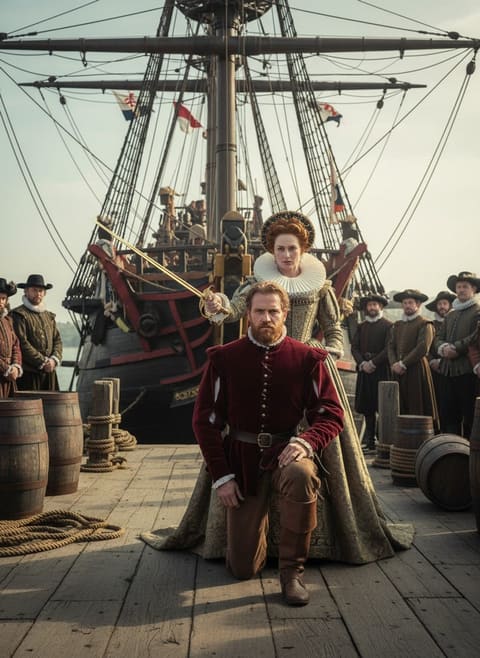
Read next: When Francis Drake Knelt Before the Mast at Deptford, 1581
Echoes of Defiance
The ripples of the raid reached far beyond the harbor of Cadiz. Back in England, Drake’s success was celebrated as a preemptive strike of genius, a defense mounted before a single Spanish foot touched English soil.
Beyond just wood and flame, it was the triumph of cunning over brute strength, of bravery over complacency. The months gained translated into improved defenses for England. When the Armada did eventually set its course for invasion, it encountered a fortified foe ready for battle.
Spain’s loss was not merely in destroyed ships but in morale. The blow was to their naval pride, an empire pricked in its own den. The setback provided the English with a foothold to fuel their maritime dreams, planting seeds of the naval empire that would one day rule the waves. In history’s grand theatre, those two sweltering days were a pivotal act, one portrayed by a commander with fire at his fingertips.
Centuries hence, the phrase remains etched in our collective memory—not just for the flames that danced over the waters of Cadiz but for the sheer embodiment of strategic genius. It stands as a testament to turning the tide before the flood, to a moment where the world’s axis subtly shifted through the sheer force of individual will. In a world where power defined civilizations, Drake's gambit wasn’t just a raid—it was a prelude to the rise of an empire.