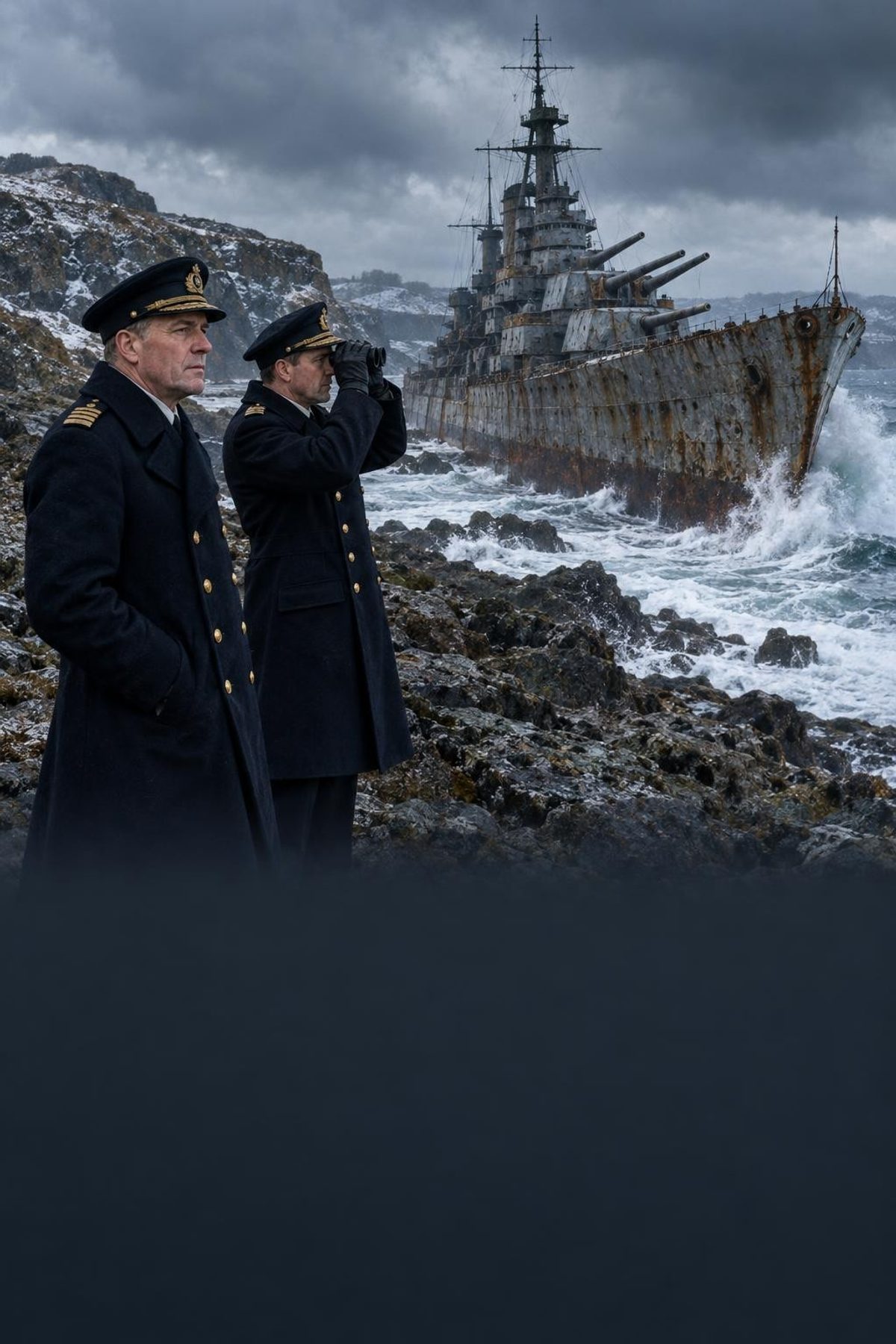
The sea was unruly, waves crashing against the battered hull of HMS Warspite with a ferocity that mirrored her fighting past. Even as she listed heavily, the metallic groaning of her ironclad body seemed less like a ship succumbing to the ocean’s will and more like an old warrior resisting one final time. The storm off Prussia Cove raged, and it was almost as if she had chosen this moment to defy her fate.
The Iron Lady of the Sea
HMS Warspite, a vessel nothing short of legendary, had etched her name into the annals of naval history with grit and glory. In her prime, she was the embodiment of British naval might, one among the Queen Elizabeth-class battleships, and the pride of the Royal Navy.
Warspite was launched into turbulent waters in 1913, shortly before the turmoil of World War I. Almost immediately, she showed her mettle in the Battle of Jutland, earning her first battle honour amidst the hellfire of naval artillery.
The interwar years saw Warspite become a seasoned warship, though age would bring not fragility, but rather an indomitable spirit. When World War II beckoned, she answered with unparalleled fervor. In the Norwegian Campaign at the Battle of Narvik, she turned the tide against the Germans, her mere presence feared as much as her salvos. Her guns roared through the Battle of Crete and the Salerno Landings, echoing through history as the voice of resistance and defiance.
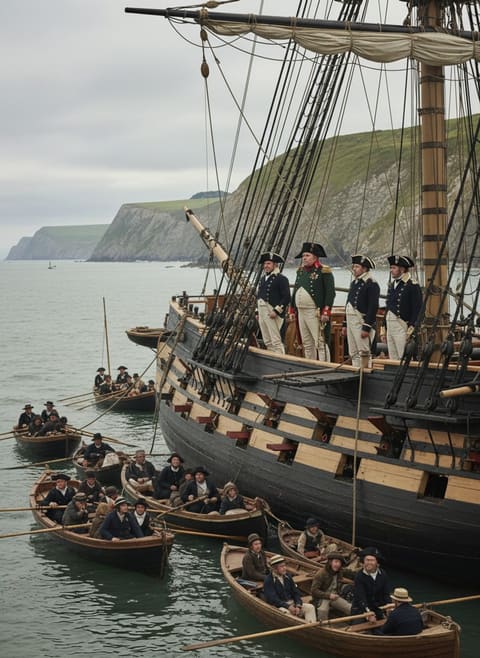
Read next: When HMS Victory Dropped Anchor at Gibraltar, 1805
The Warspite had defied enemy fire, evading torpedoes and emerging from under minefields. She was a survivor, having shrugged off bombardments that would have reduced others to wreckage. But time, the harshest adversary of all, would catch up, and by 1947, her journey seemed destined for the scrapyard. Warspite, however, had other plans.
Rebellion in Her Bones
The decision to sell HMS Warspite for scrap came as a sobering reminder that even legends must fall. Towed by the relentless tug of destiny towards her demise, she broke free near the Cornish coast, her rebellion against the slow indignity of disassembly as fierce as any naval engagement. The storm that bestowed chaos upon the seas seemed to conspire, aiding her escape.
It was Prussia Cove where she famously grounded herself. Stranded, yet somehow serene, she lay with one side to the shore as if basking in a final victory. Cornish locals were awed by the spectacle—a battleship that had seen more combat than any ship of her line, now claimed by the sands yet uncompromised by her intended dismantling. The bewildering sight was a poignant tableau, a reminder of the indomitable spirit that filled her decks.
In the days that followed, efforts to refloat the Warspite reflected both desperation and respect. Crews fought tides and tempests to pry her from the rocky embrace of the Cornish coastline, each attempt further illuminating her refusal. Locals gathered, curiosity mixed with reverence, pondering whether she resisted merely out of mechanical stubbornness or if there was more to her final resting place.
An Uneasy Peace
As the attempts to salvage the vessel proved futile, Warspite gradually surrendered to the elements and her fate. Her ironclad hull, once an unyielding fortress, became a relic, steadily taken apart but not forgotten. She became a monument to resilience and a peculiar chapter in naval history. Children would clamber over her remains, playing beneath the shadows of rusted artillery that once hushed the cries of warfare.
Through those bittersweet years, Warspite transformed into more than a beached battleship; she became a testament to the epochs she traversed. Having stood against foes both foreign and time itself, her presence was a testament to naval bravery and tenacity. Each tide pulled at her bones, whispering across the winds stories of what she once was, a mighty force rendered silent by the passage of time.
Read next: When HMS Revenge Limped Home From the Armada, 1588
This slice of maritime history lingered, not just as scrapyard salvage but as a saga of unyielding legacy. Visitors who walked the shores of Prussia Cove were greeted by the rusted reminder of strength, a storied past stilled but not silenced by time.
The Final Watch
HMS Warspite never truly vanished; she imprinted her spirit on those who came near, an echo of British naval dominance whispered into the corners of history. Her decision to run aground, defying the fate intended for her, remains a stirring legend resonant with those who value duty and determination.
Her story transports us back to an era when ships like Warspite were not mere vessels of war but symbols of national might and maritime mastery. Each bolt and beam spoke of battles fought and won, of a resilience that defined her crew as much as the iron she wore. Even in decay, Warspite delivered a lasting narrative of defiance—an old warrior whose heart refused to surrender.
In her last defiant act, HMS Warspite reminded the world of the past battles and stormy seas she had weathered. A relic, perhaps, of an empire’s twilight, yet her grounding serves as a beacon for all who venture across history’s turbulent waters. As waves continue to crash over her remnants, they carry forward the story of a ship that lived fiercely and refused to quietly fade away into oblivion.