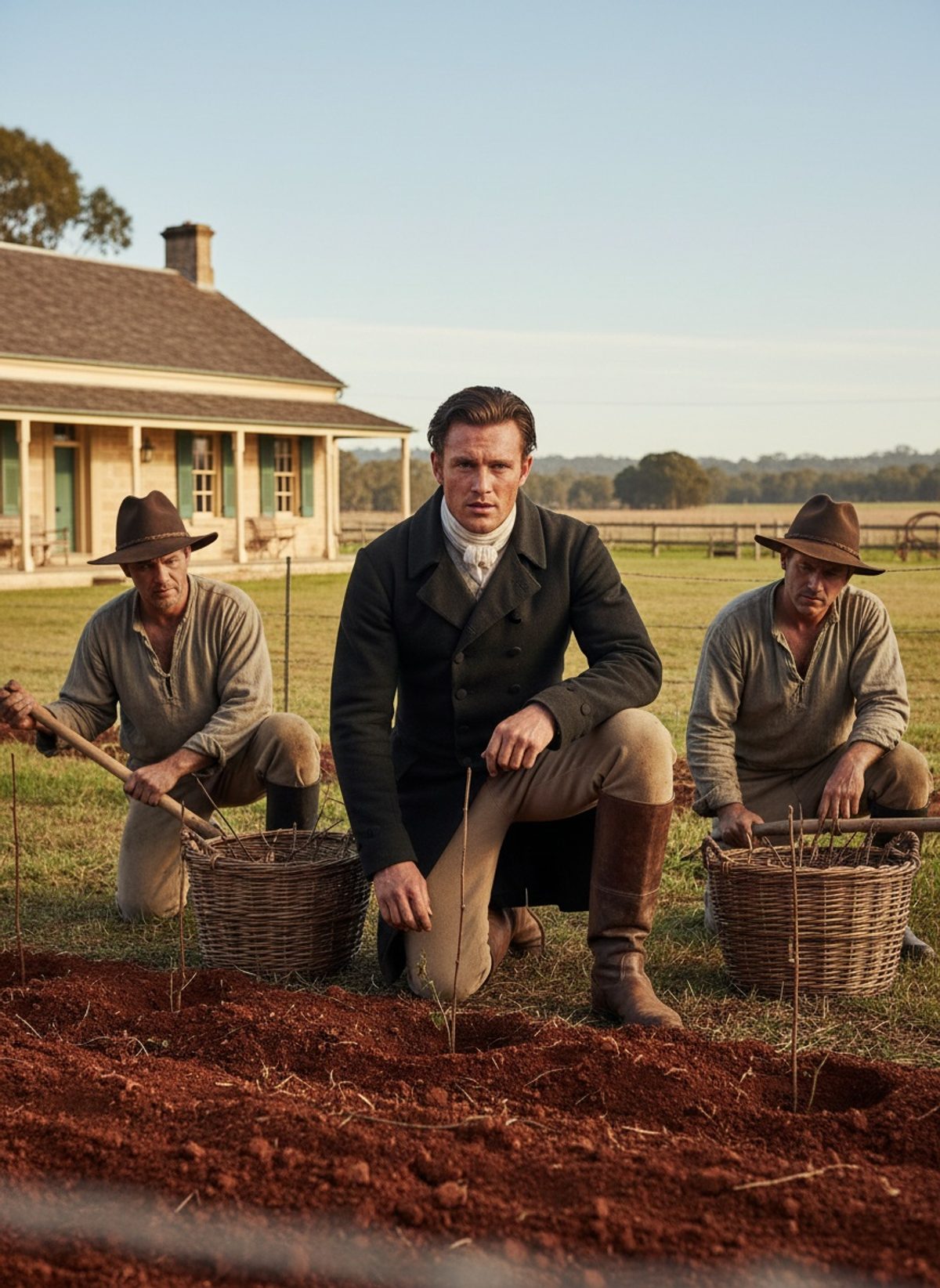
Most people think the sun-baked soils of Australia have always teemed with vines. But behind every lush vineyard lies a story of unlikely beginnings and defiance of expectations.
A Punitive Settlement Finds Its Vocation
In the early 19th century, New South Wales was far more associated with penal colonies than pastoral splendor. Founded as a place of punishment and exile, the land was initially seen as a bleak necessity for the British Empire, certainly not a site of agricultural innovation. Yet, even under these stern circumstances, the rugged resilience of the settlers started to shine through. Among the many ambitious colonists was John Macarthur, who had laid the groundwork in establishing the colony's wool industry. His foresight and relentless drive had already begun transforming the colony's economic landscape. But it was his son, William Macarthur, who saw the untapped potential within the coarse, unforgiving earth of Camden Park.
Camden Park lay at the southern peripheries of what was then considered settled territory, a sprawling estate grappling with the unpredictable Australian elements. Yet, amidst its vast fields and rolling hills, young William envisioned a different kind of future for the colony—one nurtured by sun, soil, and vine. Inspired by the vineyards of Europe and unfazed by skeptics, he chose 1820 to take a daring leap into the world of viticulture.
The Blue Mountains and the Endless Sky
The crossing of the Blue Mountains, a feat accomplished just a few years prior, had opened the imagination of the settlers to the endless promise of the Australian interior. This rugged expansion was still fresh in the colony's memory when young Macarthur decided to look beyond the family’s prospering wool endeavors. The idea of establishing vineyards on what was widely considered to be hostile soil seemed audacious to most, yet this uncharted endeavor became his driving goal.
Read next: When John Macarthur's Merinos Changed a Continent, 1803
With each vine planted, William was not just taming the land but also a part of the larger narrative of colonization—reshaping the identity of New South Wales from a place of punishment to one of potential. Every grape that matured under the expansive sky was tangible proof of the colony’s capacity to surprise and prosper.
From Convicts to Vignerons
The colony’s early labor force comprised primarily of convicts—lost souls shipped halfway across the world to toil in the Australian heat. To the British back home, these individuals were a means to an end, a way to quell overcrowding in British prisons. However, under the guidance of settlers like the Macarthurs, many convicts found themselves becoming part of something transformative. They traded the stigma of their past for the sun-baked soils of Camden and the promise of renewal it offered.
The convict laborers, many of whom knew the sweat and toil of agriculture, became unlikely pioneers. Through their labor, seedlings pushed through the earth, and a new life for the colony began to take root. As seasons passed, the process of cultivation lent a sense of purpose—cultivating vines was more than tilling the soil; it was nurturing hope, resilience, and enterprise.
Read next: When Caroline Chisholm Met the Ships at Sydney Cove, 1841
The Harvest and the Wine Empire
When Camden Park’s first harvest was ready, it marked not just the nascent stage of viticulture in Australia but also the birth of a new chapter in colonial ambition. William Macarthur's perseverance bore fruit quite literally, as the vineyards flourished and the wines gained reputation both locally and abroad. What started as a bold experiment quickly evolved into a burgeoning industry, laying the groundwork for an empire of wine. Each bottle of wine became a symbol—a toast to the colony’s arduous journey from penal establishment to a land of opportunity.
Camden Park's success with the vine sent ripples throughout the colony. Other settlers began to emulate Macarthur’s methods, and soon, the rolling fields of New South Wales were adorned with vineyards. Over the coming decades, Australia's reputation as a wine-producing nation would continue to grow, eventually becoming one of the largest in the world. And while much has changed since those early days, the spirit of persistence and innovation that William Macarthur and the early colonists possessed remains a cornerstone.
In an era where the colony of New South Wales was dismissed as little more than a penal outpost, William Macarthur saw promise. His vision and resilience transformed Camden Park’s landscape, and in doing so, helped reshape the destiny of an entire region. This story of determination and growth—from convicts sowing the seeds of recovery to the metaphoric blossoming of an industry—serves as a reminder that even the most unpromising beginnings can yield extraordinary outcomes. Today, as we raise a glass to toast a fine Australian vintage, we also celebrate the enduring spirit that first sowed the seeds of those very vines under the hot sun of Camden Park many decades ago.