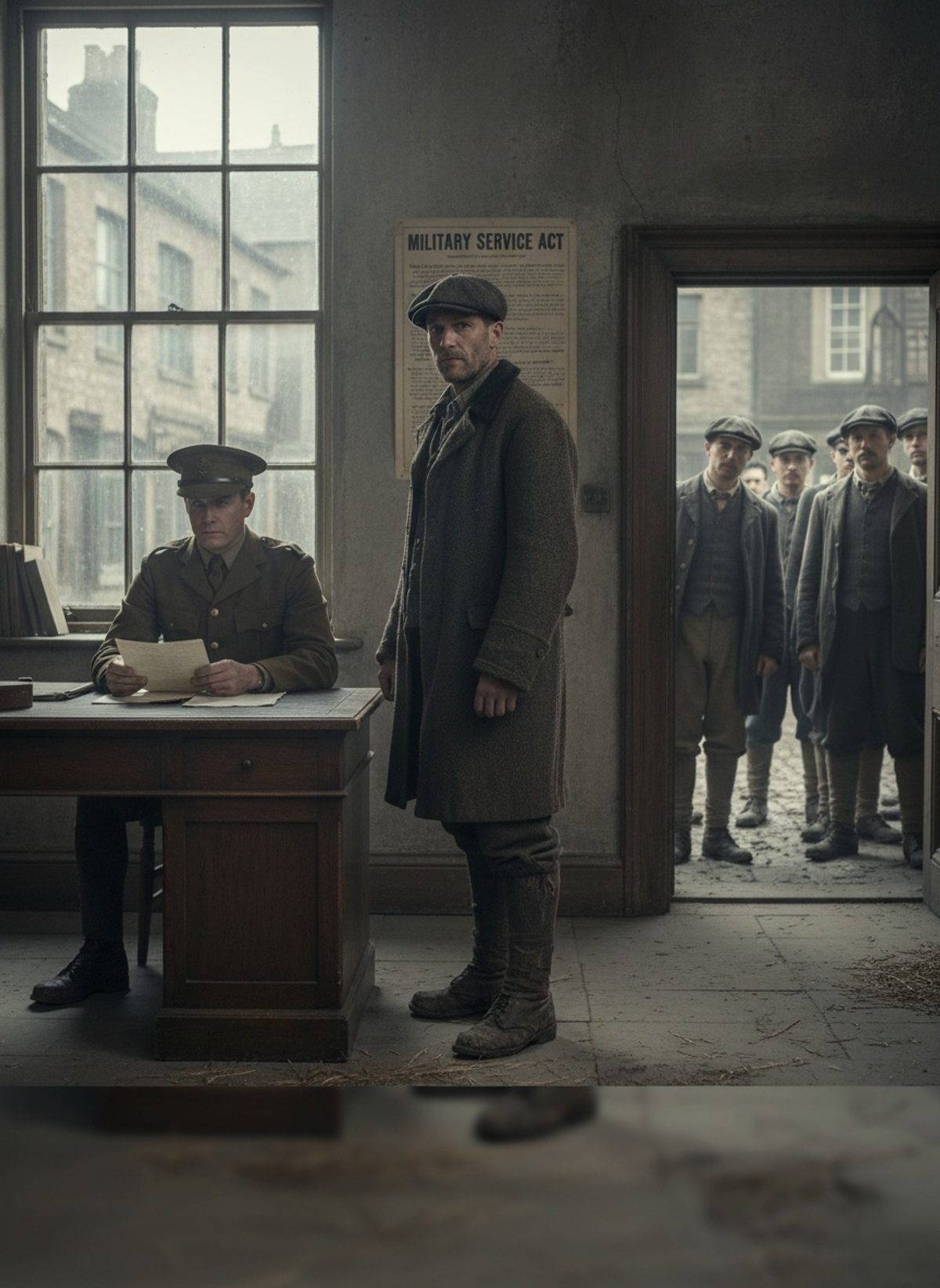
The Military Service Act of 1917 conscripted every eligible British male. But its reach extended beyond mere eligibility.
The End of Volunteering
In the early years of World War I, the British Army relied upon a tidal wave of patriotic fervor to fill its ranks. Kitchener's recruitment posters—bearing that stern, pointing finger—were iconic symbols, rallying the nation's young men to the cause. Mass enlistments stirred local pride and promised quick victories. But by 1917, the illusion of a short war had shattered, and the voracious appetite of the Western Front had consumed the eager volunteers. Britain found itself at a crossroads, with its recruitment campaign sputtering to a halt.
The Military Service Act was enacted out of desperation. It was designed to seize upon every ounce of manpower available. It wasn't just about numbers anymore; it was about survival. Every man aged 18 to 41 was potentially a soldier. No longer could they rely on voluntary joiners. This was a new era where choice gave way to obligation, where necessity bred compulsion.
Invisible Threads: The Conscription Machine
The war's reach was omnipresent, stretching its long fingers into every nook and cranny of British life. The bureaucratic machine that the War Office forged was exhaustive, pulling in data from registers, electoral rolls, and employment records. It classified and cataloged, ensuring no stone was left unturned. This network was not just about finding soldiers; it penetrated the communal fabric, reshaping public and private spheres alike.
Read next: When Gordon Stood at the Window in Khartoum, 1885
Before the act, various sectors operated under the assumption of exemptions. Farmers believed themselves crucial to maintaining food production, industrial workers thought their factory roles shielded them, and civil servants could only imagine being indispensable. Yet as the war persisted, these safety nets began to unravel. The unyielding need for more soldiers meant exemptions were rescinded, and every male became a potential recruit. It was a startling realization that no one was truly safe from the war’s grasp—not even those serving the realm from home.
Hidden Stories and Silent Sacrifices
Beyond the sterile records and faceless mandates lay stories of real men, plucked from their everyday lives and thrust into an alien world of trenches and artillery. Men like the cobbler from Devon, known for his deft hand with leather, suddenly found himself crafting makeshift dugouts from sandbags. Or the schoolteacher from Yorkshire, whose lessons shifted from arithmetic to learning the geography of Ypres and the strategies of the Somme.
These were the untold tales—a weaving of individual histories into the larger narrative of war. The communal halls once buzzing with village gossip now echoed with farewells. Elderly parents clung to forlorn hope as their sons marched away, and families adapted to absent fathers and brothers. Such personal sacrifices resonated through generations, leaving a legacy of resilience and loss.
The Seeds of Change
As 1917 waned, the Military Service Act's ramifications extended beyond its immediate purpose. It revealed the seismic shifts underfoot, heralding changes that would ripple into the future of British society. Women, called forth to fill the labor void, began to challenge societal roles and redefine their place within the public sphere. This wartime necessity set in motion cultural currents that would lead to the suffrage movement gaining traction, weaving a new social fabric that bore the imprints of the war and its recruits.
In the end, the act of calling up Britain’s last reserves became more than a military measure. It was a reflection of the nation’s grit and willingness to adapt under duress. These decisions and their subsequent effects are worth revisiting, not just in textbooks, but in the annals of collective memory. They illuminate how a society weathers its darkest days and emerges transformed, lending insights that remain vivid and salient today.