The rhythmic scuff of sandal on gravel was the only sound breaking the silence of the Tibetan plateau. Nain Singh stopped, his breath steaming in the icy air, and discreetly flicked his thumb against the bead of his prayer wheel. Another step counted. Two thousand miles of terrain lay behind him, each yard laboriously tallied in his mind, his only companions the wind and the horizon.
The Secret Mission
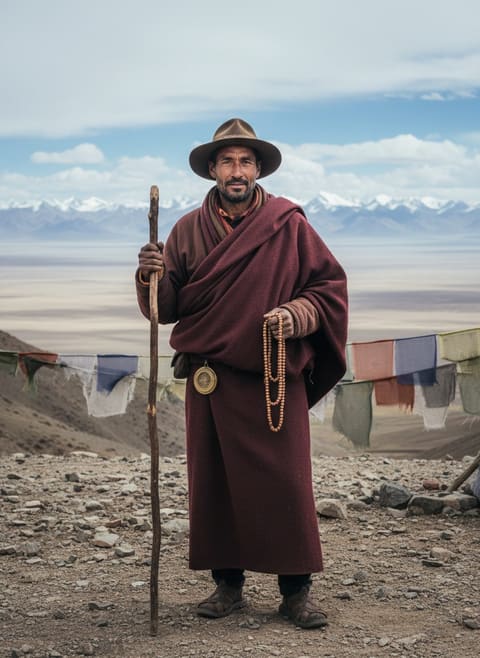
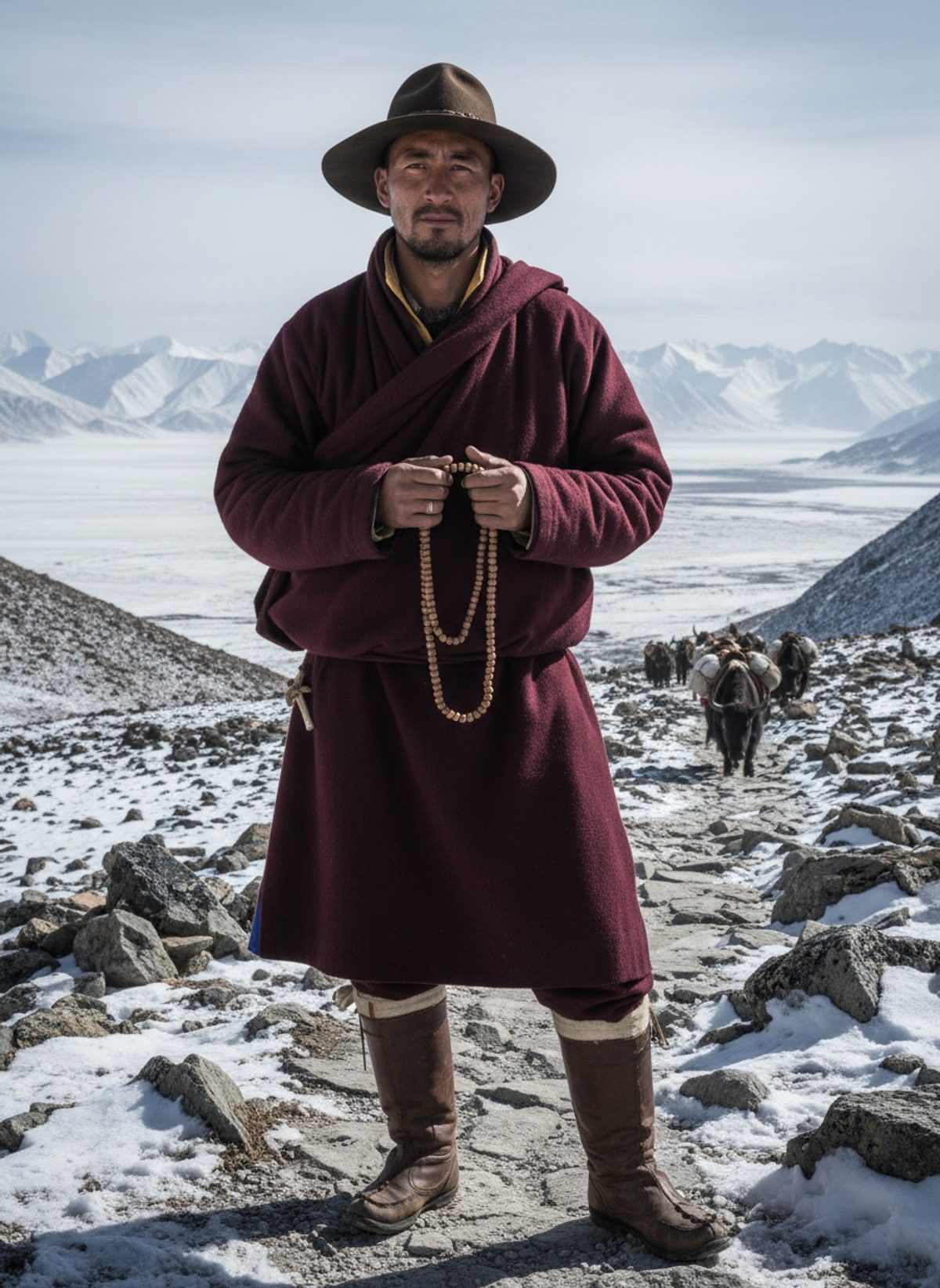
Nain Singh, a seemingly ordinary schoolteacher from the Himalayas, carried an extraordinary secret. Trained in the clandestine art of surveying by the British, he was more than a mere traveler. With Tibet's borders closed off to foreigners under threat of execution, the Great Trigonometrical Survey of India needed eyes on the ground – they found them in Singh. Disguised as a devout pilgrim, he bore no high-tech instruments, only a custom-made prayer wheel, altered to quietly record paces as he moved through uncharted lands under his pseudonym, an artifice as brilliant as it was dangerous.
Every bead on Singh’s prayer wheel represented a step. Each step brought him closer to unraveling the mysteries of the secluded Tibetan empire, a territory that was more myth than map in the Victorian Age. British authorities yearned to unveil the kingdom’s secrets without provoking its wrath, and Nain Singh was the cunning solution. His mission was a delicate weave of diplomacy and subterfuge, undertaken with quiet bravery masked in humble demeanor.
A Landscape Unforgiving
Tibet's otherworldly landscape was as daunting as it was breathtaking. The towering peaks appeared to scratch the sky, their snow-clad summits glistening like white crowns. Singh traversed bleak mountain passes that cut through jagged ranges, their treacherous paths wrought with perils that were invisible to the untrained eye. Even on the best days, the thin air was a laborious drag in the lungs, a constant reminder of the altitude. Nights plunged into darkness and bone-numbing cold, with only the stars for company.
Read next: When Britain Seized an Island and Dared the World to Stop It
Despite the punishing environment, it was amidst this barren beauty that Singh constantly measured his bearings. The crude balance of day and night leading his path, those same stars that glittered threateningly in the freezing dark, were also his guides, whispered hints of geography and direction for the keen observer. Singh’s unswerving dedication saw him through river torrents and mountain snows, navigating him with precision where maps had yet to lay claim, a lone figure against the intimidating expanse.
The Forbidden Cities
Entering Tibet's forbidden cities was an act that hovered between awe and peril. The city of Lhasa, cloistered from foreign eyes, unfolded before Singh as a tapestry of sounds and scents. The air was perfumed with incense, its thick plumes curling from monasteries as monks chanted prayers. The Potala Palace stood as a monumental guardian, its formidable presence as much a fortress as a residence for the Dalai Lama, an incessant whisper of power and mystery.
In Lhasa's bustling crowds, Singh’s disguise was his shield. Speaking the local languages and adopting the pilgrim's garb with a deftness that belied his foreign mission, he moved through the city with a quiet assurance. Each step was a silent vow to his mission – to track the shifting streets and hidden passageways, yet remain unseen and underestimated, a ghost moving through forbidden quarters. The inherent danger underscored every interaction, each curious glance a potential threat, the unmarked line between observer and intruder as thin as rice paper.
Read next: When Cornelia Sorabji Stood Before a Purdah Wall, 1904
The Map of the Heart
For two years, Singh navigated across the roofs of the world, returning to India with intel more substantial than gold. The information he gathered redrew the maps of Asia. His undocumented journey, led not by the giant strides of ambition but the careful, deliberate steps of a mission, painted cartographic contours on regions once utter blankness. Nain Singh had proven that one man's vision could indeed shift the borders of understanding.
The influence of Singh's survey extended far beyond mere cartography. His work opened pathways for commerce, diplomacy, and scientific inquiry, no small feat in a time when borders were as rigid as the mountains he traversed. The courage and endurance embedded in each step challenged conventions and inspired a greater appreciation of cultural bridge-building.
As we trace the deliberate impressions of his travel, Nain Singh's journey emerges as a lesson not only in cartography but in human spirit. The landscape of Tibet was forever altered by the quiet tenacity of a Himalayan schoolteacher who dared to count his steps across a forbidden empire, reshaping what lay beyond the known, and presenting a new vision of the world unto itself. With each step he counted on his beads, Singh not only charted a physical realm, but also ventured into the unseen territories of perception and intercultural connection — a true *Jewel in the Crown* of exploration and humanity.