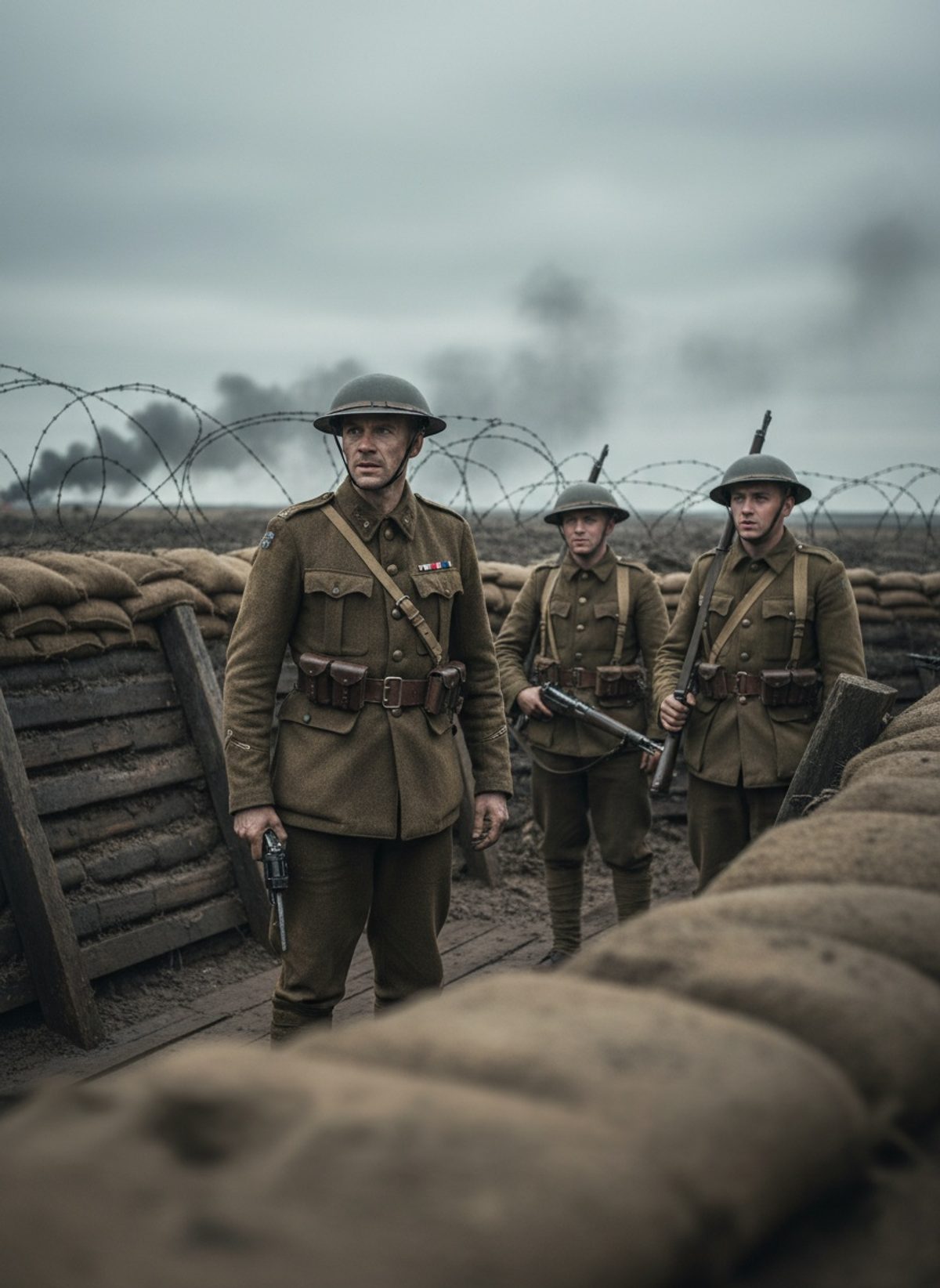
The crowd surged forward as the gunshot echoed through Ferhadija Street in Sarajevo, its report reverberating off the ancient stone buildings. The smell of gunpowder lingered in the air while the rattling of a car engine slowly came to a stop, marking an end to a journey that had gone eerily off course. Kneeling on the cobblestones, a young man, barely out of his teens, clutched the cold weight of the pistol, his breath quick and shallow from the deed just done. But even in that moment, neither he nor the gathering throng could imagine that this singular act would unravel the world, dragging millions into a nightmare of barbed wire and trenches.
From Apathy to Catastrophe
On that fateful June day in 1914, Archduke Franz Ferdinand of Austria and his wife Sophie were on a goodwill visit to Sarajevo, the capital of Bosnia-Herzegovina, annexed just six years prior by the Austro-Hungarian Empire. The streets were decorated with flags, and the summer sun was casting warm shadows on the city’s arcades. Yet, lurking beneath the surface was a cauldron of political tension, a pressure cooker of nationalist aspirations and empire entanglements threatening to explode.
Franz Ferdinand's route through Sarajevo was meant to be a showcase of imperial might and benevolence, but instead, it revealed a significant oversight in his itinerary: the security plan was dangerously flawed. After an initial assassination attempt earlier in the day was averted, fate, it seemed, took a cruel turn. In an effort to avoid the dense city crowds, the convoy took a wrong turn — a simple navigation error that brought the Archduke and his wife within arm's reach of Gavrilo Princip, a member of the secretive nationalist group known as the Black Hand.
The Ripple Effect
That bullet, fired with revolutionary fervor, was more than just a lethal projectile. It was a catalyst, setting off a series of alliances and counteractions that would envelop Europe in flames. Within weeks, a web of treaties and defensive pacts pulled nation after nation into a conflict few had foreseen. The Austro-Hungarian Empire saw its opportunity to assert dominance over Serbia, whose nationalist movements they blamed for the assassination. Russia stepped in to protect its Slavic brethren, and what could have ended as a localized war quickly escalated.
Read next: When Frederick Treves Walked Back Into Spion Kop, 1900
As tensions mounted, Germany, bound by its alliance with Austria-Hungary, declared war on Russia. France, allied to Russia, was soon drawn in. Meanwhile, the British Empire, initially reluctant to entangle itself in continental conflicts, found itself inexorably pulled into the fray through its commitments to Belgium and its own security interests. Thus, the Great War began, engulfing continents in its unrelenting grasp. An entire generation, brimming with ambition and courage, marched off to a war some believed would be a brisk campaign “to be over by Christmas.” Instead, it became a grueling endurance race of attrition and despair.
The Calculus of War
The figures from World War I are both staggeringly vast and painfully intimate. Within its four harrowing years, the war claimed the lives of over twenty million soldiers and civilians worldwide, sowed countless hearts with grief, and redefined the very nature of warfare with the introduction of mechanized combat. The British Empire alone saw nearly one million of its own perish, with many more returning home wounded, in body or mind, permanently scarred by the horrors they had witnessed in the trenches.
The war's reach extended beyond the immediate battlefield. Four major empires — the Austro-Hungarian, Ottoman, German, and Russian — collapsed under its weight, leaving a geopolitical vacuum that ushered in a myriad of new states while ending old monarchies. The specter of revolution haunted the lands, and the seeds of future conflicts were sown even as the combatants returned to uneasy peacetime. The war not only changed borders and governments but fundamentally altered philosophies, arts, and attitudes towards authority and sacrifice.
The Echoes of Sarajevo
Yet, amid the rubble of reshaped societies, the question lingers: How could a single moment have such monumental impact? Sarajevo's streets, steeped in history, became an unlikely crossroads for destiny's harsh twist. A wrong turn set the stage for an act that triggered a chain reaction, revealing the extraordinary interplay of chance and consequence. Gavrilo Princip fired not just a bullet, but a promise of the unforeseeable — a reminder that the fragility of human constructs can dictate the fates of millions.
The bullet that struck Franz Ferdinand echoes even today, a solemn testament to the unpredictable synergy between human actions and historical forces. The events of that day remind us of both the power of choice and its ramifications. A world unwound, empires vanished, yet the stories linger, urging us into reflection on the past's shadow over the present, and the perennial dance of hope and history.