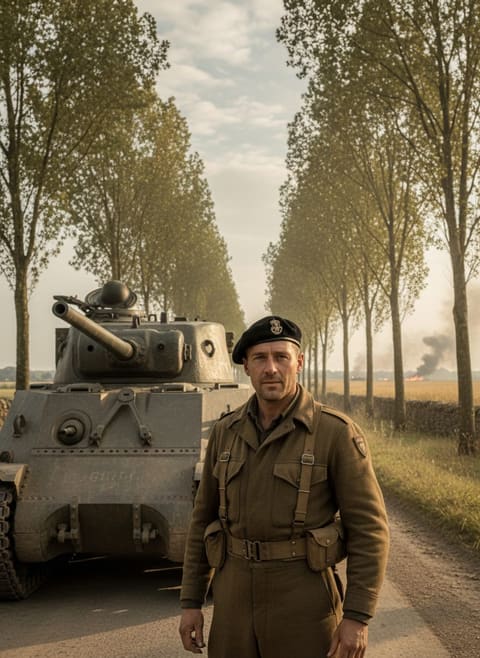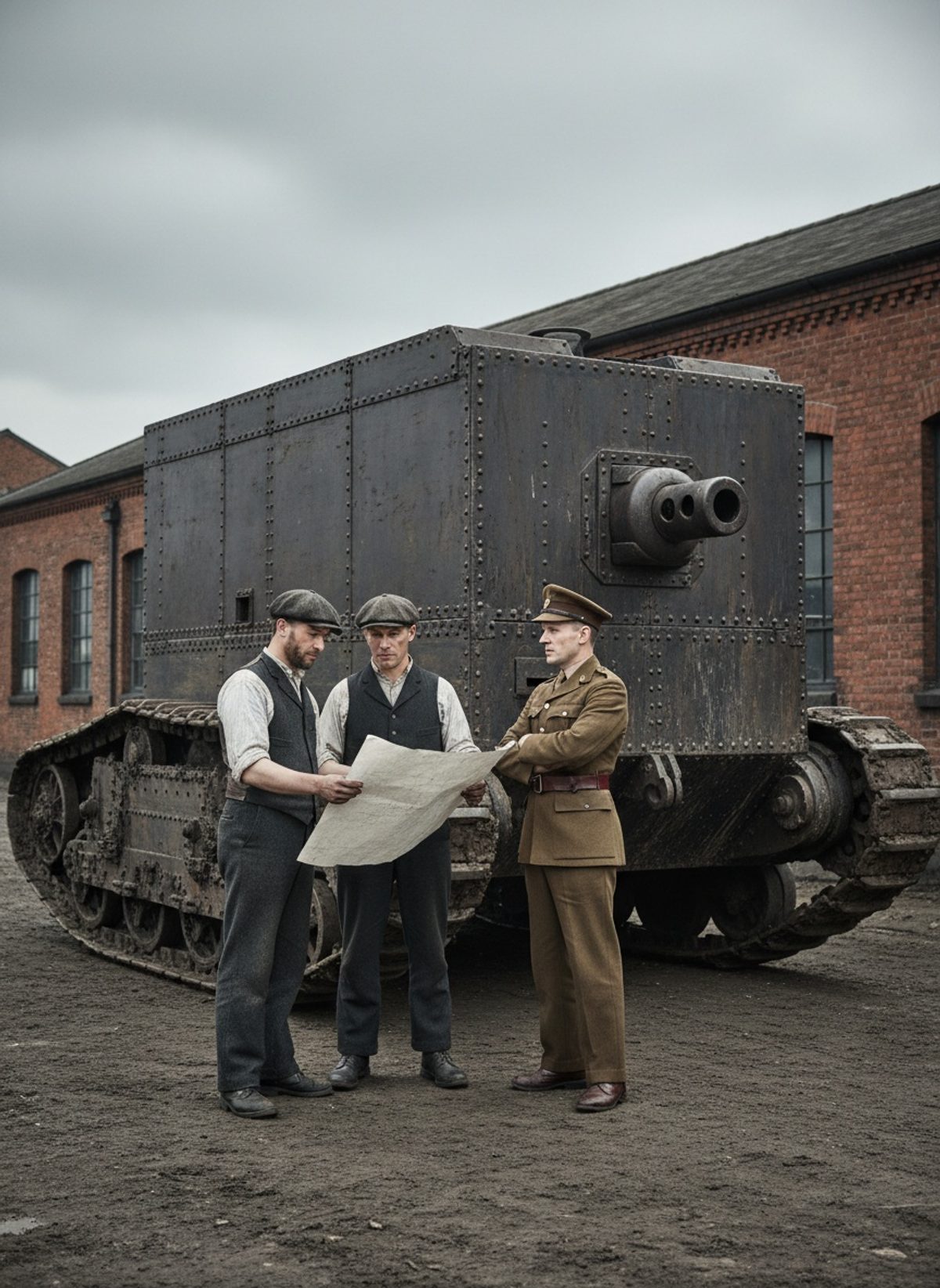
Little Willie was not much to look at. Yet, this ungainly contraption sparked the dawn of a new era in warfare.
The Birth of Little Willie
In the midst of the First World War, the British army faced an unyielding challenge: how to break through the entrenched lines that snaked across the European landscape. The stalemate-ridden trenches were defended by deadly machine gun fire, barbed wire, and artillery barrages, creating a battlefield of unimaginable slaughter. Desperation drove innovation, and in response, a group of British engineers embarked on what seemed, at first, like a mad venture: to create a "landship" that could traverse this no-man's land.
Work began in the summer of 1915 in a quiet corner of England, in the workshops of the Lincoln-based firm tasked with bringing this fantastic vision to life. There was nothing particularly impressive about Little Willie’s appearance—its boxy structure and awkward tracks made it look more like a bulky agricultural machine than a sleek war vehicle. This prototype was built to fulfill a singular yet daunting task: to create a machine capable of crossing trenches, crushing barbed wire, and absorbing the vicious hail of gunfire.
The early days were anything but promising. Little Willie was painfully slow, capable of a mere 2 miles per hour, and prone to frequent breakdowns. Its steel hull was meant to protect the crew from bullets, but reality proved it was merely a tough skin for a soft, vulnerable underbelly. Little Willie’s main armament was theoretical rather than actual—early designs considered mounting naval guns, an indication of its creators still grappling with the alien concept of mobile warfare.
Read next: When Piper Laidlaw Stood Up at Loos and Played, 1915
Despite these shortfalls, those involved held a quiet conviction that they were onto something transformational. The experimentations in these Lincoln workshops represented the first hesitant steps towards the modern tank. Little Willie was bulky and flawed, yet these very imperfections underscored an undeniable truth: traditional warfare was being inexorably left behind.
Under the Mask of Secrecy
The innovative spirit that birthed Little Willie was shrouded in secrecy. The project was undertaken with a cloak of confidentiality befitting a military endeavor, kept hidden from public and enemy eyes alike. Aware of the stakes and the potential for this new technology to alter the course of the war, the British maintained the utmost secrecy throughout the development process.
The term "tank" itself arose as a subterfuge, employed to mislead espionage operatives and potential German spies by implying these machines were merely mobile water tanks intended for the arid fronts of the Middle East. This simple ruse helped sidestep enemy curiosity and maintain the element of surprise. But this secrecy also belied the magnitude of the effort and imagination involved in transforming the blueprint into the battlefield behemoth.
Constructed by a team spearheaded by Colonel Ernest Swinton and architected in design by William Tritton, the machine was a testament to the ingenuity and persistence of these early pioneers who dared to dream beyond the limits of conventional warfare strategies. Little Willie began its trials on the fields of Lincolnshire, where its creators fought their own battles against unreliability and mechanical failures. Indeed, every tilt in the fields, every rumble on the testing grounds, gestured to a future freeing soldiers from the visceral nightmare of trench warfare.
The importance of Little Willie stretched beyond its functional failures. It was a symbol of a transitional era—of rapid technological evolution colliding head-on with dire necessity. It whispered the possibilities of mobility and mechanized warfare, shifting the paradigm of how wars could be fought and, ultimately, won.
Read next: When the Empire Promised Its Dead an Equal Grave, 1917
The Legacy Rolls Forward
Little Willie never saw battle. Yet, within months, the lessons learned from its shortcomings led to the development of a successor that did: the Mark I tank, which rolled into the annals of military history during the Battle of the Somme in 1916. The ungainly metal box that had been ridiculed by some military traditionalists and engineering skeptics alike proved its mettle.
The impact of Little Willie’s creation cannot be understated. It humbled skeptics and energized visionaries, reflecting a shift in military strategy with echoes drumming loudly into future conflicts. The industry of "landships" had been launched, ultimately transforming into the tank squadrons that became fundamental components of both tactical offensives and defensive operations in subsequent wars.
The machine that started as a cumbersome misfit in an engineering shed in Lincoln grew to symbolize a new wave in warfare that was relentless and unwavering. From these primitive beginnings, armored warfare evolved into the formidable tank divisions seen in the conflicts of the 20th and 21st centuries. Little Willie's seemingly rudimentary design propelled a revolution that neither its creators nor its audience could wholly foresee at the time.
The story of Little Willie is not just about one machine but rather a testament to human creativity under pressure. Today, the perceived simplicity of Little Willie belies the revolutionary idea it embodied—a machine born from fire and necessity, crawling confidently into the domain of innovation that forever altered the theatre of war. Its shadow, cast wide across the expanse of modern military engineering, invites us to consider how the tools of war are often birthed from unlikely progenitors, echoing through time with enduring ramifications.