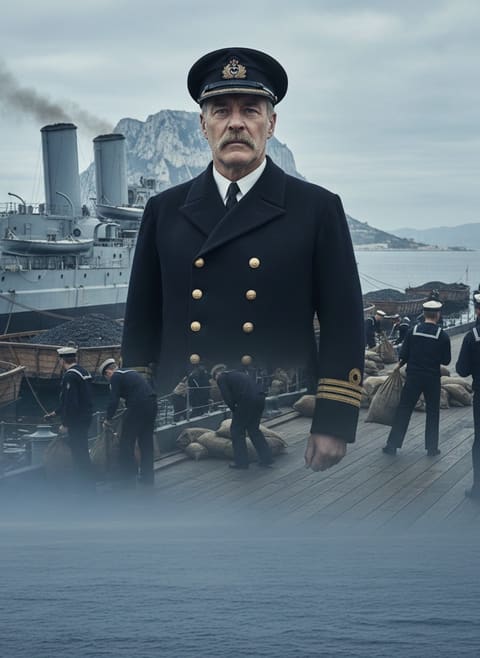
March 9, 1777. A chilling wind swept across Portsmouth Harbour, slicing through the morning mist like a phantom from the sea. Amidst the quiet bustle of naval operations, a fortress of destiny rested inconspicuously on the Gosport shoreline, known only to those who needed to know its name: Priddy's Hard.
The Secret Beneath the Waves
Located just across the water from the bustling naval dockyard at Portsmouth, Priddy's Hard played a silent yet pivotal role in the maritime dominion of the Georgian Empire. After the Gunpowder Plot of 1605, the memory of nearly losing Parliament to explosive treachery detonated the foundations for more secure provisions of gunpowder management. By the 1770s, Britain required something far more efficient than sound vigilance; it needed an impregnable fortress.
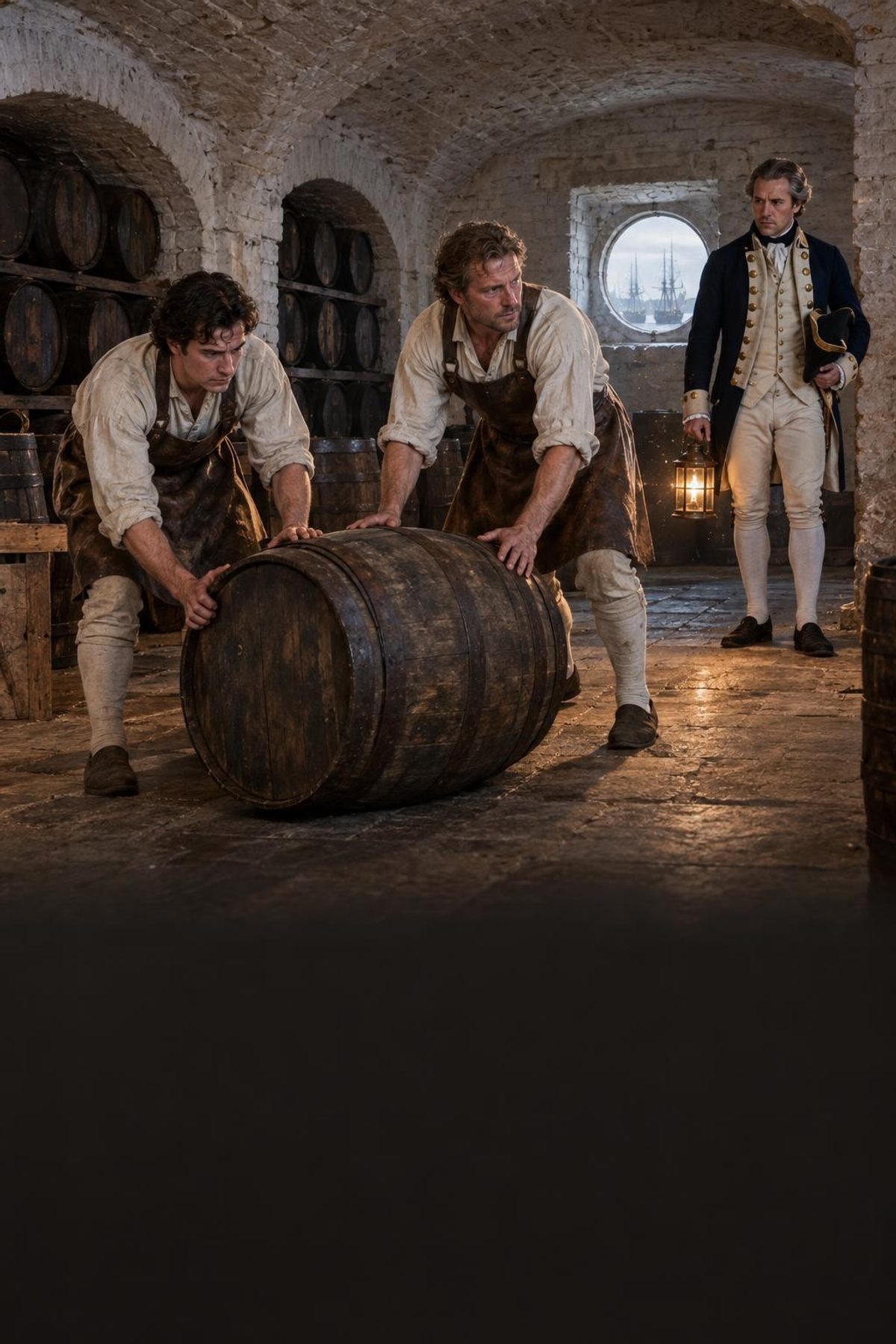
Priddy's Hard was the embodiment of this necessity. Constructed under layers of secrecy, it served as the Royal Navy's primary magazine for gunpowder. Unlike the rattling barrels that once threatened landmark destruction, the multitudinous barrels here were quietly preparing to establish Britain's naval supremacy. Within its fortified walls, thousands of barrels lay in meticulously organized rows, ready to be loaded onto ships that would enforce the Empire's will across global waters.
The men and women who worked at Priddy's Hard shared a singular burden of peril—handling enough explosive material to level an entire city. They faced this volatile task daily, their lives suspended on the fragile thread of discipline and routine.
Read next: When Chatham's Shipwrights Laid the Keel of HMS Victory, 1759
With calm precision, sacks were filled, barrels were rolled, and the steady rhythms of naval superiority were orchestrated in silence. Their unsung contributions served as the undercurrent to Britain's historical battles at sea, none more famous than Trafalgar in 1805, where every broadside fired whispered the ancestry back to this shoreline sanctuary.
Ensuring Continued Dominance
In the prime years of the late 18th century, as Britain's territorial ambitions expanded, the role of Priddy's Hard only grew more indispensable. The Royal Navy, the linchpin of the empire's defense and projection of power, relied on the magazine's seamless delivery of gunpowder to its fleets. Here, the art of war met the silence of kegs stacked one atop the other, waiting to fill the holds of ships bound for unseen horizons.
It was not just the mechanical process of distribution that defined Priddy's Hard—it was the culture of precision and care that prevailed there. Workers, aware of the immense risk, engaged in whispering conversations to avoid accidental sparks.
The sound of boots on gravel was absorbed by the thick earthen mounds surrounding the magazine, as every movement was tuned to prevent catastrophe. This devotion to procedure transformed potential annihilation into measured success and raised the spectre of Priddy's Hard into an essential pillar of Britain's naval warfare.
Read next: When HMS Victory Dropped Anchor at Gibraltar, 1805
Yet, its presence remained concealed from much of the general populace, protected by security protocols and natural defenses. Only those who shared its secret understood the significance of its contribution. As the royal flagships departed Portsmouth, they carried not just their daunting arsenal but also the confidence instilled by Priddy's Hard's persistent guardianship.
The Echo of Silence
March 9, 1777, marks more than just a day on the calendar; it encapsulates the enduring spirit of those who toiled within the fortress's walls. The invisible threads tying Priddy's Hard to the triumphs of the seas went largely unnoticed by history's chroniclers. Yet, its influence resonated across battles, imbuing each cannonade with the fortitude of silent sacrifice. While naval accommodations have evolved, the profound impact of Priddy's Hard remains etched in the legacy of maritime warfare.
The strategic foresight of securing gunpowder supplies reflected the Georgian Empire's prescient understanding of conflict as much an exercise in logistics as in tactics. This hidden fortress, like the spine of a lurking leviathan, ensured the naval fleet's strength and dexterity. Priddy's Hard was more than a depot—it was a silent protagonist in the grand narrative of Britain's ascendancy.
As modern commerce and leisure boats ripple the waters of Portsmouth Harbour today, they pass over the same waves that bore munitions born of Priddy's Hard. How many recognize the role this fortress had in shaping history? It stands as a testament to the power of unassuming prominence—an echo of the days when an empire's security and success rested upon the devoted efforts of those who remained steadfastly under the radar.