Samuel Baker was a man on a mission to uproot the Upper Nile's slave trade. But it is his wife, Florence, who emerged as the extraordinary spark that no one expected.
The Call to Suppress Darkness
In 1869, amidst the frenzy of the Scramble for Africa, Samuel Baker embarked on a second African expedition that carried Queen Victoria's mandate to destroy the Nile slave trade from the inside. Famous for discovering a lake previously unseen by Europeans, Baker now faced tasks that demanded more than navigational skill. He was charged with unraveling one of the darkest threads in humanity's tapestry—the Nile slave trade.
Baker was accompanied by his intrepid wife, Florence, whose spirit of adventure and resolve rivaled her husband's. Not content with remaining at the headquarters, she dived headlong into actions that defied the conventions of Victorian womanhood. Florence, with her striking persona, was determined that her steps would venture into territories unmapped by European women. And so it was, in bustling slave markets, that Florence Baker carved her own path in history.
Florence: More Than Just a Companion
Florence's presence was not merely symbolic; she was actively engaged in the local proceedings. Armed with resolve and a commanding presence, she visited slave markets, previously considered dangerous for anyone with a mind for humanity, let alone a European woman of her status.
Read next: When Frederick Russell Burnham Scouted the Ndebele Alone, 1896
Her method was fearless, stepping directly into these domains of despair and bargaining for the lives of the captives. More than a few raised eyebrows were met when she addressed the enslaved by their names, breathing new life into souls diminished by oppression. Her intervention disheartened the slavers, who were unaccustomed to procedural humanization in such settings.
This direct engagement spoke volumes. In an era when women typically adhered to rigid societal roles, Florence acted with astonishing independence. She knew these names, these stories, because she engaged with the people, not as subjects of her husband’s mission but as individuals. This interaction drew a strikingly human line between the political enterprise of colonialism and the personal crusade for human dignity.
Standing Tall Amidst Consequence
Florence's interactions were not without consequence—her actions challenged deeply ingrained systems, causing friction with both local enslavement networks and European allies unaccustomed to such overt female involvement. Yet, it was this bold defiance that became a catalyst for lingering change. Her efforts sparked conversation and curiosity among European administrative circles, planting seeds of change that extended beyond immediate results.
But it was not just about freeing individuals on that day. Each name and each life represented a blow to the heart of an industry steeped in human misery. Florence’s work symbolized more than personal bravery; it was an exemplar of courage and empathy manifesting on an imperial stage, hinting at the seismic shifts yet to come as the Scramble for Africa unfolded.
Read next: When Samuel Crowther Baptised a King on the Niger, 1888
Challenging the Impenetrable: Into Unmapped Terrains
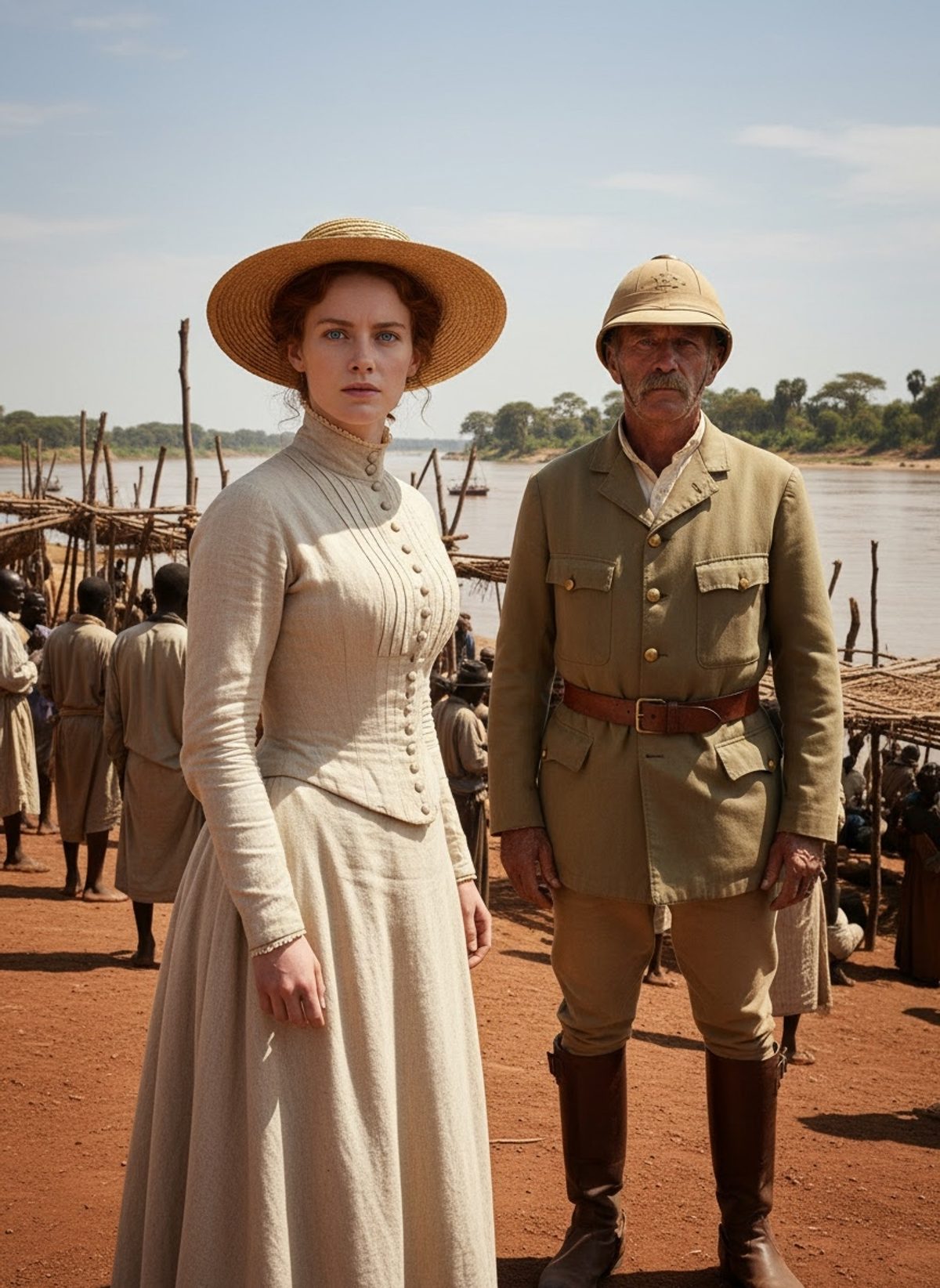
While Samuel pursued policy and strategy to dismantle the trade networks, Florence ventured into the literal and metaphorical markets—spaces where no European woman had laid foot before. The visuals of her navigating through these alien terrains speak the unsaid. Fashioned in flowing Victorian attire amidst the arid African climates, she was an irrepressible force of change.
Her presence illuminated the courage that many didn't see coming from the Victorian Empire. The backdrop of her actions interwove with the broader canvas of imperial politics and social reform. Unknown lands, untold stories, and unfolding epochs had a visitor who represented more than her own story—she represented a potential future grounded in something beyond imperial assumption.
Echoes of Defiance
Florence Baker’s role in the dismantling of the slave trade underscores the sometimes hidden contributions of women in the history of empire. She rode into uncertainty, unarmed except with conviction and the will to speak life to freedom. Her name may not have the echo of her husband’s exploits, yet her steps left indelible prints on the tracks of human rights long before the term became commonplace.
More than a figure on the margins of Baker’s mission, Florence embodies a spirit of undeterred defiance that challenges societal constructs. Her story reminds us that history is not always written by parliaments and armies. Sometimes it is brought to life by those who step out of expectation and into the core of humanity’s map, paving roads for change where none seemed plausible.