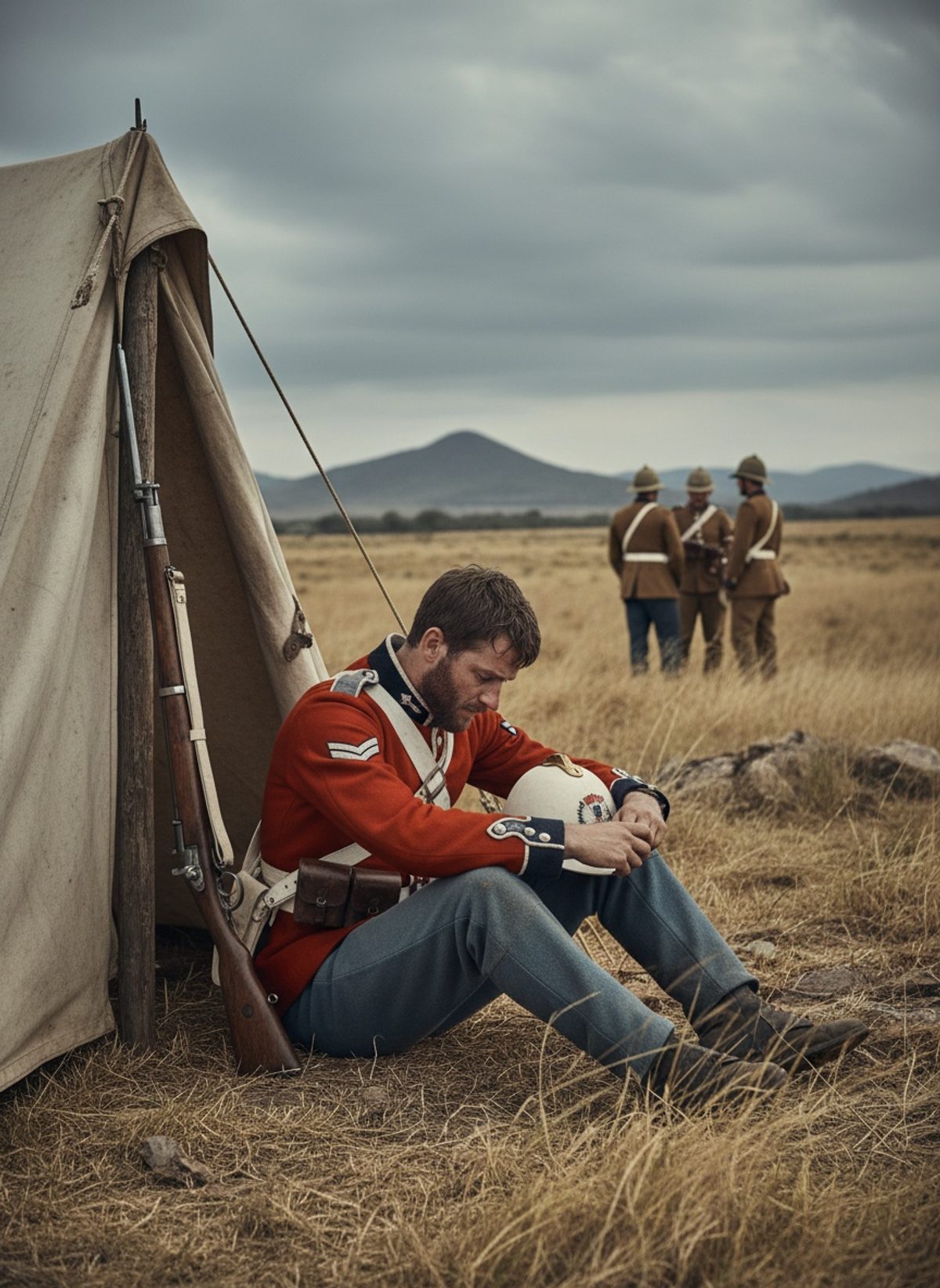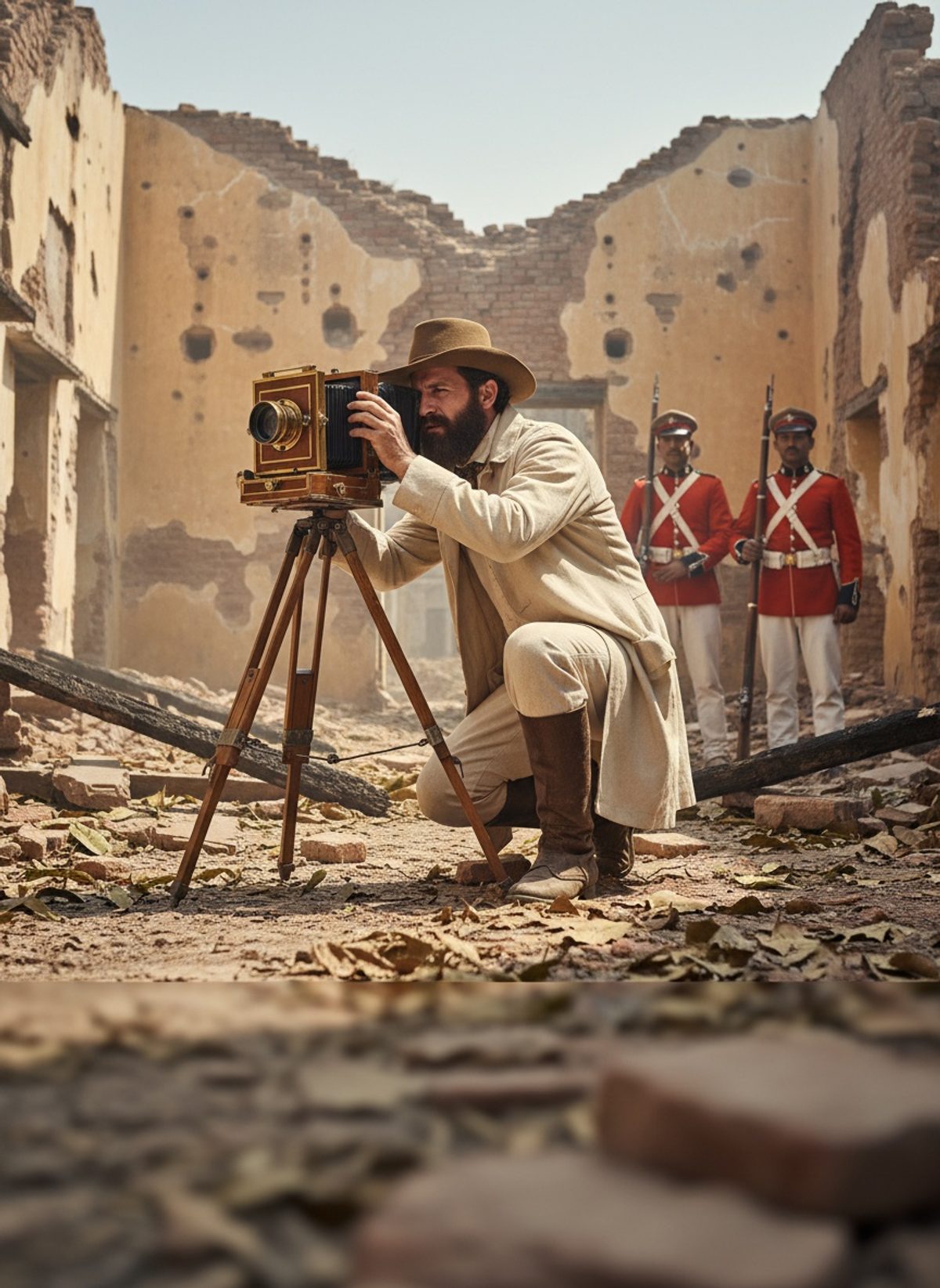
He wasn't British, but his work would soon stare across British coffee tables. Felice Beato was an Italian-British photographer, and in 1858, he captured history—and shattered Victorian sensibilities—through a lens that stared unflinchingly at the ravages of the Indian Mutiny.
The Ruins of Lucknow
The air hung heavy with the smell of gunpowder and decay when Felice Beato walked into Lucknow in the aftermath of the Indian Mutiny of 1857-1858. This rebellion, a cataclysmic uprising against British colonial rule, had left the city in ruins, its streets littered with debris and echoes of violence. With his trusty camera in tow, Beato was there not to participate in the conflict but to immortalize its debris. Photography was a nascent art, just two decades old, and its application in capturing war was revolutionary. No artist's paintbrush had captured human suffering like Beato's lens did.
Lucknow was not just any city. It was a bastion of resistance and a scene of prolonged bloodshed during the mutiny. The Battle of Lucknow saw some of the fiercest fighting, with British forces enduring a grueling siege before eventually securing their hold. As a scene set for photography, it offered Beato both a chilling challenge and an unprecedented opportunity. He ventured into its most devastated corners, immortalizing images of crumbled walls—silent witnesses to the horrors that had unfolded within their stone carcasses.
The idea of a photograph portraying stabbed dignity and punctured pride was novel. Through Beato's work, the British public found themselves confronted with sepia-toned windows into a reality previously confined to the imagination. The haunting stillness of the images—a stark contrast to the chaos they silently proclaimed—moved viewers across Britain. The underpinnings of imperial power were laid bare, unfamiliar and uncomfortably intimate.
Read next: When Captain Hedley Vicars Walked Into the Trench at Sebastopol, 1855
A Staged Narrative?
While Beato's photographs were groundbreaking, they have not escaped scrutiny. Within the haunting array of desolate streets and dead soldiers, suspicions arose: were some scenes artfully arranged? After all, photographs weren't yet capturing mere moments in time; they could be constructed to convey narratives and evoke emotions. Reports surfaced that Beato might have rearranged bodies or directed his "subjects" to amplify the somber drama.
The ethics of these purported manipulations linger as a shadow over Beato’s legacy. In an era that was only just beginning to grapple with the imperceptible line between reality and representation, this revelation was a profound shock. Yet, it also provokes an essential question: do staged elements undermine the emotional truths they were designed to convey? Regardless of the veracity behind every scene, Beato’s images encapsulated the dissonance of empire—the clash between civilization and brutality, between order and chaos. His purported embellishments added a layer of complexity to an already contentious historical recording.
These suspicions of staging did not wholly detract from the historical impact. The photographs were an awakening, stirring debates about imperial policy and the moral responsibilities of a ruling power. The Victorian public, ensconced in their homeland, had wrestled with distant concepts of authority and revolt; Beato's pictures brought the conflict uncomfortably close. His lens offered an unfiltered glimpse into the human cost of empire-building—or rather, perhaps, a glimpse through his interpretive filter.
Why These Images Matter
In dissecting Felice Beato's work, one unveils an enduring legacy of imagery that transcends its immediate time and context. The photographer pioneered a tradition that has become central to the world's understanding of conflict: true war photography. His gaze froze the anguish of Lucknow, and that of countless other spaces, onto photographic plates. In doing so, he painted the first frames of a broader narrative—the intimate relationship between imperial force and its repercussions.
Through the echoes of his camera lens, a conversation begun over a century ago grows louder. Beato’s work implored viewers to consider the ramifications of distant policies and human consequence. Now, more than ever, in an age rich with images and immediate news, the foundational layers laid by Beato urge reflection on each photograph’s power and purpose. These black-and-white secrets extend an invitation to ponder not only the content and context but also the creator's motives: A reminder of the perennial dance between consequence, representation, and memory.
His lens may have captured the unthinkable, yet it is the questions his work raises that remain vibrant. Felice Beato’s photography clutches the heart of a narrative that challenges us to see—and question—the intricacies of human conflict within the ambit of empire. It teaches us about what was seen, what was shown, and the images that survive, undaunted and undiminished. These photos demand we ask ourselves: what do we choose to remember, and at what cost?