July 1941. A 16mm camera whirred to life on a quiet street in Amsterdam.
The Accidental Capture
In the mid-summer of 1941, Amsterdam was a city teetering on the edge of war's ravages. Despite the looming shadows of turmoil, life found ways to cling to normalcy. Amidst this backdrop, a neighborhood wedding was unfolding—a joyful distraction in a world steadily growing darker. Rings of laughter echoed from the cobblestone street, as a 16mm camera, a rare luxury in those days, churned away to capture the celebration.
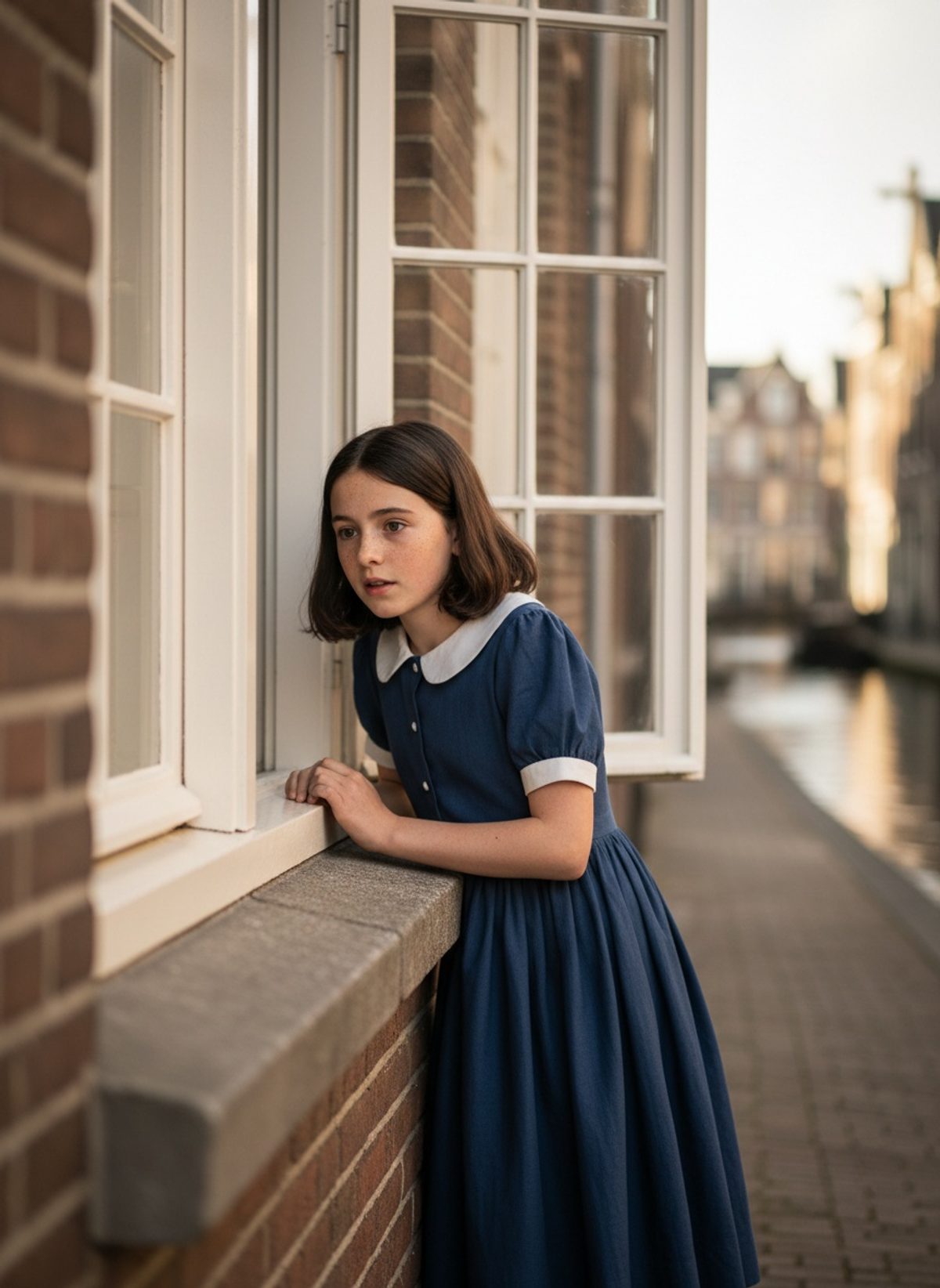
As the groom nervously adjusted his tie and guests gathered in their finest attire, a serendipitous turn of the camera lens directed the viewers’ gaze toward a nearby apartment building. There, in one of the upper-story windows, a young girl with a round face and dark hair leaned out to watch the festivities below. Her name was Anne Frank—unbeknownst to the cameraman and the jovial crowd, they were capturing what would become the last moving image of the girl whose diaries would later captivate the world.
This brief moment of curiosity, where Anne paused to peer into a scene of celebration and joy—so innocent and rich with the promise of youth—gave no hints of the writing she would undertake, nor the tragedy that awaited. Yet, in that fleeting second, the film immortalized Anne not as a historic figure or a symbol of suffering, but as a child caught in a moment of everyday enchantment.
Read next: Lachhiman Gurung Had One Hand. He Held the Line.
A Neighborhood on the Brink
In the summer of 1941, Amsterdam was under German occupation, its streets marked by both subtle anxieties and quiet resistances. This tension lingered like a shadow over Merwedeplein, the neighborhood where the Frank family resided. Here, neighbors maintained appearances, clinging to routines despite the oppressive regime looming over the Netherlands.
The Frank family, originally from Frankfurt, had sought refuge in Amsterdam in 1933, looking to escape the rise of the Nazi regime. Otto Frank, Anne's father, had moved his family to what he hoped would be the peaceful safety of the Netherlands. But as the specters of war drew nearer, it became increasingly clear that safety was an illusion.
On that July day, as the camera swept past the brick facades of Merwedeplein, it did more than document a wedding—it captured the calm before the impending storm. Less than a year after the joyous gathering, in the dead of night on July 6, 1942, Anne and her family would slip away from this place of attempted refuge to take shelter in the cramped quarters of a secret annex, hiding from the encroaching darkness that threatened their very existence.
This footage, no longer than a heartbeat, offers a haunting glimpse into the ordinary life on the brink of extinction. The stark contrast between that vibrant day and the lives soon to be shadowed in secrecy and fear is made poignant by those few seconds of film.
Read next: The Boy Who Ran Into the Fire. He Did Not Stop.
The Testimony of Film
While no one could have guessed the significance of that film reel at the time, it stands today as an extraordinary historical artifact—a testament to the unexpected ways in which history preserves moments. The footage reminds us of the power of the camera to find grace in the mundane and to grant a voice to those whom history would otherwise silence.
That brief, flickering image serves as the sole motion picture testimony of Anne Frank. Her youthful face at the window stands in stark contrast to the still photographs and the somber gravity of her written words. In her diary, Anne Frank chronicled both the dreams and fears of a young girl living under unbearable circumstances, yet that longing look from the window on a joyous July day paints a picture of her life untold, one ripe with possibility that the world never knew.
As the final frames of the wedding footage fade out, we are left contemplating the greater tapestry of history. Within its weave are threads of individual lives, briefly illuminated, then tucked away into the depths of the past. The captured film of Anne Frank is but a whisper across time, an accidental snapshot that refuses to disconnect from our collective consciousness. It challenges us to remember not only the tragedy that befell her and her family but also the resilience and hope that endure in the face of such adversity. In capturing Anne's final filmed moments, we are reminded of the lasting impact of one life and the eternal importance of bearing witness.