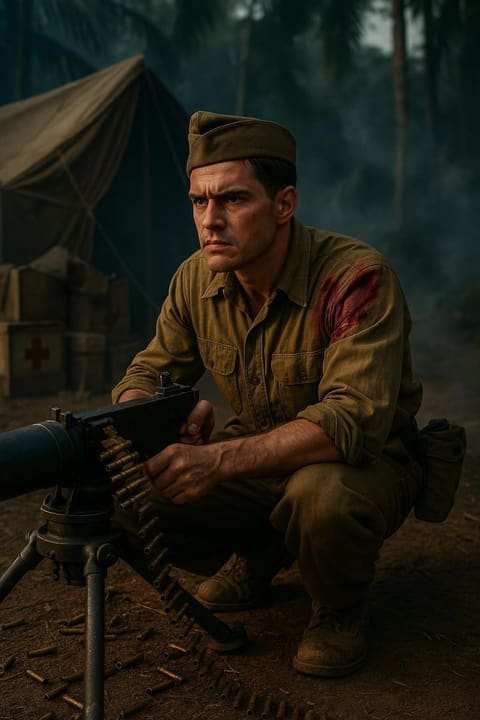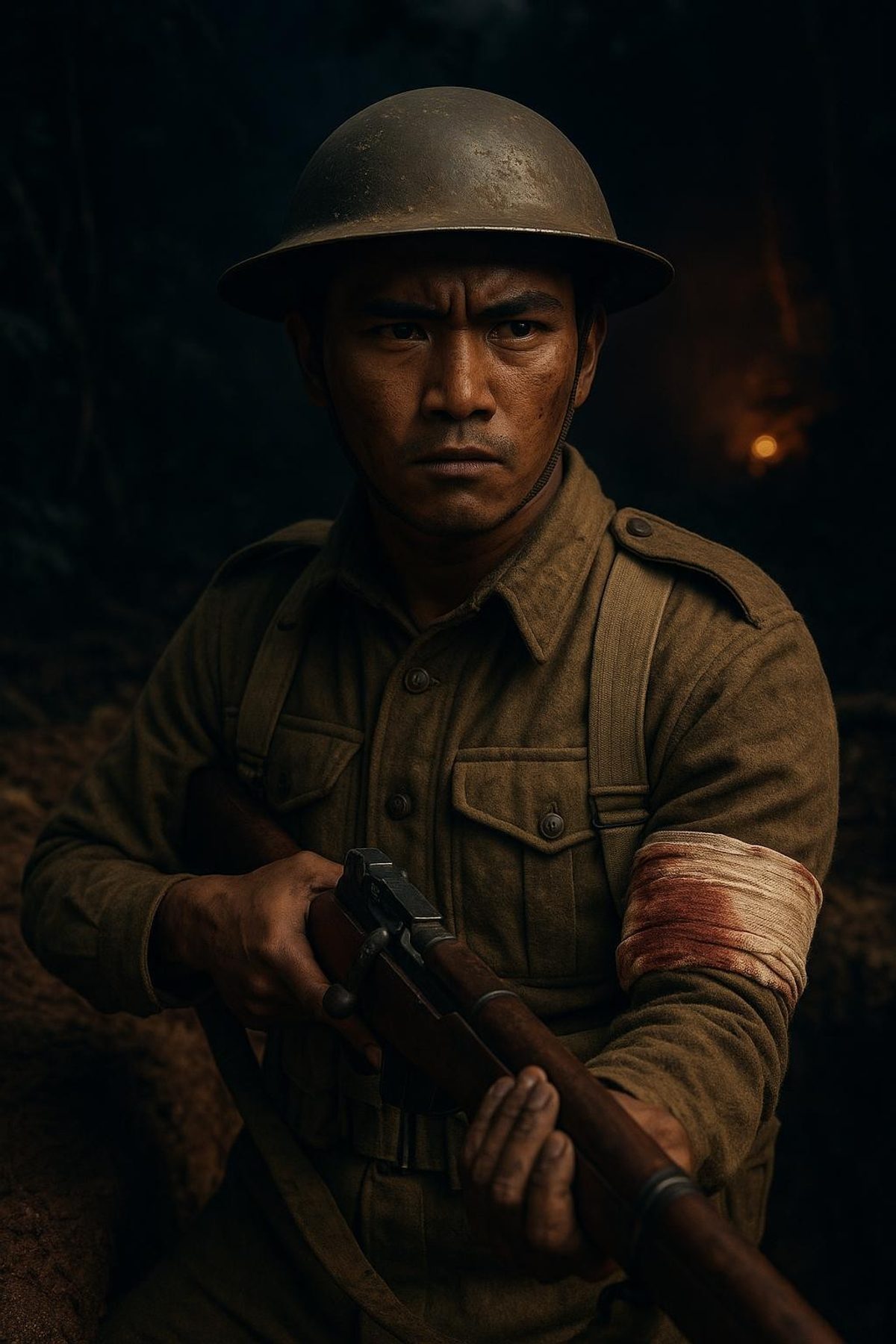
A burst of blinding light, the raw explosion, and the searing pain hit him all at once. Lachhiman Gurung blinked through the dust and screams, his ears ringing from the blast. His right hand was mangled, useless, yet he refused to relinquish his grip on his post. With unfaltering resolve, he steadied his rifle against the earth, his left hand firmly doing the work of two. In the claustrophobic confines of a trench teeming with chaos, the 4ft 11in Gurkha rifleman faced down his fate.
It was the early hours of May 12, 1945, at Taungdaw, Burma, during World War II. Gurung's battalion was entrenched as enemy forces launched an overwhelming assault. Outnumbered and cut off from the main body, the position occupied by Gurung and his comrades stood as the last bastion against a tide of Japanese soldiers showing no signs of relenting. Each grenade landed with a heart-stopping thud on Burmese soil, yet Gurung remained steadfast. With the first two grenades hurled out of the trench as if they were nothing more than stones, hope teetered on the edge of a knife.
The heroic defiance against such odds soon turned the battlefield into a testament of one man's refusal to succumb. The third grenade was betrayed by time, exploding in his grasp. Shards of metal tore into Gurung's face, body, and right leg. Yet, he persisted. Despite his gruesome injuries, he clung tightly to his rifle, a weapon embodying his spirit, and his cry echoed into the night, “Ayo Gorkhali!”—a battle cry that lifted from legend into reality.
For four grueling hours, Gurung held his ground. Every pull of the trigger was fueled by unyielding valor and an indelible sense of duty. The sharp crack of rifle fire was punctuated by deafening silence, the continuation of an ancient dance of predator and prey. The dark silhouettes charging his trench were met with repetitive blasts, marking each futile advance. His actions, driven not merely by survival but by the burden of an entire platoon's safety, became the fulcrum on which the battle teetered.
Read next: The Steel That Came Home: How 9/11's Ruins Became a Warship
It was in these moments of trial—where military discipline intersected with sheer will—that an indelible bond was forged not just with his fellow soldiers, but with history itself. This skirmish was not an isolated instance of fortitude for the Gurkhas, renowned for their fearlessness and unparalleled loyalty. They had, after all, been tested time and again, from the rugged Afghan terrain to the mud-drenched trenches of Europe during World War I. But the sight of one man, silhouetted against the dawn, refused to be overshadowed by the numbers that opposed him.
When dawn finally touched the battlefield, the cruel toll was evident: 31 enemy soldiers lay motionless before Gurung's position. The sheer disbelief of the opposing forces couldn't erase the fact that they had encountered not just a single rifleman, but an indomitable spirit. Gurung was not merely holding a trench; he was preserving a tactical stronghold that shielded the wider position from being obliterated.
His extraordinary resistance ensured the safety of his platoon and showcased the mettle of a fighting force that took pride in their heritage and martial prowess. The Gurkhas, part of the British Indian Army, were imbued with a legacy of bravery. They were crafted from a spirit that couldn’t be quantified by height or weight, but rather, by a heart forged in their native mountains of Nepal.
Gurung’s conspicuous gallantry did not go unrecognized. Later that year, on December 19, 1945, he stood before the Viceroy of India, Field Marshal Lord Wavell. The setting was solemn, yet the atmosphere brimmed with a respect that transcended words as the Victoria Cross was pinned onto his chest. This was not merely an accolade but a symbol that spoke volumes of Gurung's resolve—a commitment to duty that refused to yield, even in the face of death.
Read next: Every Man Watched the Capsule. One Number Changed Everything.
The end of the war did little to quiet the fiery spirit within Gurung. Though the right side of his body bore the scars of his steadfast fervor—a missing eye, a shattered hand—he continued to serve till 1947. When the 8th Gurkhas became part of the newly independent Indian Army, his allegiance to his regiment was unwavering.
Returning to his village in Nepal, Gurung found solace amidst the familiarity of home. The small holding he farmed was far removed from the fields of battle, yet each furrow in the land carried the echoes of determination, a reflection of his unyielding sense of purpose. Married twice, he raised a family, grounding his legacy not just in tales of bravery, but in the continuation of life itself.
Years flowed past, yet in the annals of military history, Gurung's stand at Taungdaw did not diminish. It echoed the quintessential tale of an individual's ability to shape the course of events through personal sacrifice and unrelenting bravery. His actions illustrated that courage was not confined within the boundaries of ability or circumstance, but propelled by the inner tenacity that defies odds and redefines battles.
Gurung's life story resonates beyond the rigid barriers of nationality or service. It communicates an essential truth about the human spirit—a truth that reveals vulnerabilities can become strengths, and that in moments of deepest crisis, one person can indeed hold the line. In the breadth and scope of history, it is such stories that remind us of our capacity to endure, and to inspire hope and resilience across generations. Lachhiman Gurung did not merely hold ground; he fortified the timeless narrative of bravery, ensuring it would be told anew with every retelling across cultures, lands, and eras.