Everyone knows Winnie-the-Pooh. Few pause to consider the bear behind the bear. The story starts not in the Hundred Acre Wood, but during the outbreak of World War I.
A Soldier, a Bear, and an Unlikely Meeting
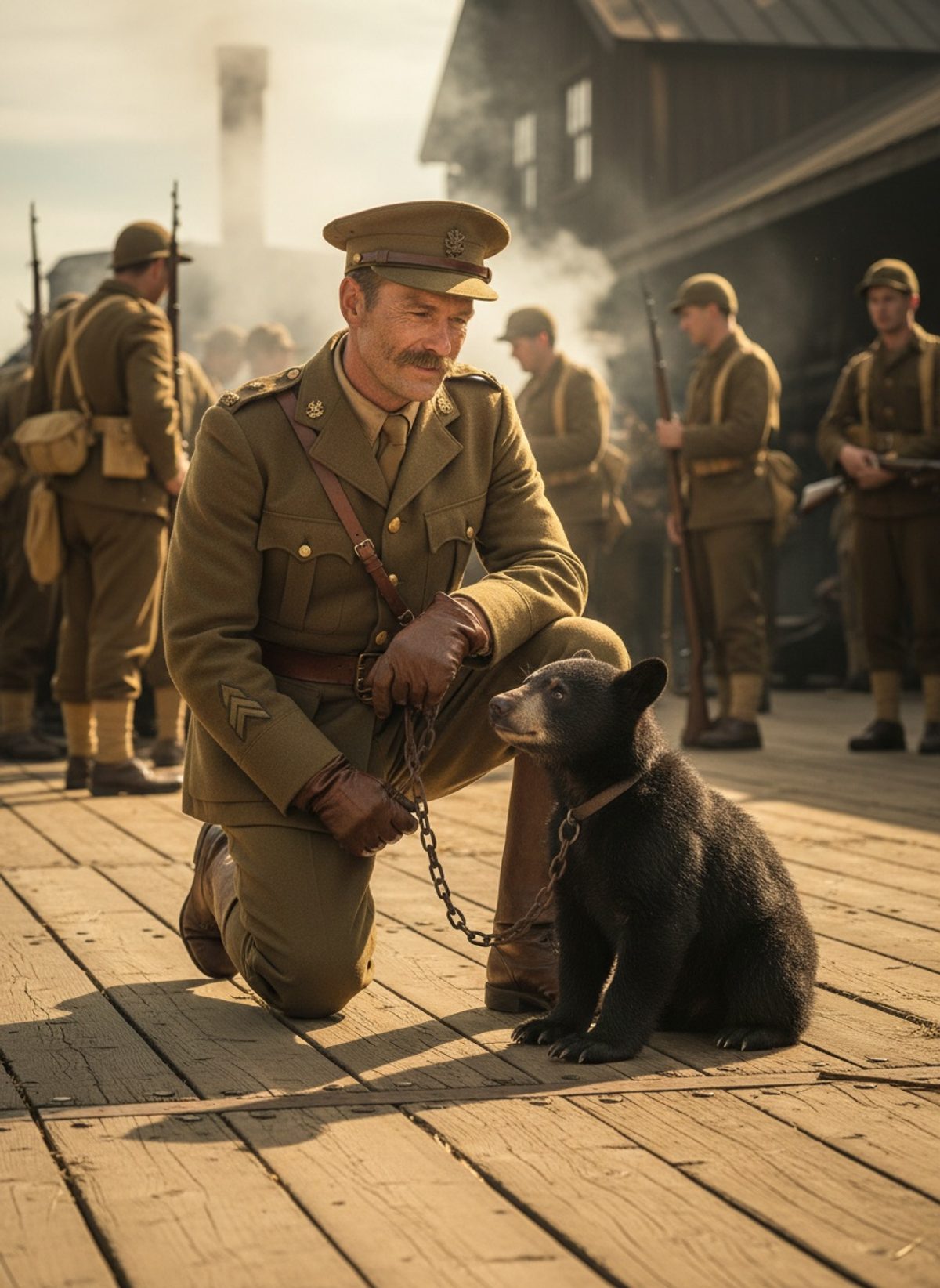
Amidst the tumultuous backdrop of the Great War, Lieutenant Harry Colebourn, a veterinarian of the Canadian Army, made a fateful decision. In August 1914, while en route to a military training camp in Valcartier, Quebec, Colebourn stumbled upon a hunter at a train station in White River, Ontario. The man had a small, orphaned bear cub, her mother likely taken by the hunter’s bullet. Unprepared to leave the helpless creature to her fate, Colebourn offered the hunter twenty dollars—a sum not insignificant for the time—and adopted the bear. He named her Winnipeg, a fond nod to his hometown, though she would soon be affectionately known as "Winnie."
Colebourn’s regiment, the Fort Garry Horse, would not leave Winnie behind when they shipped to England in October of that year. The bear, with her friendly demeanor and playful antics, became the unofficial mascot of the battalion. Soldiers delighted in her presence, a much-needed morale boost during the grueling training preparations they faced before heading into the fray of a global conflict.
Winnie Goes to War
As the war front shifted to France, practicalities dictated that Winnie could not accompany her comrades into battle. Securing her future, Colebourn made the painful decision to leave her at the London Zoo, assuring himself—and possibly the bear—that it was just a temporary separation until war’s end. Winnie arrived there in 1914, residing in the Zoological Gardens of Regent's Park. Her affable nature meant she wasn’t just another exhibit; she was a star attraction and a delight to visitors—young and old alike.
Read next: The Boy Who Ran Into the Fire. He Did Not Stop.
Unlike most of the zoo's more exotic lodgers, Winnie was unusually approachable. Children were even allowed to ride on her back and feed her condensed milk. Her disarmingly gentle behavior charmed all who visited, and she quickly became a beloved figure in the London community. The children who met her could hardly imagine the tiny joys she sparked would soon inspire one of literature’s most enduring friendships.
The Boy Who Named Pooh
One particular child took more than a passing interest in Winnie. A young boy by the name of Christopher Robin Milne frequently visited the London Zoo, spellbound by the endearing bear. Her friendly nature and unique personality would leave a lasting impression on him. Christopher Robin, son of author A.A. Milne, decided to name his own teddy bear after the real-life Winnie.
At the time, A.A. Milne, already a successful playwright, was inspired by his son's stories and imagination. This inspiration blossomed into the tales of Winnie-the-Pooh, with his son’s toy bear at the heart of a series of storytelling marvels. First published in 1926, "Winnie-the-Pooh" brought to life the enchanting tales set in the fictional Hundred Acre Wood, populated by a host of memorable characters. Yet, the whimsical adventures echoed back to those hopeful days when Christopher Robin's "Winnie" was more than just stuffing and fabric.
Read next: The Steel That Came Home: How 9/11's Ruins Became a Warship
From Playful Pet to Literary Icon
Back in London, Winnie's presence continued to captivate the imagination. Though she never returned to Canada with Colebourn, who visited her frequently after the war, her legacy did not remain confined to her zoo enclosure. Many who saw the bear firsthand were compelled to recount their meetings, embedding the personal into the cultural fabric of post-war storytelling.
Winnie's impact reached far beyond her calm and calm eyes and gentle spirit. Her story underscores the unexpected intersections of history—how a chance encounter at a train station can ripple across time to touch countless lives. Through Milne’s pen and Christopher Robin’s childhood wonder, Winnie influenced generations of readers worldwide, providing solace and companionship through the various vicissitudes of the 20th century.
Today, as we look back, we see that Winnie was never just a bear. She served as a palpable connection to the innocence and imagination that literature invites us to revisit and cherish. In a century marked by change and conflict, the simple story of a bear and a boy reminds us that history's power often lies not in grand battles but in small moments where limb, limb, and heart intersect to inspire.