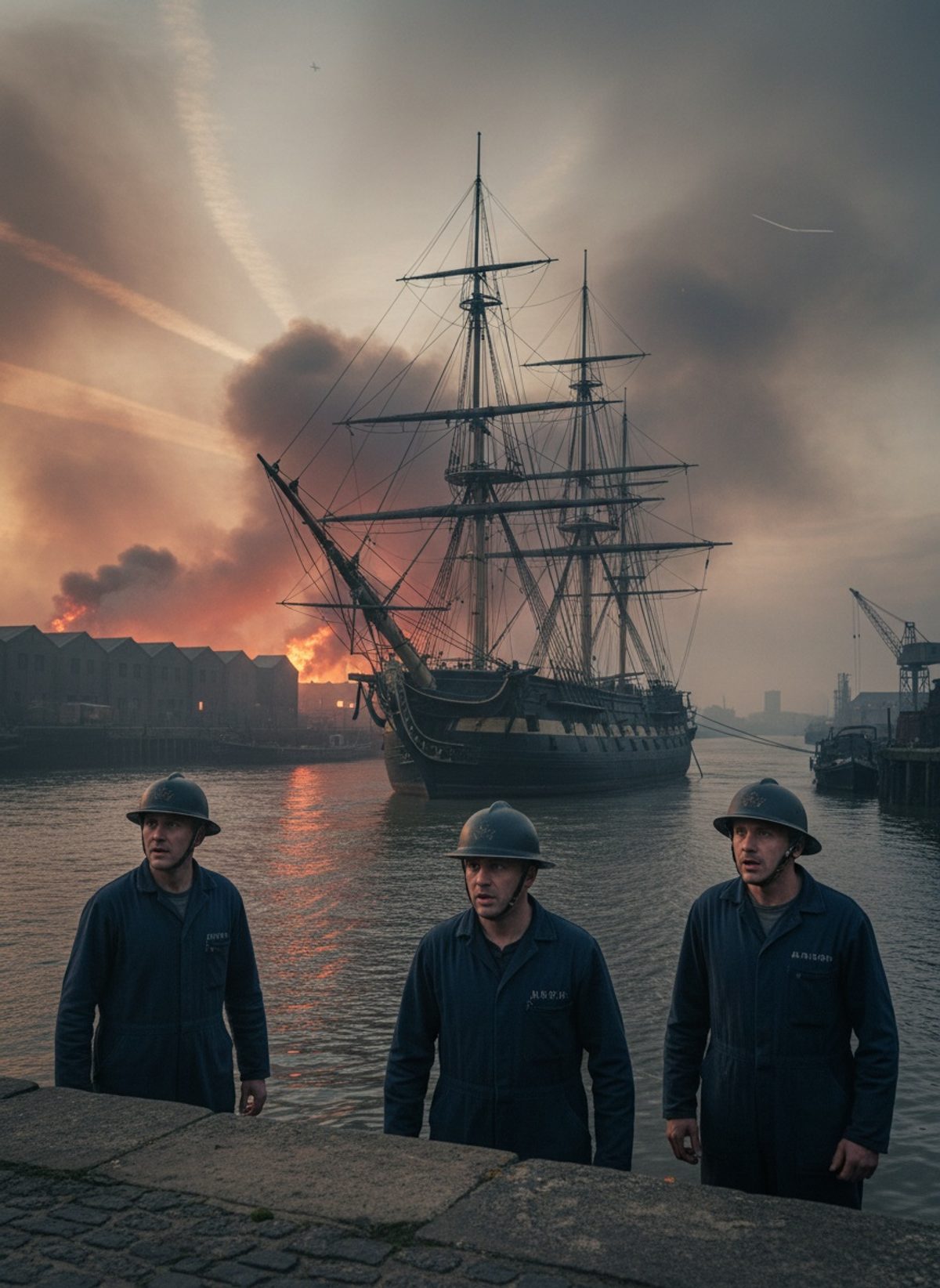
September 24, 1940. A cold, determined gust swept across the waters of the Thames, seemingly foreshadowing the potent mix of history and destiny about to unfold.
The Birth of HMS Wellesley
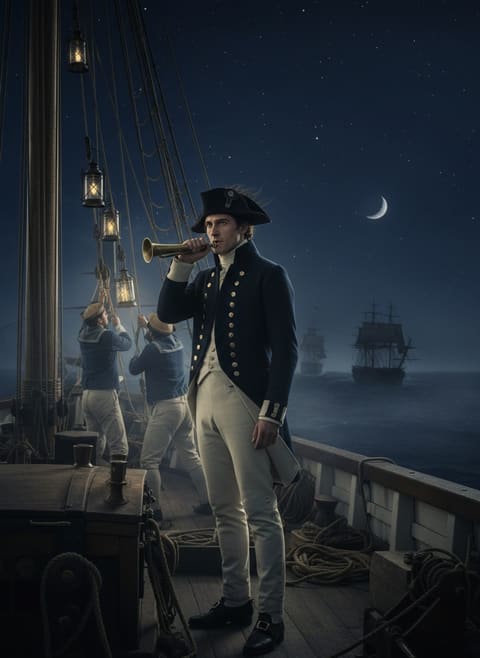
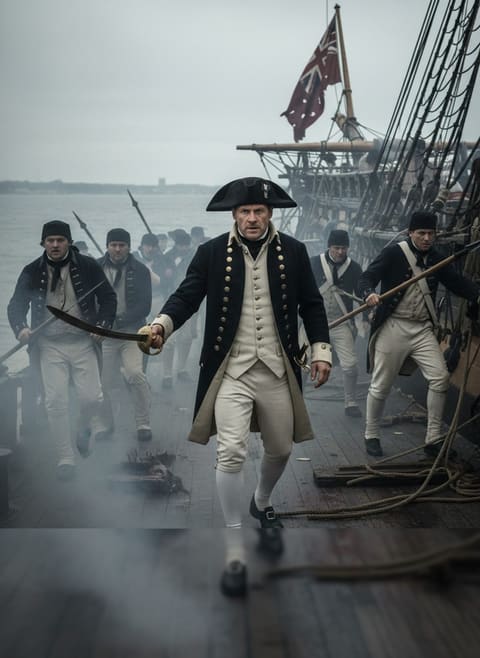
Launched in February 1815, the HMS Wellesley made her maiden voyage just as the Napoleonic Wars were drawing to a climactic close. Crafted from the stout teak of Bombay’s verdant forests by masterful shipwrights, she embodied Britain's maritime supremacy. Her hull was a testament to both imperial ambition and maritime mastery. As a 74-gun ship of the line, HMS Wellesley was tailored for the cannon-laden symphonies of naval warfare, her decks an orchestra of disciplined sailors who managed her complex rigging and formidable artillery.
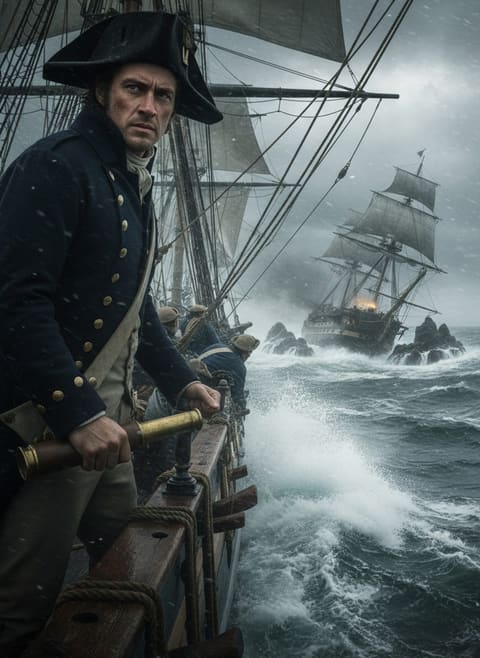
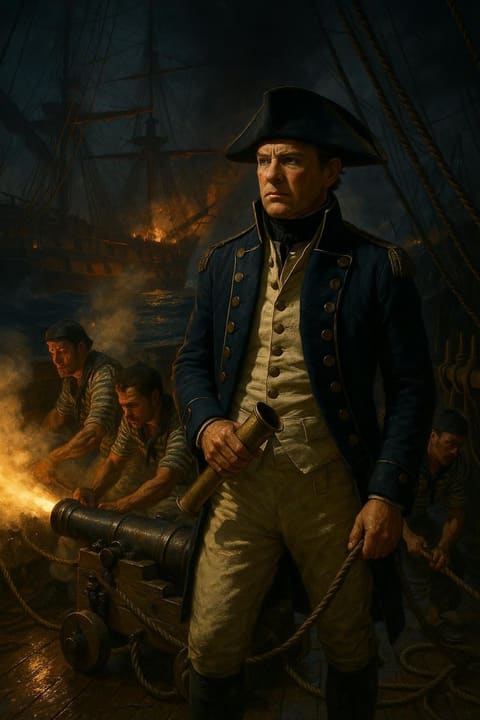
In the era of Lord Nelson, ships like the Wellesley were the epitome of naval architecture — powerhouses at sea, designed to deliver broadsides that could cripple an enemy’s hopes. Her presence in the theater of war was not just symbolic but strategic, as major battles hinged on the iron-woodbeaten resolve of such vessels. Yet, as often happens with aging warriors, her role would transition, a fate common in a world moving swiftly toward the horizon of modernity.
A New Chapter as HMS Cornwall
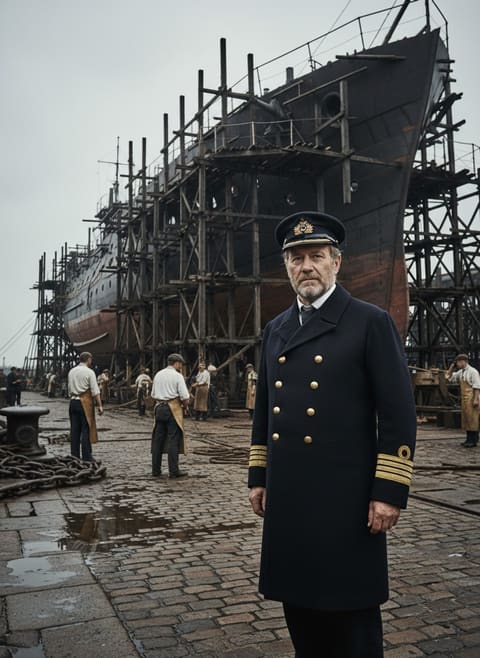
Reborn under the name HMS Cornwall later in her service, she evolved from a martial beast to a bastion of naval education. The vessel became a training ship, her storied decks morphing into classrooms for the Royal Navy's future generations. Her cannons silent, her voyages now charted into the realm of pedagogy, she remains at her post, moored on the banks of the Thames as both mentor and monument.
Read next: The Royal Navy's Secret War on Slavery, 1808–1867
The Teak-built veteran watched as steel titans replaced canvas and wind, and as Britain transitioned from sea power to air dominance. Yet through these transformations, HMS Cornwall persisted as a tangible link to an era when Britain commanded the waves — a relic enduring amidst innovation, her timbers infusing naval tradition into the hearts of young mariners.
The Luftwaffe's Iron Rain
But shadows loomed on that autumn morning of September 1940. The Luftwaffe, relentless in their blitz against Britain, cast their steely gaze over the River Thames. A convoy of Doom flew above, dispatching a rain of bombs on strategic points. As explosions echoed on London’s ether, a fatal symphony commenced overhead. HMS Cornwall, resplendent as ever in the traditions she held dear, was caught in their crosshairs.
Read next: When Pellew Drove His Burning Ship Into the Enemy, 1801
A direct hit ruptured her centuries-tempered frame, and with her antique stateliness underscoring the tragedy, she plunged beneath the Thames, resting uneasily on the riverbed. The final British ship of the line to be lost to enemy action — her demise not the result of fierce artillery aboard a French vessel, nor of tumultuous seas, but through the destructive evolution of warfare that she couldn’t escape.
An Enduring Legacy
The story of HMS Wellesley cum Cornwall resonates not merely because of her destruction but what she represented through the ages. Her lifespan stretched over layers of history: from representing Britain's indomitable spirit in the Battle of Trafalgar’s wake, to the solemn silence of a docked instructor in a time of transition and tension.
Her ultimate fate, sunken by airborne adversaries in a world heavy with the specter of modern warfare, speaks to the relentless march of time and technology. In a single thread from her teak-kept timbers, one sees the weave of Britain's naval narrative, where strings of tradition meet the fabric of innovation in an ever-changing global theatre. Today, as the tides roll over her submerged form, HMS Cornwall reminds us of the fluidity of history— a storied arc that even the greatest ships must trace back to in their inevitable return to the sea.