The men strained against the darkness, their boots sinking into the soft Falkland soil, as the lights of the landing crafts flickered out and the silence of the pre-dawn hour clung to San Carlos Water. The silhouettes of 4,000 British soldiers moved with quiet precision, executing Operation Sutton with an urgency that belied the profound stillness of the night around them. As their landing crafts kissed the shore with muted splashes, a new chapter in the Falklands War was being penned in these remote, wind-whipped islands.
The Silent Landing
While the world slept on 21 May 1982, the British amphibious force uncoiled its power on the shores of the San Carlos Water under a cloak of darkness. This operation marked the beginning of Britain's most daring manoeuvre in the Falklands conflict, chosen for its strategic protection by surrounding hills that acted as natural barriers against anticipated Exocet missiles and lurking submarines. San Carlos was far enough removed from the Argentine military stronghold at Stanley to allow this surprise attack to unfold unsuspected.
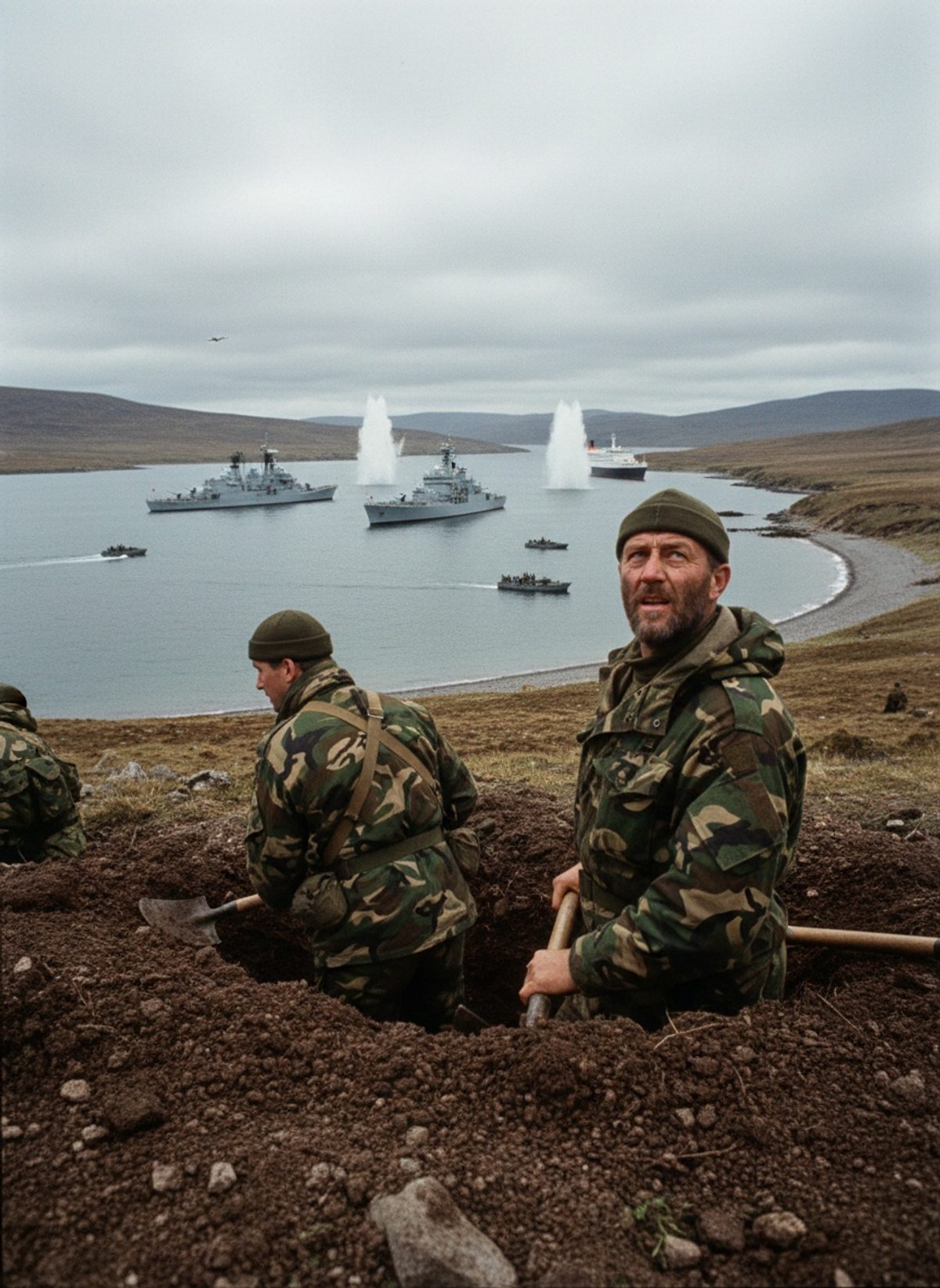
The first to touch soil were 2 PARA and 40 Commando, emerging from the shadows of the ferry Norland and HMS Fearless onto Blue Beach with the grace of spectres. At Green Beach, the men of 3 PARA descended from HMS Intrepid's belly under the electric charge of imminent threat, while 45 Commando infiltrated Red Beach from RFA Stromness. The clandestine landings were meticulous and triumphant, and with a decisive foothold on the island, Brigadier Julian Thompson established his headquarters in dugouts near the settlement, setting the stage for the coming conflict.
Into Bomb Alley
As the sun's first rays pierced the horizon, the calm of the beaches shattered when Argentine jets tore through the sky. Dubbed "Bomb Alley" by the sailors, San Carlos Water became the stage for a dramatic battle that would test the mettle of Britain’s modern naval defenses. Argentine A-4 Skyhawks and Daggers, brave yet beleaguered by logistical constraints, launched wave after wave of low-flying attacks, their engines roaring defiantly over the waves.
Read next: When Pellew Drove His Burning Ship Into the Enemy, 1801
HMS Ardent, pummeled by the day-long assault on 21 May, valiantly traded fire until succumbing to the ocean's embrace. Her sinking cast a somber shadow, a harbinger of the relentless aerial threat that prowled overhead. Yet, despite the hail of bombs that rained down, many failed to detonate—an ironic twist of fate courtesy of faulty fuses. These defective bombs narrowly spared other vessels from similar fates.
The Cost of Valor
On 23 May, it was HMS Antelope gripped in the hands of calamity. Attacked and left wounded, her fate was sealed when an explosive ordnance detonated prematurely during defusal, splitting the ship's steel hull with a fiery breath and sending her to join Ardent beneath the waves. The chaos of Bomb Alley claimed its share of heroes and vessels, and this heart of darkness became both a crucible of courage and a testament to tenacity.
The sailors of the British Task Force fought ardently, countered each skyward threat with every missile in their arsenal. Amidst chaos, they sealed their supremacy in the air with the nimble Harriers that rose from decks like avenging angels. Although slower than their Argentine counterparts, the Harriers wielded Sidewinder missiles with deadly prowess, notching numerous aerial victories in the sky arena.
Hearts and Heroes
As the conflict of Bomb Alley raged on, amid the cacophony of gunfire and thunder of jets, the men on the ground found resolve. Throughout the harsh days, British troops maintained the reinforcements of courage and unwavering bodies even as the tragic ballet of aerial warfare continued overhead. In bloody engagements at Goose Green and against all odds, the British forces pushed on, their grit cutting through Argentine resistance until the Union Jack waved once more over Stanley in June.
Amidst such visceral stakes and turmoil, tales of valor and sacrifice mingled with the chill of the South Atlantic winds. Stories emerged of young lives given for comrades and flags, as echoing battles were fought in stilled whispers across family tables back home. The Battle of San Carlos, in all its hardy resilience, hewed a profound respect for the young soldiers who cemented a legacy with their sweat and at times, their very souls. The charge here at this secluded inlet was not merely a tactical triumph but an emblem of that profound muster called forth when history demands it.
Read next: When Piper Findlater Played On With Two Bullets in Him, 1897
The Unsung Frontier
In the quiet aftermath of 1982, as the waters of San Carlos simmered to reflections of tranquil blue once more, the world could hardly know how the valor inscribed amid those shores would ripple through time. This harrowing episode stood apart as a testament to the indomitable human spirit—a testament not only circumscribed to military evaluation but as a living chapter of bravery willingly tendered by a generation.
Stripped from the textbook gloss and abruptly thrust upon a receptive hearth of public memory, the story of Bomb Alley reveals how, with every decision, even history's quietest edges can blaze with the resonance of battles untold. It reminds us that soil and sea alike are mere stages, and the real legends are etched in the courage to turn an island’s contested horizon into the bastion of a legacy unwilling to be forgotten.
This week, British paratroopers rehearsed an amphibious landing on the islands, the first landing exercise there in years.
Part 2 of 24: One Falklands story a day until Remembrance Sunday