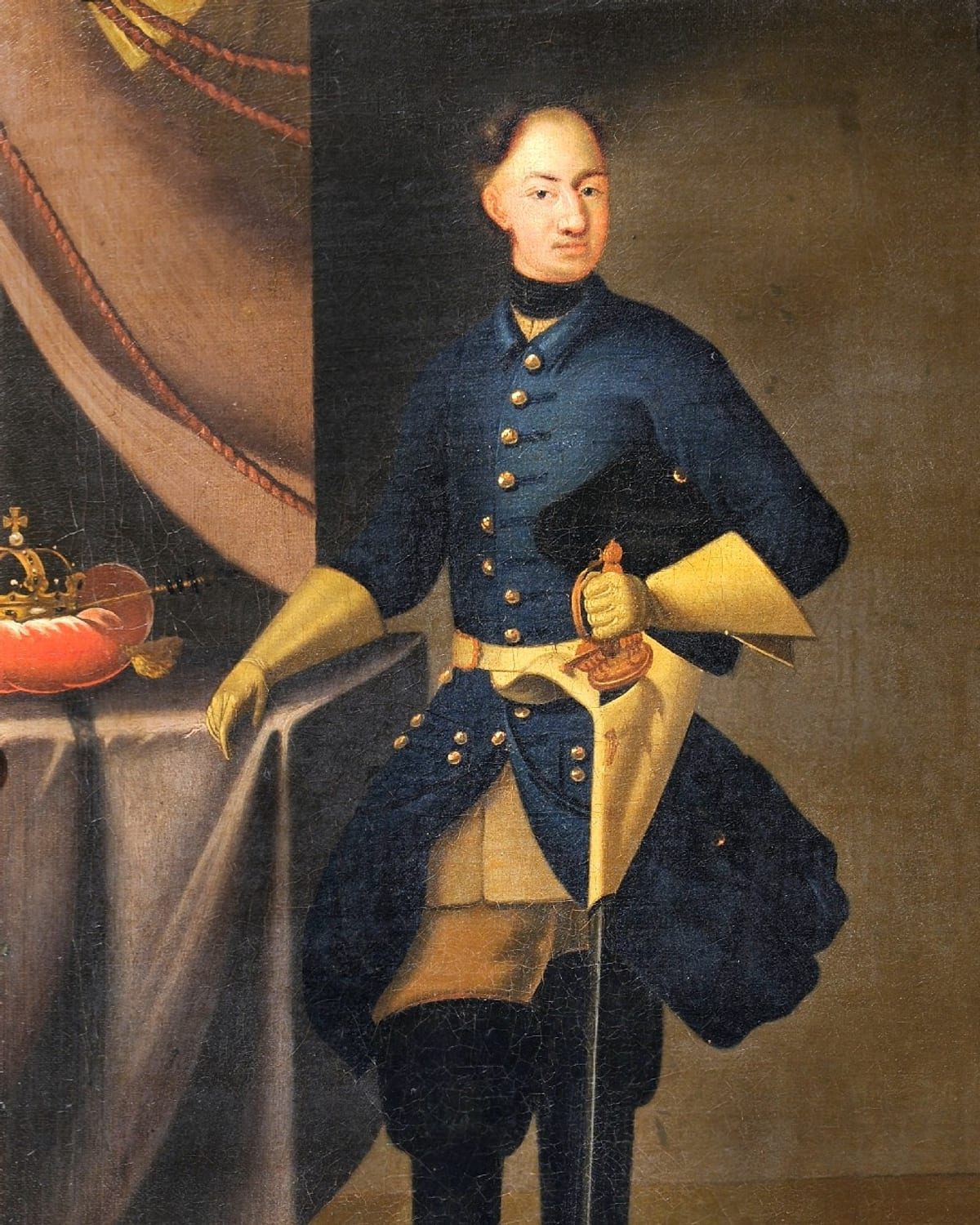
On the evening of 11 December 1718, a projectile struck Charles XII of Sweden in the head as he inspected the trenches before Fredriksten. By the Old Style calendar that Sweden was then using, the date was 30 November. He was 36.
Two dates for one death
Wikipedia says Sweden used a calendar of its own from 1 March 1700 until 30 February 1712, one day ahead of the Julian. In January 1711, writing from his camp at Bender, Charles XII ordered it abandoned.
Sweden went back to the Julian calendar in 1712 and did not adopt the Gregorian until 1753. The Siege of Fredriksten article gives the date as 11 December, with 30 November as the Old Style date.
The soldier king
Store norske leksikon says Charles took personal command of the Swedish armies in the Great Northern War. He first landed on Zealand and forced Denmark out of the alliance against Sweden. Then he turned on the Russians, and beat them at Narva in 1700.
Read next: Alvin York Refused the Draft, Then Silenced 35 Machine Guns in the Argonne
He next attacked Poland, where King Augustus was forced to abdicate in 1706. He planned to destroy the main Russian army and march on Moscow. The campaign ended in defeat at Poltava in 1709.
The long way home
After Poltava, Store norske leksikon says, Charles fled to the Ottoman Empire and tried to arrange a Swedish-Ottoman alliance against the Russian tsar. In 1714 he tried to relieve the besieged city of Stralsund, and in 1715 he returned to Sweden.
He then set about rebuilding the country's economy and army. Perhaps, the encyclopedia suggests, to dampen discontent with his policies, he tried to conquer Norway.
Norway
The Siege of Fredriksten article says Charles invaded southern Norway in 1716 and failed. By then his supply fleet had been captured or destroyed, and by 12 July 1716 all Swedish troops had been withdrawn from the area around Fredriksten.
In the autumn of 1718 he tried again. Wikipedia gives him 36,000 men in three armies, and Store norske leksikon says 40,000. His plan was to take Fredriksten first, so that he could sustain a siege of Akershus.
The siege
The Siege of Fredriksten article says the garrison numbered between 1,400 and 1,800 men. About 5,000 to 6,000 Swedes besieged it under the personal command of their king. On 8 December the forward fort, Gyldenløve, fell.
The Swedish trenches had almost reached the main walls, the article says, when a projectile struck Charles through the left temple on the evening of 11 December, or 30 November Old Style. It was probably a large musket ball or grapeshot, and he was inspecting the works.
Read next: Adrian Marks Landed a Seaplane on Open Ocean to Pull 56 Men From the Water
Who fired it?
Store norske leksikon says it is still an unsolved riddle whether the fatal shot came from the fortress or from the Swedish ranks. It says it has been the subject of eager debate in Sweden and a rich body of legend in Norway.
The encyclopedia adds that recent research, based on topographical and ballistic studies, has rejected the idea of an assassination.
After the king
The death effectively ended the attack on Fredriksten, according to the Siege of Fredriksten article, and the invasion was called off.
Store norske leksikon says Charles died unmarried and childless. His sister Ulrika Eleonora succeeded him, together with her husband, who ruled as Frederick I. Sweden lost its position as a great power. The uniform Charles wore at Fredriksten is on display at the Royal Armoury in Stockholm, and Wikipedia says he was buried at Riddarholmen Church on 26 February 1719.
A mixed legacy
Store norske leksikon says no Swedish king has left such a mixed reputation. Many regard him as the "hero king". Others sharply criticise what they see as a policy of adventure. His abilities as a field commander are now generally recognised, it says, though his strategic judgement, including the decision to march on Russia, is disputed.