Witold Pilecki's name isn't famous. It should be.
A Volunteer for Hell
In the grim landscape of Nazi-occupied Poland in 1940, there were few rays of hope. Though Adolf Hitler’s forces had steamrolled the region, one Polish man chose to step into one of their darkest creations: Auschwitz. Witold Pilecki, a dedicated army captain, took the unimaginable step of not only forging his own arrest but actively seeking it. He aimed to infiltrate the concentration camp, a pandemonium of horror being constructed right before the world's unseeing eyes.
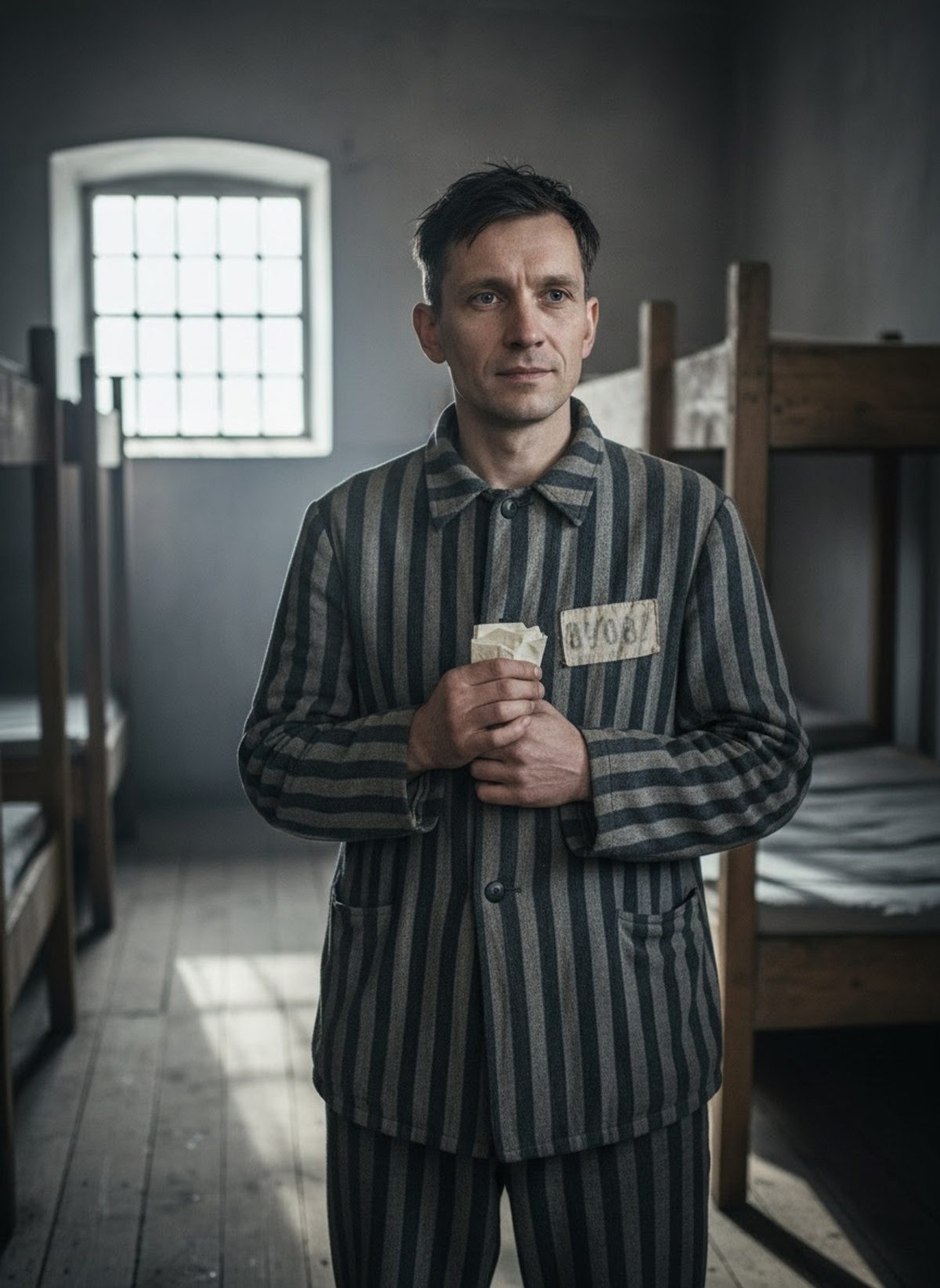
Auschwitz had transformed from an army barracks to a living nightmare, where sadistic violence was rampant and survival a mere dream for most. Pilecki became prisoner number 4859, a participant in the Great Unseen War that took place behind the electrified fences and under the ever-watchful eyes of the Schutzstaffel. Little did the Nazis know that the man they had just branded was about to become a persistent thorn in their side, a saboteur cloaked in prisoner garb.
Building an Underground Resistance
Once inside, Pilecki’s mission was perilously clear. He began to organize a resistance network under the suffocating grip of the SS. Amidst the despair-filled blocks of Auschwitz, Pilecki sowed the seeds of rebellion, connecting inmates in common cause against their oppressors. This would not only buoy spirits but would serve a larger strategy — obtaining and smuggling out evidence of Nazi atrocities.
Read next: Ben Ferencz Prosecuted 22 Nazi Commanders at Age 27
Underneath the surface, amongst cramped quarters and starvation rations, a resilient web of anti-Nazi activism began to knit itself tighter. Pilecki documented the mass murders, the brutal conditions, and the very essence of Nazi inhumanity with meticulous detail. This information — vital and revolutionary — was then surreptitiously passed to the Polish resistance outside the camp, who in turn forwarded it to the Allies.
Even as Pilecki endured the hardship of daily life at Auschwitz, witnessing grim spectacles that no human should, his commitment did not waver; instead, it intensified, driven by the urgent peril faced by his fellow inmates. He conveyed chilling reports, revealing that Auschwitz was not simply a large-scale detention site but a methodical death machine.
The Great Escape
After nearly three years of enduring and resisting within the constraints of Auschwitz, in April 1943, Pilecki decided it was time for a desperate bid for freedom. His escape wasn’t just about self-preservation. Carrying crucial evidence, Pilecki’s successful breakout needed to happen so the world could bear witness to the Nazi atrocities and potentially intervene.
Under the cover of night, Pilecki, along with two fellow prisoners, slipped past their captors in a meticulously planned escape. Surviving this exodus was a miracle in itself, testament as much to Pilecki’s resolve as to sheer fortune. Once liberated and reconnected with the Polish resistance, Pilecki wrote detailed reports on the unimaginable realities faced by those still trapped in Auschwitz.
Read next: USS Chopper Plunged 1,011 Feet and Breached the Surface Bow-First
Despite the horrors unfurled across Pilecki’s parchment, the reception by the Allied powers was underwhelming. His reports, as unimaginable as they were, were met with general disbelief and ultimately failed to drive immediate action against the horrors unfolding at Auschwitz.
A Life Sacrificed, a Hero Remembered
Witold Pilecki’s story didn’t conclude with the war’s end. He continued to fight, taking part in the Warsaw Uprising in 1944, facing armed confrontations against a juggernaut enemy. Yet, perhaps his most tragic battle awaited him in the post-war landscape when Poland fell under Communist rule — a regime that viewed him not as a hero but as a threat.
In 1948, Pilecki was executed by the very state he had fought valiantly to protect. Branded a spy by the Communists, his death was a grim coda to a life lived fiercely and with purpose. Pilecki had defied Nazi tyranny and paid the ultimate price under a different totalitarian regime that saw his righteousness as rebellion.
Why should we remember Witold Pilecki today? His story echoes far beyond the fences of Auschwitz, reminding us that courage can thrive in the direst situations, and truth is worth bearing, even when it comes at great personal cost. Though his warnings were initially ignored, his legacy is that of a man who lit a beacon in the darkest times, a testament to resilience and resistance that refuses to let history rest in silence.