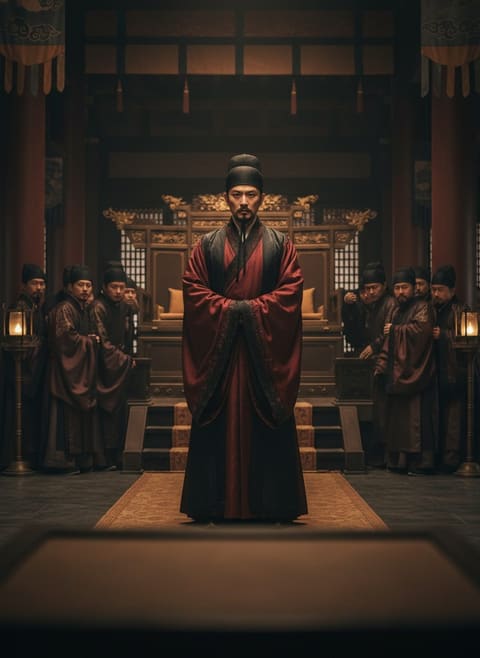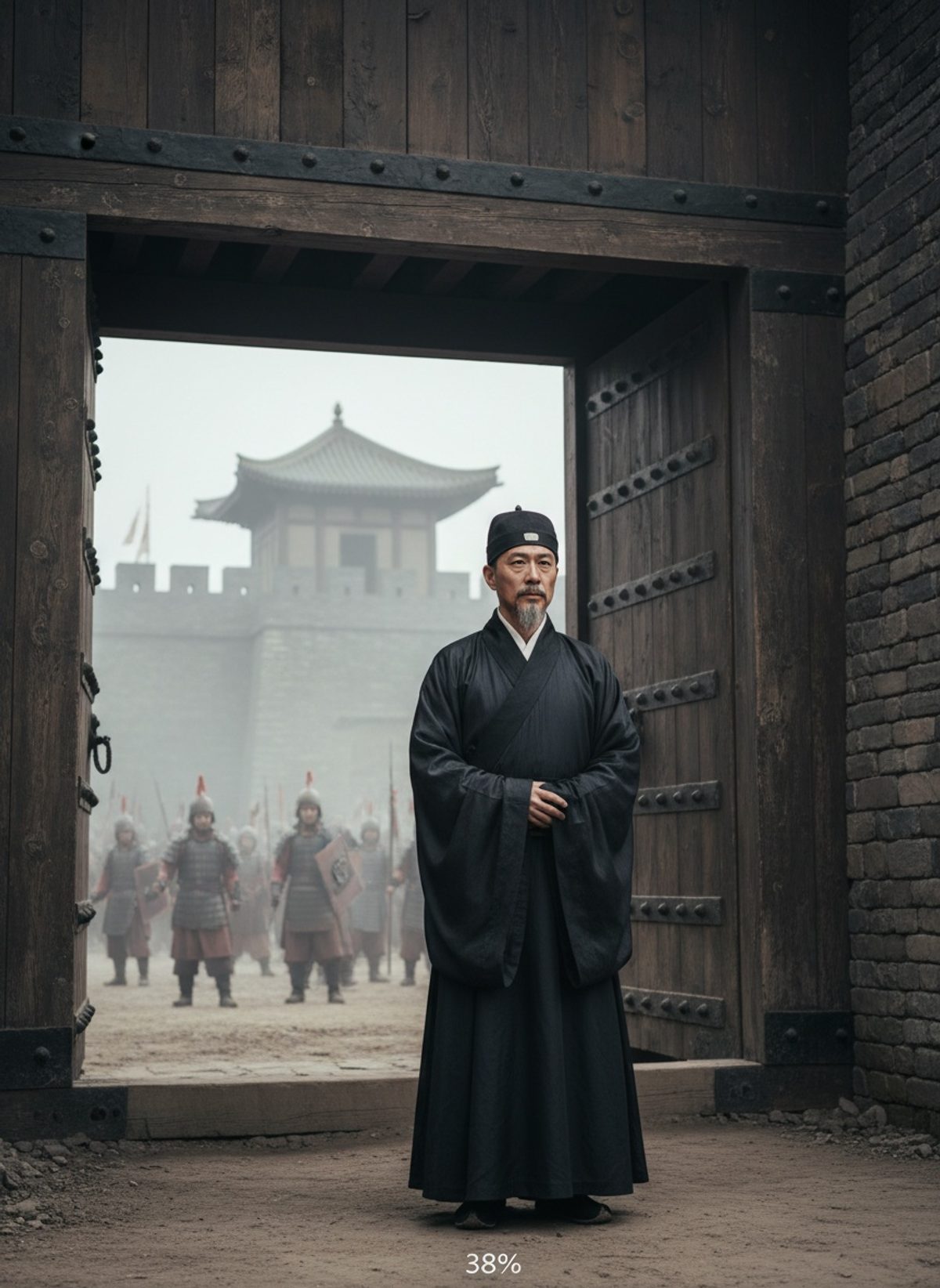
The air hung heavy over the besieged city, the late autumn chill intensified by the tension of impending doom. Flickering lanterns pierced the dense gloom that enveloped the narrow streets, where frantic whispers of worry and the occasional clangor of soldiers' armor disturbed the silence. The scent of fear and resignation mingled with the damp earth, as November's bitter embrace foreshadowed what hundreds of lives hung upon. In the year 198 CE, within this battleground where crumbling defenses might give way at any moment, an opportunity presented itself—a chance to avert a massacre by a most unlikely savior.
Cao Cao, a fearsome warlord with a reputation as sharp as his blade, had cast a shadow upon northern China. His campaigns were legendary for both their brutality and cunning, often leaving the provinces either utterly subdued or aflame with rebellion. The city, now enfolded in Cao Cao’s maneuvers, was no stranger to turmoil. Yet in this moment, poised on the precipice, it had lost more than its defenses. The governor, a quintessential figurehead of authority, had vanished—spirit lifted into the wind like the ashes of hopes undone, leaving the citizens to their fate.
Amidst the chaos, one man stood resolute in the dying light of Autumn—Lu Zhi, a figure whose reputation as a meticulous educator and devoted scholar bloomed amongst scholars rather than among soldiers. A flicker of determination kept him at his post, a solitary candle against an overwhelming darkness. When the city’s hopes seemed dimmest, when life appeared to wither under the specter of inevitable destruction, it was Lu Zhi who stepped forward into history’s gaze with an audacious plan fueled by compassion.
Seeing the suffering of soldiers and citizens alike, starved into submission by the encircling siege, Lu Zhi formulated a choice that defied the expectations of war. He yearned not for personal glory nor the iron will of defiance. His was a path grounded in empathy—a battlefield of minds and hearts where blades were of no use. He resolved to meet with Cao Cao, to open the gates himself, and to spare the city the ravages of pillage and slaughter. Not out of cowardice, but conviction, Lu Zhi slipped away in that night's veiled embrace to negotiate the salvation of thousands.
Read next: Jing Ke Walked Into the Palace. He Had One Chance.
In the annals of Chinese history, tales of valor are largely dedicated to martial prowess and the fiery pursuit of glory—or its downfall. Yet here was the gentler story, one where surrender was a victory, for it was won with clear-eyed realism rather than reckless defense. Cao Cao, known as much for his strategic acumen as for his ruthless efficiency, saw the promise in Lu Zhi’s entreaty. Letting compassion briefly govern his iron heart, the warlord accepted the city's capitulation. Yet this was not a decision borne entirely of mercy; his forces would gain strength, avoiding unnecessary loss.
The gates, erstwhile barriers against fear, slowly swung open. As a chill wind whispered its way through the city, so did the news of its surrender usher peace through anxieties like balm on wounds. The transition from besieged isolation to occupied relief was not one of overnight transformation, yet it marked a critical pivot—one that resonates with socio-political complexities. To some, Lu Zhi’s action might have whispered treachery—a sacrifice of standing and station for uncertain peace. But for the majority, his decision represented a rare glimpse of heroism marked not by destruction but preservation.
This often untold strand of history unspools within the vibrant tapestry of Eastern Han Dynasty military struggles, echoing a reflective truth about human nature and the moral dilemmas faced by those caught between loyalty and survival. Cao Cao, an emperor in all but name until his own son heralded the end of the Han dynasty, may have been respected for his leadership, feared for his irrepressibility, and cherished for his poetic skill. Yet without the intervention of ordinary courage exemplified by Lu Zhi, myriad stories—those of citizens and soldiers—might have closed unread.
Read next: Guo Ziyi Rode Alone Into the Enemy Camp
It is said that Cao Cao himself penned lines that pondered the ephemeral nature of ambition and conquest, reflecting insights deeply tied to an era of fragmented authority and shifting allegiances. These words, floating ghostlike through eons, bear a curious symmetry with Lu Zhi’s choice—a surrender in name but defiance in substance. As the years flowed forward, this event became an echo within the mists of increasingly complex tales, spoken in quieter tones than the clamor of battlefield victories.
Histories typically exalt the fortitude of fortresses, yet how seldom do they celebrate the bravery of those who choose life over reputational death—the pioneers of peace amid cacophonous calls to fight? There exists a poignant wisdom in considering the value of such narratives not taught in traditional schooling, their lessons woven into acts of simple courage that dare to defy monumental consequences.
As we reflect upon this narrative and its preservation through the dense labyrinth of Han China's fiercest years, we might ponder the lasting question it leaves behind. In a world often measuring heroism through grand acts, what of those heroes whose legacy is captured within the breaths and lives spared by their silent acts of surrender? In contemplating Lu Zhi's choice, we discover fragments of humanity’s enduring tug between conflict and resolution, harshness and harmony—timeless in their complexity and relevance today.