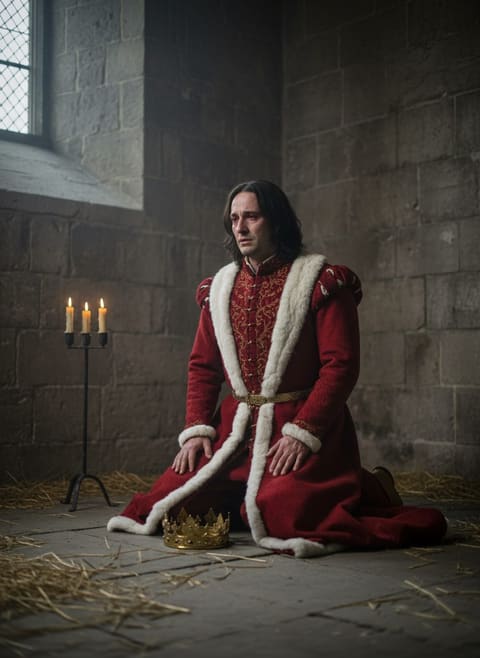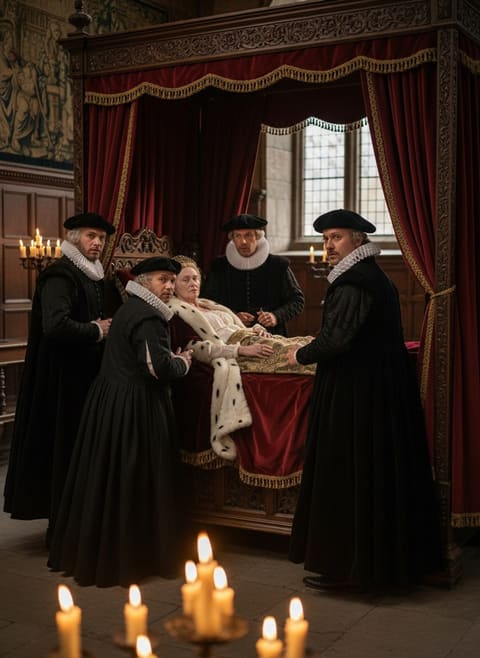
At just twenty-four years old, Charles Stuart became King of England, Ireland, and Scotland. But it is not the crown that he wore which history remembers, but the hat he refused to remove.
The Stage Is Set: A War Between Crown and Parliament
The year was 1649, and the seat of power that once seemed as firm as the stones of Windsor Castle had been shaken by civil war. The conflict between King Charles I and Parliament was not merely a political squabble, but a chasm between two visions of governance. Charles, ever the believer in the divine right of kings, stood at one pole — a king ordained by God, his power absolute. Opposite him was a Parliament that saw the need for shared governance, a balance of power that could rein in the excesses of monarchy.
The seeds of conflict were sown early in Charles’s reign. Financial woes and religious tensions simmered beneath the surface, erupting eventually into a war that saw families torn asunder and loyalties tested. The Royalists, or Cavaliers, stood by their king, while the Parliamentarians, or Roundheads, championed their cause under the leadership of Oliver Cromwell and his New Model Army. As battle lines drew and allegiances shifted, England was a nation divided, each side fervently convinced of its own righteousness.
The Hall of Reckoning: Entering Westminster
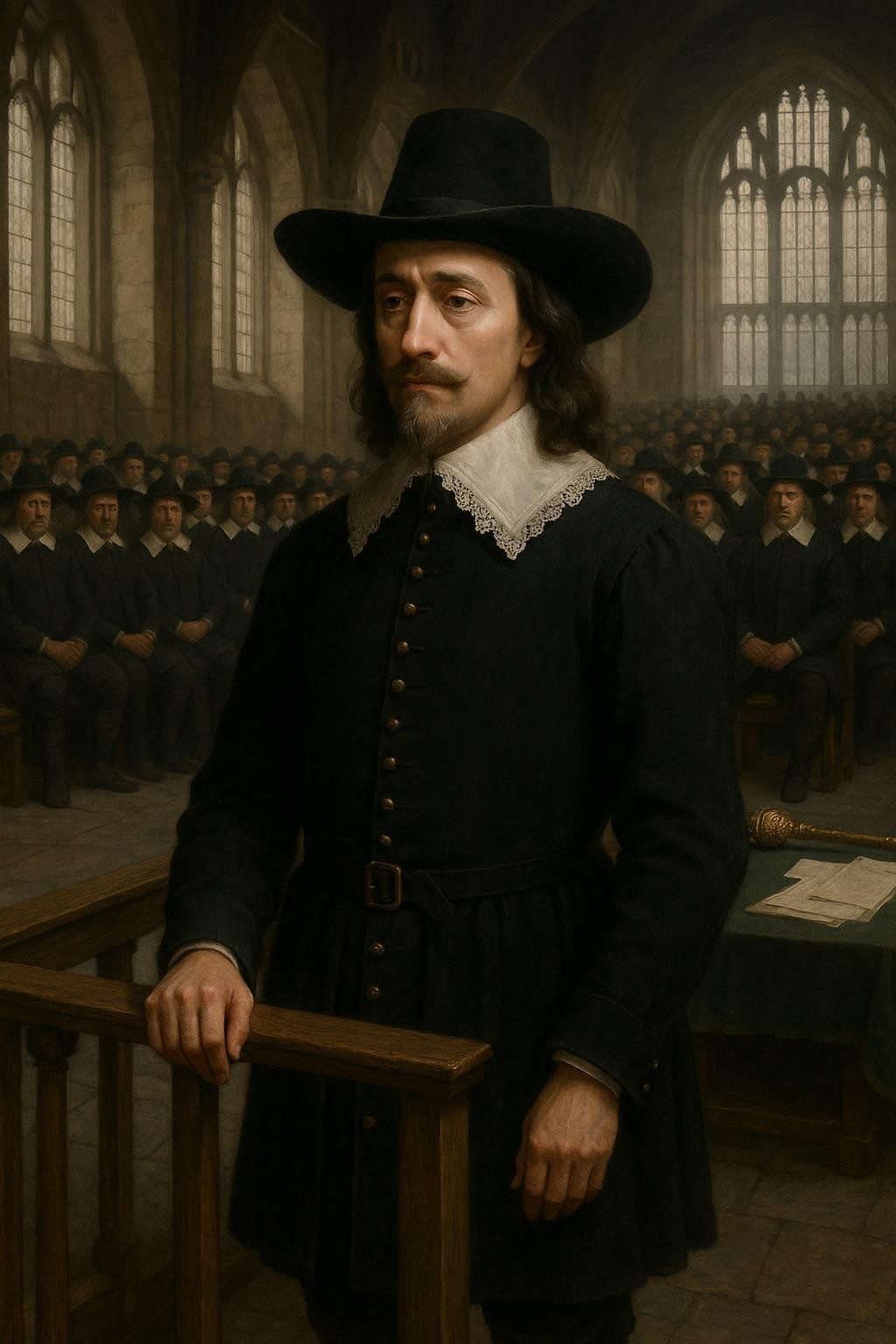
On a crisp January day, Westminster Hall was transformed into a courtroom. But this was no ordinary trial. For the first time in history, an English king stood accused by his own subjects. The hall echoed with the whispers of 135 judges and murmurs of an audience that had come to witness history in the making.
Read next: The Day a King Wept and Gave His Crown to His People
Charles entered with a regal grace, though his current circumstances were far removed from the opulence of court life. Clad in black, he appeared every bit the sovereign despite being dethroned. The atmosphere was thick with anticipation, not least because no one knew exactly how the proceedings would unfold. Charles refused to plead, a deliberate silence that spoke volumes. To plea, he believed, was to acknowledge the court's authority, a notion he resolutely rejected.
His refusal was both a matter of principle and a potent reminder of his belief in the divine right bestowed upon him as monarch. As he stood there hat on head, with unflinching resolve, it was more than mere decorum; it was a refusal to submit fully to the theatre unfolding around him.
The King's Speech: Defiance in the Face of Judgment
Words hold power, and Charles understood this well. Observers might have expected a man shaken, perhaps cowed by the gravity of his predicament. Instead, they found a monarch who matched the court's solemnity with a resolve they couldn’t break. When finally given the opportunity to address the court, Charles chose his words with care.
He questioned the legitimacy of the proceedings and demanded to know by what authority they sat. As silence filled the hall, broken only by the impatient scribbling of quill on parchment, each word he uttered was both his defense and his defiance. The King’s speech was not so much a plea for leniency as it was a declaration of his dignity and an indictment of the process against him.
Read next: The Scots Girl Who Became Britain's Most Loved Queen
Despite the court’s insistence, he never wavered in his stance. By refusing to acknowledge them, he laid bare the philosophical and legal tensions that had defined his reign. This wasn’t simply a legal argument; it was a fundamental clash of ideologies. For Charles, to concede was akin to tearing the fabric of the world as he believed it should be.
The Verdict and the Unyielding Legacy
The trial was swift, the outcome inevitable. Even as the sentence was pronounced, he remained composed. Charles I was convicted of treason against England and was sentenced to death, his fate sealed as blood spilled upon civil soil. The executioners' block awaited him, and though stripped of titles and power, he retained a kingliness that bewildered even his detractors.
His execution marked a turning point in English history. No king before had faced such a fate, and the execution sent shockwaves through Europe. Yet, even as the axe fell, his defiance did not wane. In choosing not to yield, he set into motion a series of constitutional transformations that would ultimately redefine the monarchy and Parliament.
This episode in history remains significant not for a tale of a tragic fall, but for its bold statement against unchecked power. It was a chapter that questioned the very foundation of authority and sovereignty. Charles' unyielding resistance, his refusal to bow, is a testament to the complex dance between power and principle. It reminds us that even in the face of seemingly insurmountable odds, there lies the capability to stand firm, to defy, and perhaps in some corner of history, to shape the course of that history by the simple act of keeping one's head — hat firmly in place.