May 20, 1910. The flags of Europe fluttered somberly in the cold spring breeze outside Windsor Castle.
The Gathering of Monarchs
On that gray day in May, Windsor Castle served as the backdrop for an unprecedented assembly. Nine reigning monarchs gathered together under somber circumstances—King Edward VII's funeral. Never before, and not since, has such a constellation of royalty met in one place. The air was thick with solemnity, yet the representation of European power within those ancient walls was a sight unlike any other.
Imagine the scene: grand carriages rolling up the cobblestone paths of Windsor, depositing kings adorned in elaborate military uniforms, their chests ablaze with medals and insignia. The mood was one of both respect and introspection, the kings united by the loss of a fellow ruler, but also by a complex web of familial ties that bound royal Europe together.
Edward VII, known as the "Uncle of Europe," had familial connections with nearly every royal representative in attendance. His funeral became both a tribute to his legacy and a final testament to the era he helped shape. This meeting of kings marked the closure of an age where diplomacy was as often conducted in drawing rooms as in public forums.
Read next: The Day a Young Prince Knelt and Refused a Crown
A Portrait of Power: The Nine Kings
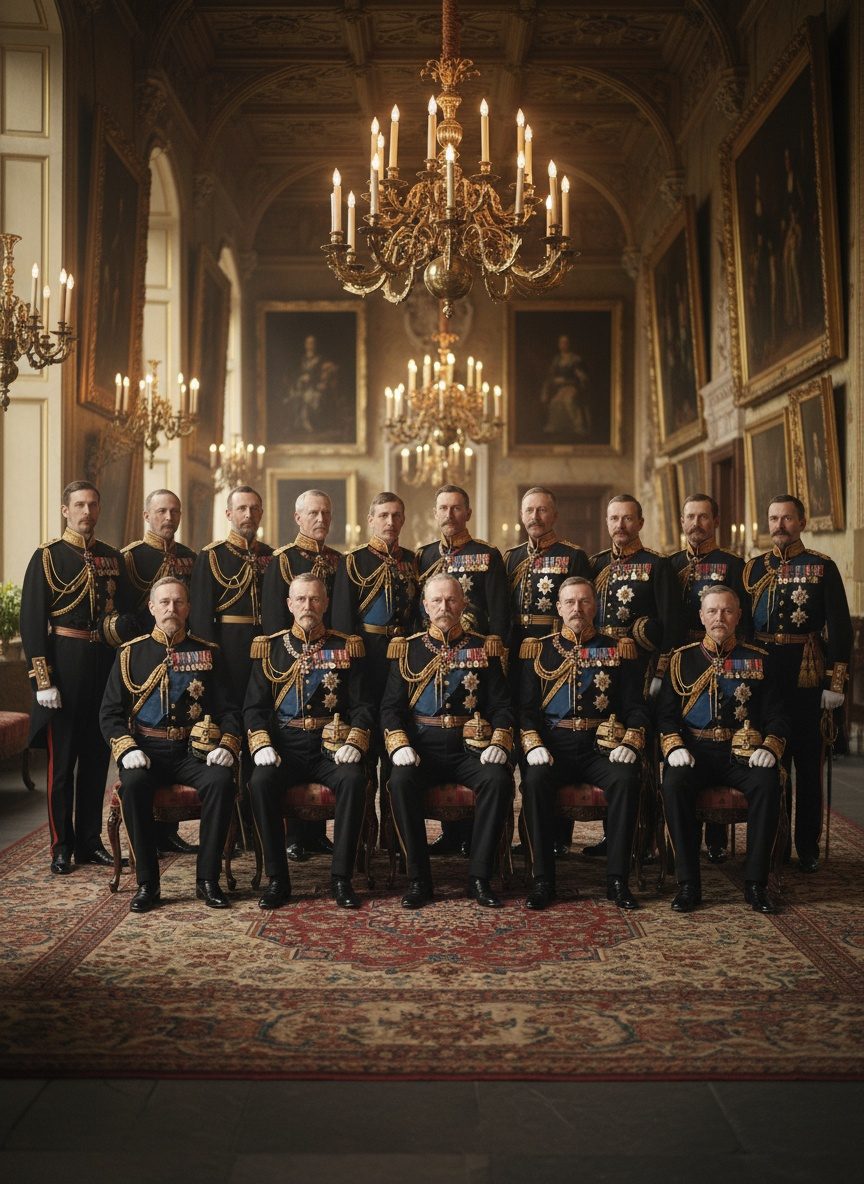
The gathering included a who's who of European royalty: from the tall stature and stern demeanor of Kaiser Wilhelm II of Germany to the youthful air of King Alfonso XIII of Spain. Each king brought with him the unique ethos of his nation and a deep, if unspoken, understanding of his counterparts' roles on the European stage.
Rare photographs from the day capture the kings standing together, resplendent in their royal garments, their faces betraying little of the underlying tensions. For those with a keen eye, one might observe the furtive glances exchanged between some—hints of the looming geopolitical storm clouds on the horizon. These men, accustomed to power and privilege, stood shoulder to shoulder, oblivious that they were on the cusp of an epochal transformation.
But the event was more than a gallery of royalty; it was a tableau of a world still clinging to the vestiges of monarchical diplomacy. The relationships between these rulers and their collective decision-making had governed European affairs for decades, yet here, at the dawn of a new decade, that old order was dying alongside Edward VII.
Winds of Change
Unbeknownst to the kings, the world stage was set for seismic shifts. In just four years, the unthinkable would occur: World War I would erupt, plunging their nations—and indeed the entire globe—into unprecedented conflict. The alliances and friendships embodied in that royal assembly would fracture, giving way to dissent and hostility.
The gathering at Windsor highlighted the fragility of the monarchical system that had maintained a delicate balance of power through ties of blood and marriage. Diplomatic nuances were soon to be overshadowed by the gritty realities of mass warfare where dynastic connections offered little protection. Nationalism and modernity were on a collision course with tradition.
Read next: The Day a Queen Rode Alone Into a Mutinous Army
Historians now see this meeting not just as a royal spectacle but as a dramatic prelude to the fall of empires. The old Europe—its values, its hierarchies, its rulers—would be reshaped in the fires of war. This assembly of kings, captured in a single photograph, was the last breath of a bygone era.
Echoes from the Hall of Kings
The somber gathering of May 1910 and the photograph that emerged from it holds more than historical interest. It is a poignant artifact, reminding us of a time when Europe's destiny was shaped by a few royal families. The world that followed, with its ideological battles and global conflicts, emerged from the twilight of their reigns.
Understanding this moment—what it represented, who attended, and why it mattered—provides valuable insights into the forces that shaped the turbulent twentieth century. It encourages us to reflect on the power of history’s turning points, often noticed only in hindsight, and the human stories interwoven within them.
In sum, the gathering of nine kings at Windsor Castle is more than a curious historical footnote; it is a vivid testament to a world in transition, a snapshot of the old as it edged toward inevitability. The stage was set for a new kind of diplomacy, a new kind of Europe—one crafted in the aftermath of the very decisions and relations negotiated long ago in rooms far from the battlefield.