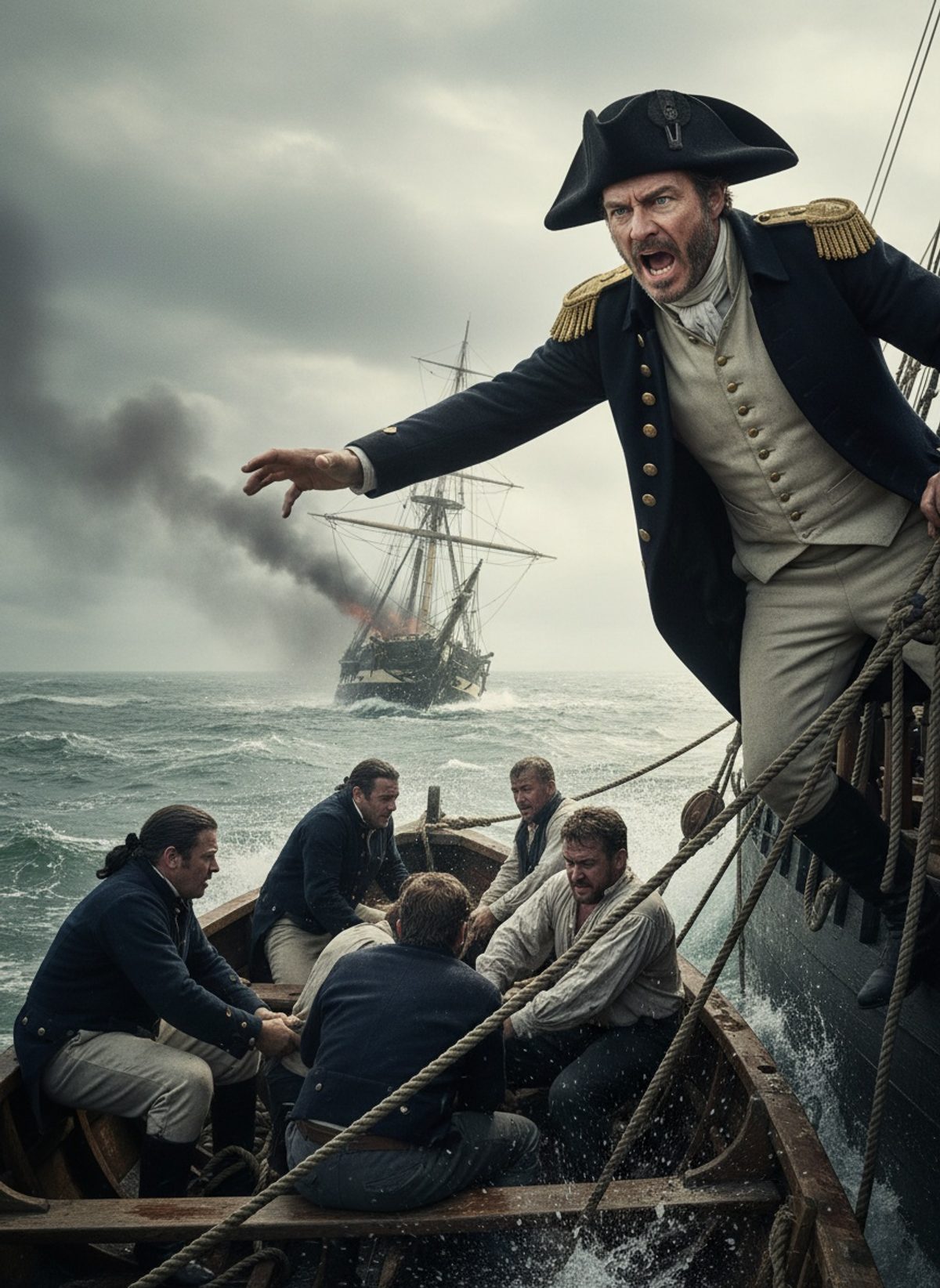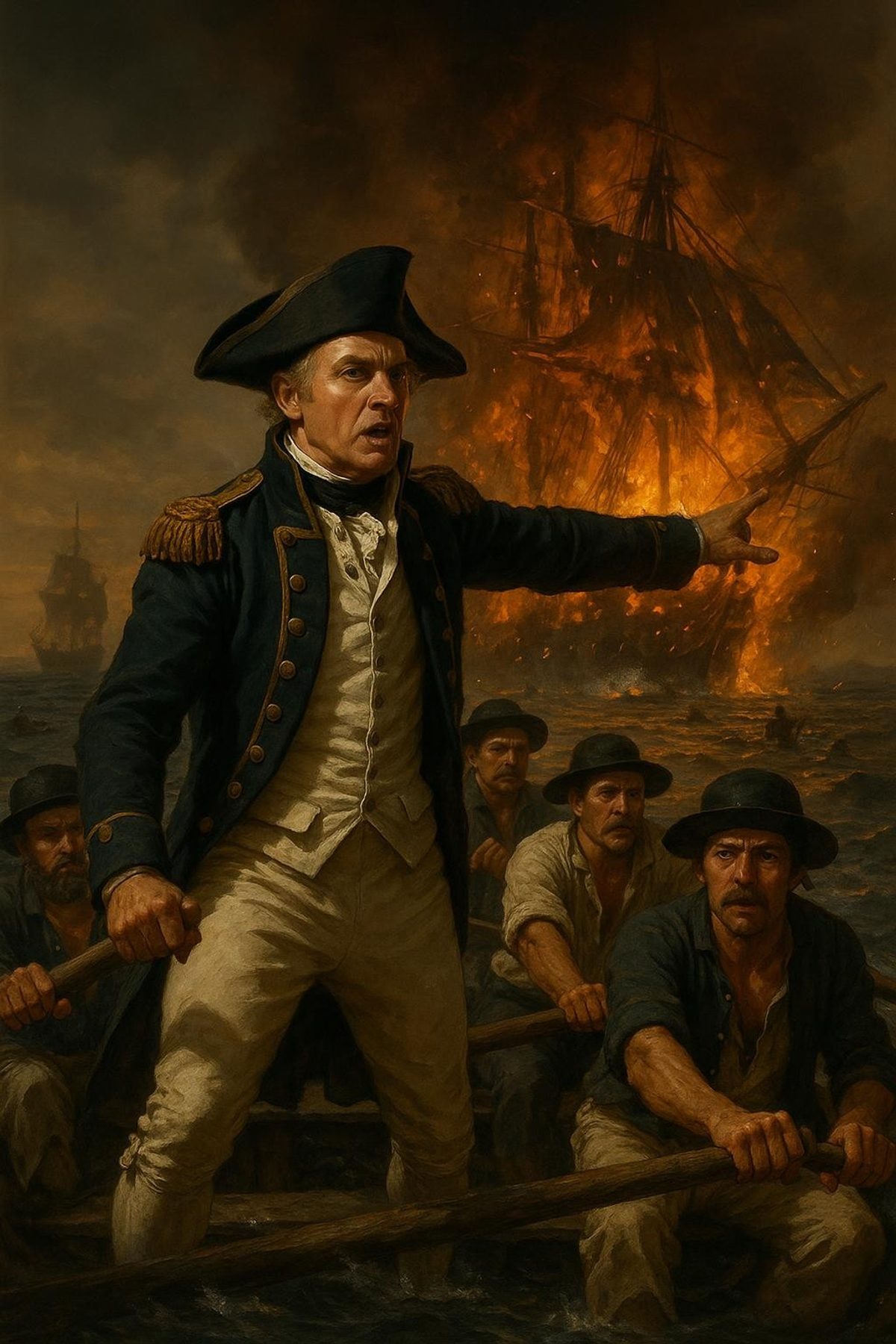
The acrid stench of burning tar and gunpowder hung heavy in the air as Captain Edward Pellew's keen eyes surveyed the chaotic seascape before him. The French frigate, now half-consumed by unforgiving flames, groaned ominously as its wooden hull began to crumble. The water around the stricken ship danced with fiery reflections, and the crackle of fire was interspersed with the desperate cries of its trapped crew who clung to the last shreds of hope amidst the inferno.
The Decision Beyond Duty
Pellew was no stranger to the rigors of naval warfare. The Age of Sail was replete with tales of valor and ruthless engagements, yet it was the issuance of a decidedly unconventional command that set this day apart. As smoke cloaked the British ships and the echoes of cannon fire faded into an uneasy silence, Pellew found himself at a crossroads. The battle had ended; victory was theirs, but the fate of hundreds of enemy sailors still hung precariously by a thread.
While maritime tradition would have justified leaving the vanquished ship to its fiery fate, Pellew's sense of duty transcended conventional expectations. His decision to deploy his boats toward the stricken enemy vessel was a testament to a deeper moral compass—one that saw through the fog of war to the common humanity that pulsed beneath the surface of adversarial enmity.
The Fire and the Fury
The task was perilous. Rowing directly into a blazing wreck required not just skill, but extraordinary courage. His men understood the risks. With every pull of the oars, they drew closer to the swirling whirlpool of flames and debris, propelled by the knowledge that lives hung in the balance. The sea, once an unpredictable ally, now threatened to claim both rescuer and rescued alike.
Read next: The Night a British Crew Sailed Into an Uncharted Minefield
As they approached, the ship's timbers snapped treacherously like brittle bones, emanating a searing heat that threatened to obliterate everything in its path. Despite this, Pellew and his crew were undeterred. Their boats zigzagged deftly through the wreckage-strewn waters, and each time they returned to the safety of the British ships, they did so with yet more survivors.
Unity Amidst Adversity
The rescued French sailors were a motley crew of exhaustion and disbelief. For them, the prospect of being saved by their erstwhile combatants was as unexpected as it was humbling. Many, their spirits broken by the conflagration, wept openly as they clambered aboard the boats. The sight of the enemy transforming into saviors stirred something profound within these men who had moments ago resigned themselves to a grim fate.
Language barriers dissolved in the shared relief and gratitude that permeated the sea air. Pellew's men, hardened by combat yet softened by the palpable humanity of the scene, offered care and comfort where hostility once reigned. In this shared crucible of survival, distinctions between friend and foe blurred, leaving behind an indelible sense of unity that even war could not extinguish.
The Unsung Heroism
Upon their return to British shores, Pellew and his men were met with admiration and disbelief. As word of the daring rescue spread, it painted a portrait of British mariners not just as warriors of the sea, but as champions of compassion. Yet, in this act of valor, there remained an air of quiet dignity; Pellew received no awards, no grand ceremonies in his honor—his reward was the knowledge that 345 souls, once considered his foes, lived to see another dawn.
In the records of the Royal Navy, tales of triumph and conquest abound, yet this chapter—etched not in medals but in the enduring impact on every life touched by those harrowing moments—remains one of its most poignant legacies. It is a story passed quietly from officer to sailor, inspiring those who have donned the mantle of naval service since.
Reflections on a Burning Sea
The sea is unyielding, an entity that regards human struggle with indifference. Yet moments such as the day Captain Pellew ordered his men into the flames transcend epochs, speaking to the courage, integrity, and tenacity that define true leadership. In a world accustomed to division, this story echoes as a challenge to go beyond duty, to see the reflection of our humanity in the face of our adversary.
As readers reflect on this tale from that August in 1801, it serves as a powerful reminder that the most enduring victories are often not those recorded at sea or in the annals of history, but those etched in the hearts and minds of those who bore witness and survived. In this fiery baptism, the boundaries of past enmities fell away, leaving a legacy of reconciliation and shared humanity—an ageless testament to what is best in mankind.