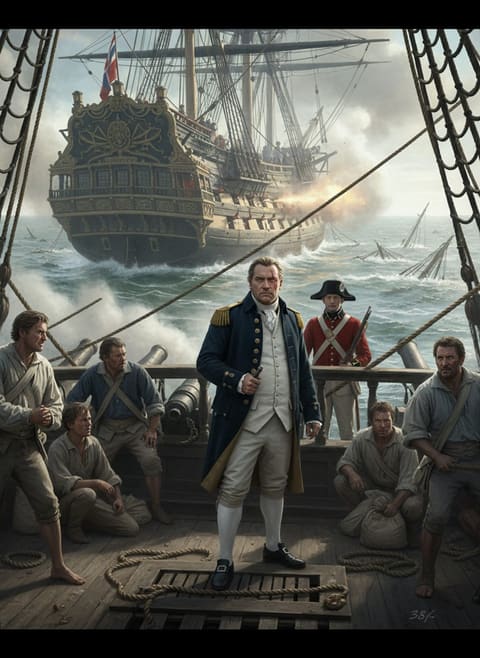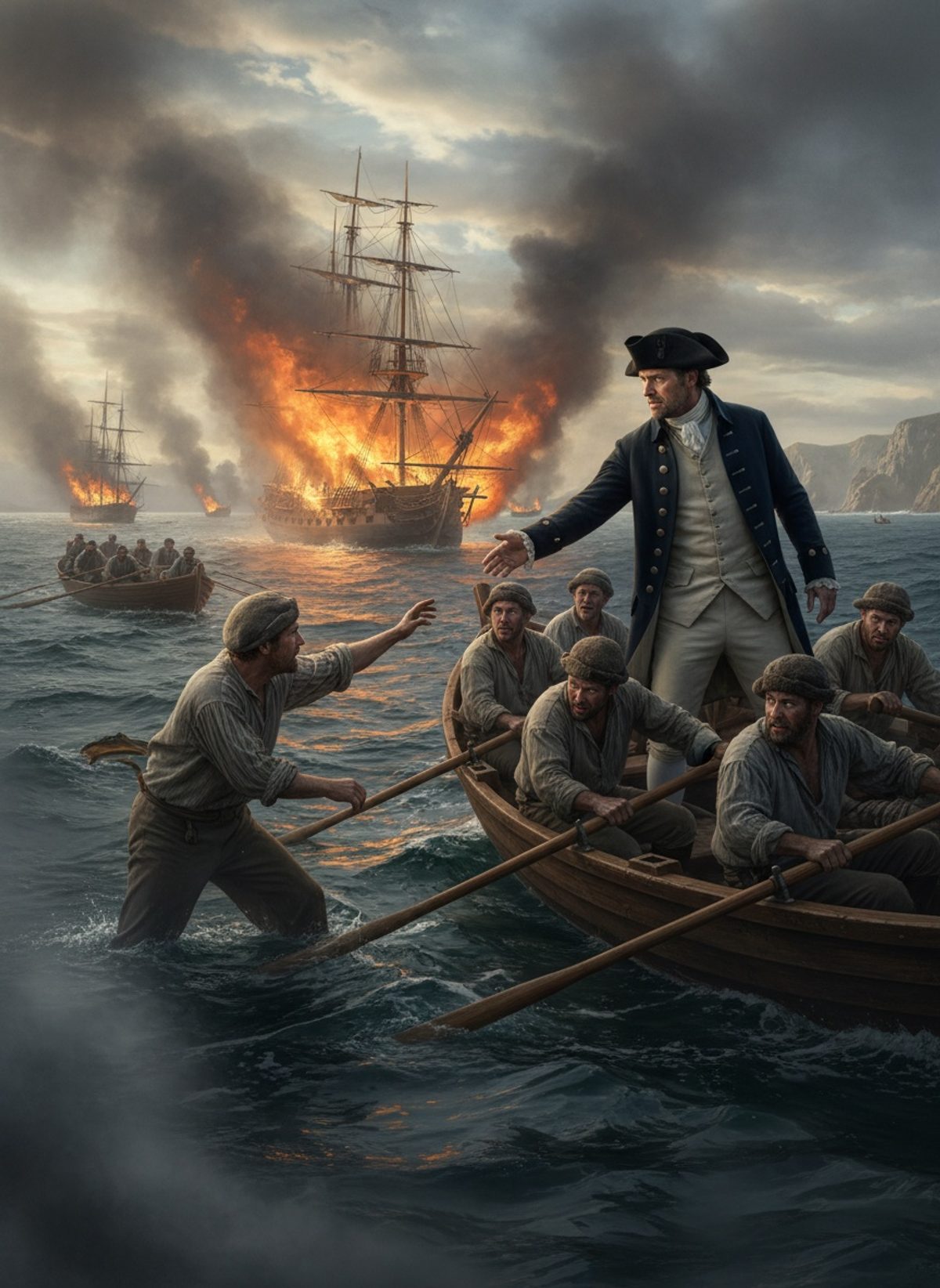
The sun was setting over the tumultuous sea, painting the sky with hues of fiery orange and somber indigo. Thick plumes of smoke lingered in the salty air, remnants of the fierce battle that had raged mere hours before. Waves crashed against the fractured hulls of ships scattered across the Bay of Lagos, their wooden carcasses charred and broken—haunting witnesses to the grim aftermath of naval warfare. Among these ghostly shadows of the clash, desperate cries for help mingled with the relentless roar of the wind, inviting an impossible decision.
A Test of Character Amidst Chaos
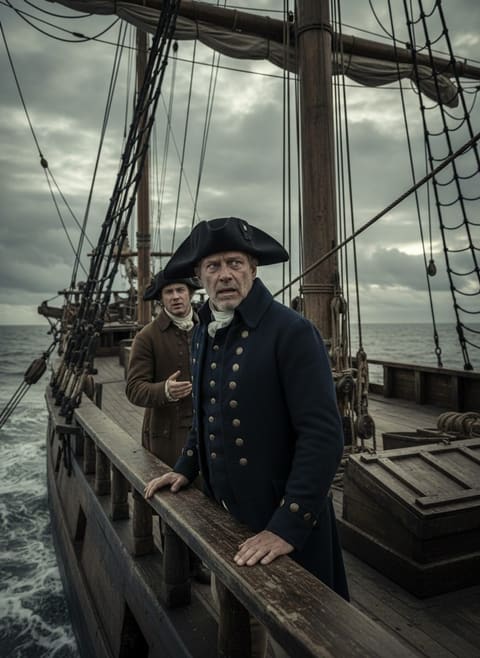
On that fateful August day in 1759, Captain Richard Howe stood on the deck of his ship, the sounds of victory still echoing faintly in his ears. The Seven Years’ War was at its peak, and the Battle of Lagos had ended in a definitive victory for the British fleet over their French adversaries. Captain Howe gazed at the sea around him, the reality of war starkly evident through the floating debris and struggling men. Rivulets of fear and confusion wove through these French survivors. They were enemies, yet they were human. Against the backdrop of his own triumph, Howe faced a moral quandary that transcended orders and protocol.
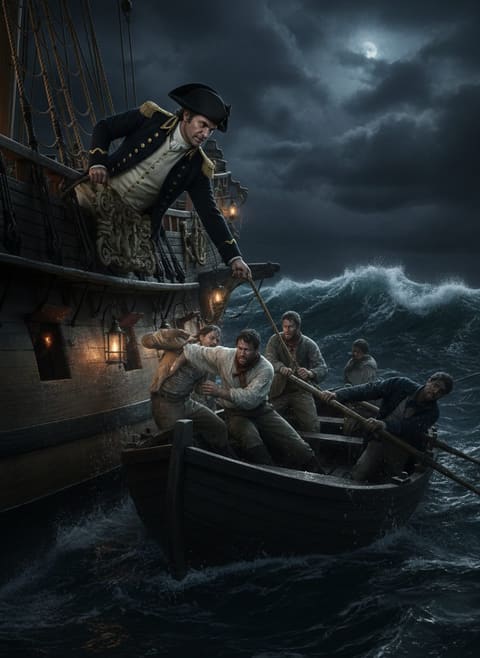
Historically, naval traditions did not oblige victor captains to extend mercy to their adversaries—especially those who might rekindle the flames of opposition if they survived. The sea offered an excuse to those who wished to ignore the cries for help on moral reasons, yet Howe, a man known for his strategic brilliance and stern discipline, hesitated not for long. His was not a brand of victory defined solely by the number of enemy ships sunk. Instead, he saw humanity in this shattered armada. He ordered his crew to lower the longboats, rallying them with a silent nod, and they began to row toward the remnants of the French fleet.
Mercy in the Madness
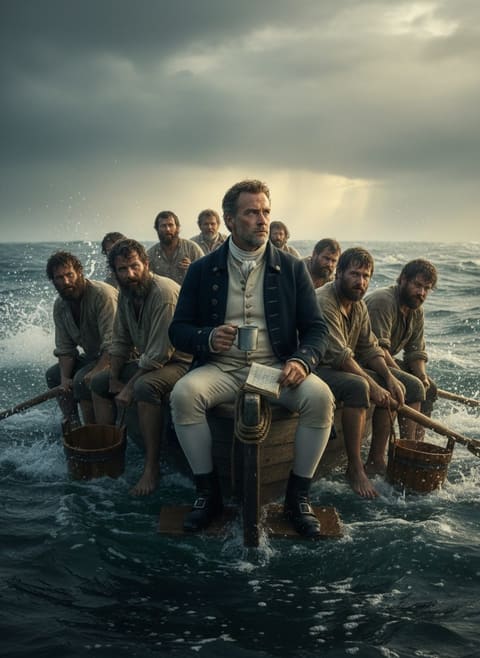
The British sailors worked tirelessly against the relentless waves, their muscles straining with each stroke of the oars. The longboats, a fleet of mercy amidst floating devastation, churned through the icy brine, navigating around treacherous wreckage. Howe, leading by example, moved among his men, encouraging their efforts with a quiet resolve. The jaws of the sea threatened to swallow any man who dared venture too close to its frothy maw, yet they pressed on, urged by a command rooted not in order but in compassion.
Read next: The Day a Navy Captain Freed a Ship Full of Pressed Men
Howe’s decision was an unusual one, not taught within the rigid structures of maritime warfare. In an era where the glory of battle found itself celebrated and intensified by acts of brutal retribution, Howe’s actions resonated as a testament to a nobler calling—one that prized human life above military doctrine. Those hours of laborious rescue revealed a lesser-spoken truth about warfare: that it wasn't always the victories that left lasting impressions, but rather, how mercy amidst malevolence could illuminate a path forward.
The Reprieve of the Rescued
Every soul pulled from the grasp of the unforgiving sea brought whispers of gratitude. The faces of the rescued, weary and battered, slowly transformed from expressions of desperation to muted disbelief. These were not men who expected mercy—and perhaps not all men who deserved it by their nation’s deeds. Yet here they were, draped in British naval blankets and nourished by rations handed by men whom, just hours before, they had sworn to fight to the death.
Read next: The Day William Bligh Faced His Crew and Would Not Break
In those precarious moments on the boats, distrust lingered between former enemies. Yet, it was replaced, gradually, by a shared understanding. Howe’s men saw humanity in their French counterparts, and a rare camaraderie took precedence over animosity. The very concept of an enemy was challenged, as the men recognized in each other the shared lot of sailors bound to the unpredictable tides of fate. In the endless stretch of the bay, they found a sliver of hope in this newfound alliance.
An Unforgettable Legacy of Compassion
The events of that August day did not drastically alter the course of the Seven Years’ War, nor did they change the strategic stakes of the conflict. Yet, Captain Richard Howe’s story found a different kind of immortality. In a brutal era defined by power and conquest, his choice to value compassion over command served as a beacon—a tale of shared humanity that transcended borders, reminding all who heard it of the enduring power of mercy.
As generations passed, and textbooks continued to immortalize battles and treaties, Howe’s actions remained largely unrecognized in formal history. His story lacked the crisp allure of conquest, yet it whispered across time, gracing the hearts of those who understood that sometimes, the greatest victories were not won on the battlefield. In choosing to save his enemies, Howe illustrated that the lessons of history could also be learned not from the strategies that led to victory, but from the moments where empathy prevailed over enmity. And in a world where conflict continues to define civilizations, perhaps the greatest legacy we can inherit is the courage to choose humanity against the tide.