The sea lay calm beneath the August sky, a shifting pane of blue pooling to the horizon, flecked only by the unyielding vessels that had clashed in their ancient dance of war. The midday sun beat down mercilessly upon the wooden decks of the ship, where the acrid smell of gunpowder still hung in the smoke-laden air. Cannons sat silent, their mouths having just roared in a fierce cacophony that announced the brutal symphony of battle. The quiet that followed was eerie and profound, a testament to the lives altered—or ended—in the sway of the tide. Here, at this moment in 1801, amidst the tense tranquility, one British captain would make a decision that resounded through the annals of maritime history.
The Clash of Titans
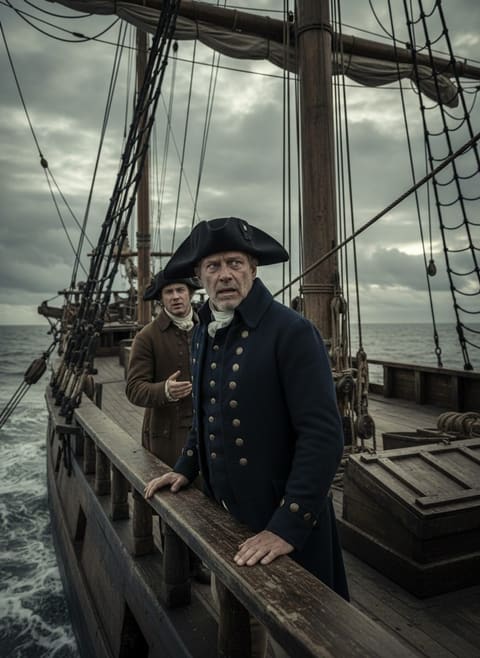
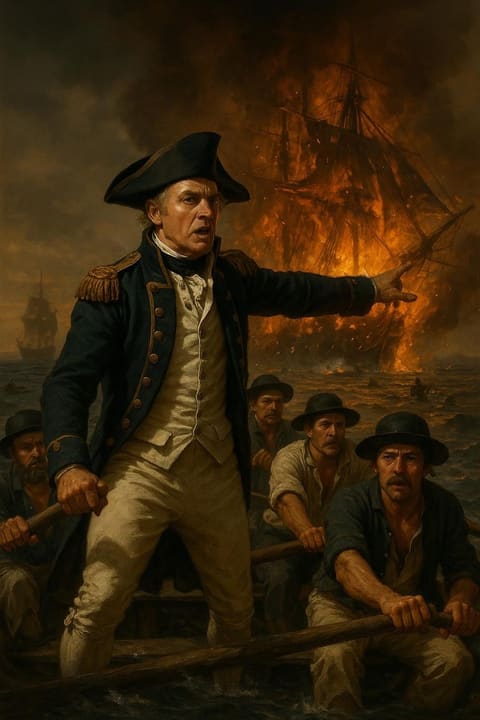
On this day in the Age of Sail, the British Royal Navy crossed paths with French forces, their encounter a tableau vivant of nautical power and naval strategy. The British ship, under the command of Captain Edward Pellew, had played its part vigorously. Cannons fired in unison, the black iron orbs of destruction tearing through air and timber, their trajectory a promise of ruin. The French vessel could do little but respond in kind, though the skill and ferocity of Pellew's crew soon reduced the enemy ship to a floating ruin.
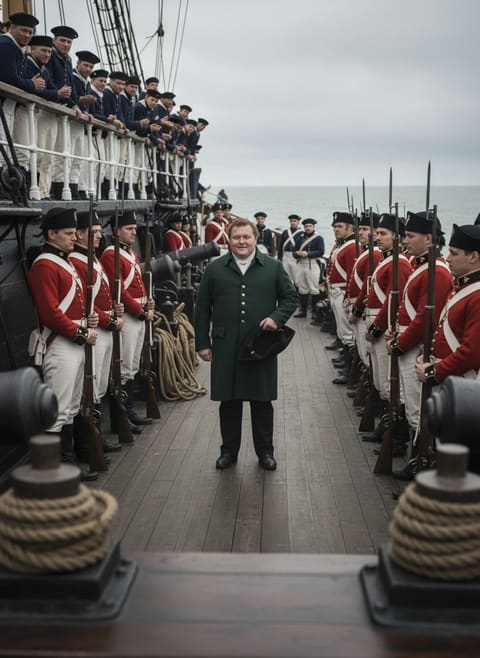
The sailors, sweat-soaked and smoke-stained, moved like ghosts amidst the narrow passageways and open decks. Draped in the shadows of the sails, all eyes were fixed on their captain, a man as solid and steady as the ships he commandeered. That fateful day, the elements of surprise, precision, and relentless British discipline had sung their traditional song of dominance. Yet, as the guns cooled and the scene shifted from chaos to the silence of aftermath, the captain's determination pivoted in an unforeseen direction.
A Momentous Order
The duel subsided, but the sea harbored more than the crimson and salt of battle; it bore the wreckage of a nation fractured. Captain Pellew observed the horror-strewn panorama with a hardened gaze, yet it was his heart—unyielding and profound—that dictated his next move. Against the expectations pounded into every mariner since setting sail, against the notion that the vanquished foes were now spoils of war, Pellew gave an order that would astonish his men and teeter on the edge of naval tradition: to rescue the enemy.
Read next: The Night the British Ate the President's Dinner
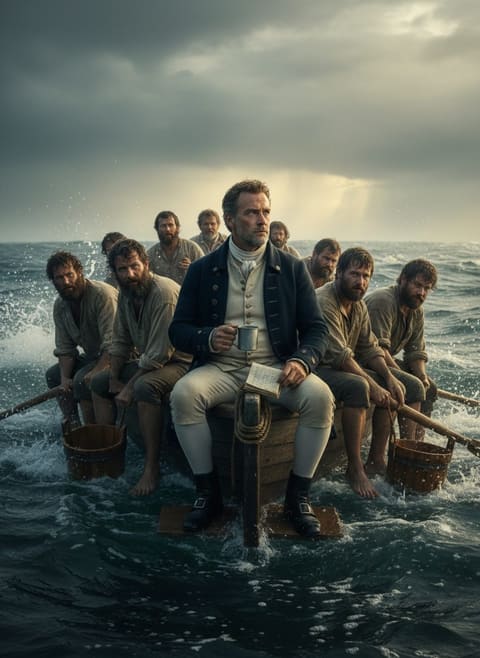
The British sailors were not accustomed to such directives. Schooled in victory's stark realities, where chivalry rarely bore compliment, they now found themselves lowering ropes to pluck their erstwhile adversaries from the cold grasp of a watery fate. French sailors, their faces a mixture of shock and gratitude, were hoisted one by one onto decks they had sought to conquer. Once enemies, they now surveyed their British saviors through eyes that brimmed with a complex array of emotions.
The Silent Exchange
Amidst the creaking of the ship and the muted lapping of waves against its hull, the rescued men from the French frigate stood uncertain upon well-trodden British planks. Here, where the salt of sweat mingled with the salt of the sea, language barriers dissolved under the universal understanding of shared humanity. Those who emerged from the carnage and chaos bore not only the scars of the morning’s battle but an unspoken alliance with those who had once sought their destruction.
A curious camaraderie blossomed in the aftermath of gunfire. The British crew, eyes once sharp with duty, now surveyed their French counterparts with respect born of valor on both sides. Despite the deep rooted animosities fostered by years of war, in this sunlit suspended tableau, there was no need for gentle words, only the quiet transactions of kindness shared over rations and water. Worlds apart were unified in their relief.
Read next: The Day a One-Eyed Admiral Sailed Into the Line of Fire
The Choices of a Compassionate Commander
Captain Pellew’s decision was more than an instinct of mercy; it drew upon a profound moral compass that steered him beyond the rigid edicts of military engagement. To many, his actions were a paradox, a benevolence barely fitting the role of a naval officer hardened by years on the high seas. Yet, they spoke to a broader philosophy, leaving his naval cohorts and the rescued French mariners to ponder the essence of honor.
The implications were more than philosophical musings. An act of humanity at sea resonated as a beacon of unexpected defiance. News of this remarkable episode filtered through channels formal and informal, casting Captain Pellew in roles both heroic and contentious, highlighting the ethical complexities faced by naval leaders during a turbulent era.
A Remembrance Beyond Waves
In the stillness of the sea on that August day, a British captain’s compassionate act reverberated beyond the immediate field of battle. The story of Captain Edward Pellew's choice illustrates the profound human capacity to shift from vengeance to mercy, even against the tempest of warfare. This tale survived the years not merely as a salute to one man's courage, but as a catalyst prompting reflection on the wider stage of human conflict. Where cannon shots once rang out, history remembers too the silence of peacemaking, born not from treaties or ceasefires, but from a single ship's deck where enemies became men once more.