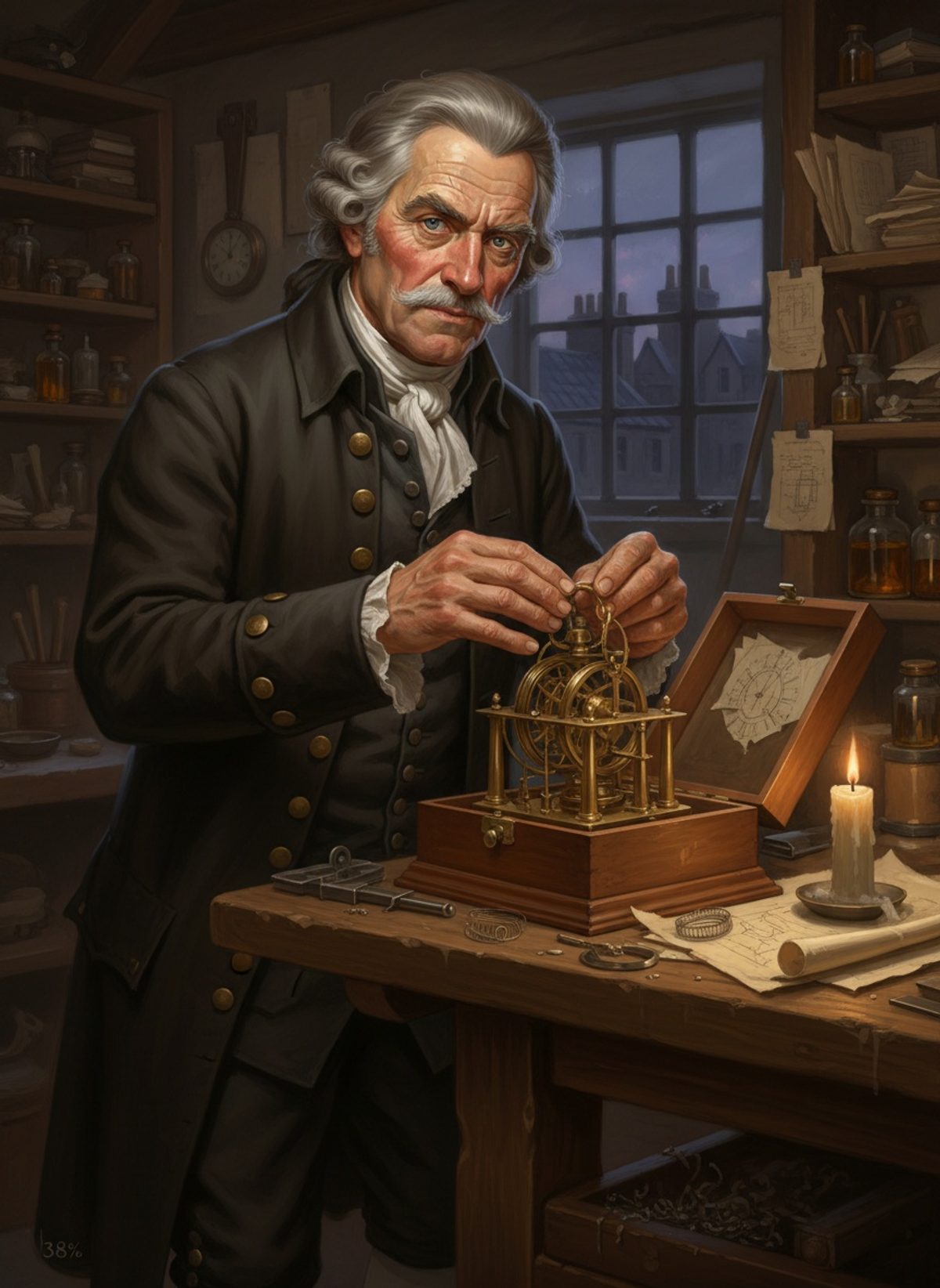
The morning sunlight stretched across the rough-hewn oak table, casting shafts of light through the modest workshop in the small village of Barrow upon Humber. The familiar cadence of ticking clocks filled the air, a symphony of gears and springs. Yet, within this humble space in 1773, the stakes reached far beyond the confines of the clockmaker’s domain. It was here that John Harrison, an eighty-year-old son of a carpenter, sought to conquer one of the greatest challenges in navigation: longitude. For more than half a century, his inventions faced immense skepticism from the naval authorities, who deemed his vision impossible. But, in Harrison's hands, time itself would become a navigational savior.
A Quest Against the Sea
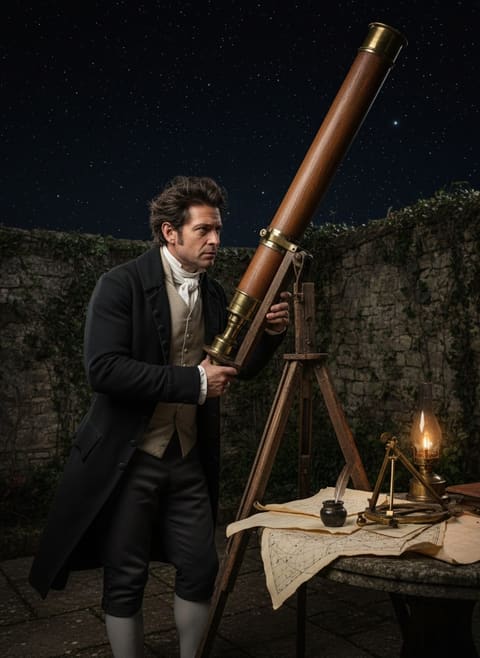
The unforgiving sea had long been the bane of sailors. While latitude could be gauged by the angle of the sun or stars above the horizon, longitude remained elusive, leading to treacherous errors in maritime positioning. Ships frequently found themselves lost, crashing into coastlines or succumbing to the ocean’s depths. The sea was a vast dominion of mystery and peril, swallowing thousands of lives because one piece of information was beyond human grasp. The need for precision was more than a scientific luxury; it was a matter of survival.
In his youth, driven by the tales of sea-bound disaster, John Harrison embarked on a journey of his own. As the son of a rural carpenter turned clockmaker, Harrison seemed an unlikely hero. He did not possess the training of a naval officer nor the backing of affluent patrons. Yet, his keen understanding of mechanics and his passion for precision set the stage for an invention that would redefine navigation — the marine chronometer. Harrison believed with an unshakable certainty that a reliable timepiece could serve as a compass against time’s relentless tides.
The Relentless March of Innovation
Harrison’s ambitious endeavor began in the early 18th century with the creation of his first clock entirely made of wood, a testament to his father's traditional craft, yet ingeniously precise. His tenacity earned him an audience with those who had the power to transform maritime travel. His quest brought him to the Board of Longitude, established by the British government in the 1710s with a hefty reward for anyone who could solve the longitude problem. Recognition from this board could bring Harrison not only fortune but the transformation of seafaring safety. However, convincing seasoned navigators and astronomers of the clock’s potential was a Herculean task.
Read next: The Day a Tanner's Son Proved the Earth Was Millions of Years Old
Over decades, Harrison’s designs evolved, each iteration pushing the boundaries of horology. By 1773, he had crafted a clock so precise it defied the roiling of the sea, able to keep time accurately over long voyages and various temperatures. This innovation didn’t come easily. The board, steeped in tradition and skepticism, contested Harrison’s advances, challenging him to pass rigorous tests. They favored astronomical solutions over mechanical ones, viewing Harrison’s work as a quaint curiosity, rather than a revolutionary breakthrough.
The Triumph of Tenacity
Despite institutional resistance, Harrison’s resolve was as unwavering as his inventions. Each obstacle only deepened his resolves. Fortunately, by the late 1760s, his persistence bore fruit. A trial voyage from Portsmouth to Jamaica saw his H4 chronometer in action, proving so accurate that it revolutionized naval capability. The achievement forced even the most skeptical eyes to take notice. The clock’s integrity remained steadfast as ships sailed thousands of miles, its tick-tock offering the reassurance of terrestrial connection amidst oceanic vastness.
Read next: The Day a Weaver's Son Mapped the Invisible World
The acclaim that followed, albeit reluctantly awarded, affirmed the clockmaker’s genius. Harrison, by then an octogenarian and weary from the fight, emerged victorious. His chronometer wasn’t just a device; it was an instrument of change, its impact rippling through the scientific community and the shipping world alike. His solution saved countless lives, altering the course of maritime history. The legacy of his determination meant that no longer would the sea be the theater of uncertainty that had haunted sailors for centuries.
The Legacy of Time’s Master
The narrative of John Harrison is not simply about technological triumph; it’s a chronicle of human endurance against systemic inertia. Harrison's life reminds us that true innovation requires not only brilliance but steadfast dedication, often against insurmountable odds. His story illustrates how an ordinary man from Lincolnshire defied the expectations of the era’s elite minds. It’s a tale underlining the convergence of art, science, and passion, and highlights a pivotal moment where human ingenuity chipped away at the mysteries of the universe.
Today, as modern ships traverse the world’s sprawling oceans with precision unimaginable in Harrison’s time, we remain indebted to the clockmaker who dared to measure time with steadfastness. His legacy beats rhythmically with every passing second, echoing through the ages like the tick of a well-crafted clock. The very seas that were once graveyards became highways of trade and discovery, tamed not by nature but by time's relentless keeper. In this story, the essence of progress takes form, waiting patiently for the next mind willing to challenge the impossible.