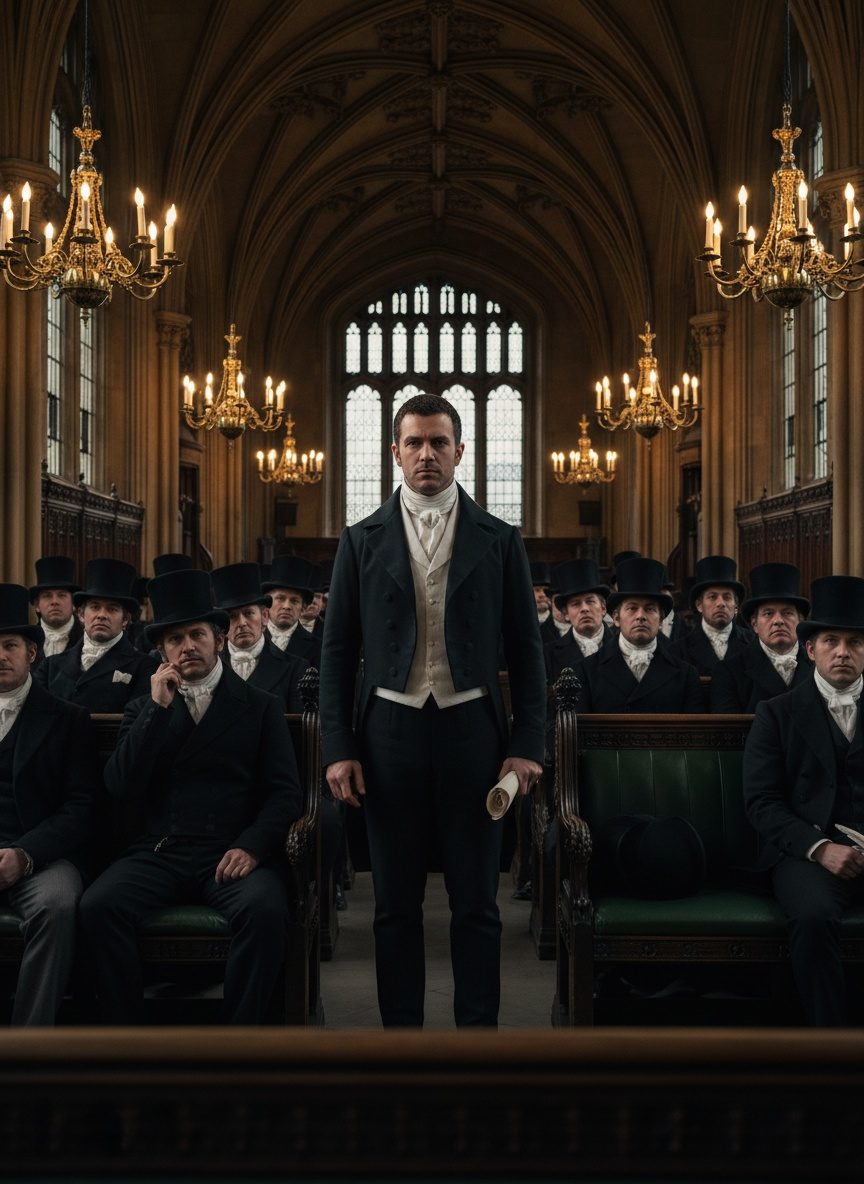
The room was stifling, the air thick with the persistent buzz of murmurs and shifting papers. Candlelight flickered uncertainly against the oak-paneled walls as Michael Sadler rose to speak, his voice cutting through the din like a blade in the silence. In his hand, he held the damning testimony—a story from the grim underbelly of Britain's economic triumph. Here, in the heart of Parliament, the future of industry began to change, resounding with the tale of Robert Blincoe.
The Weight of Chains
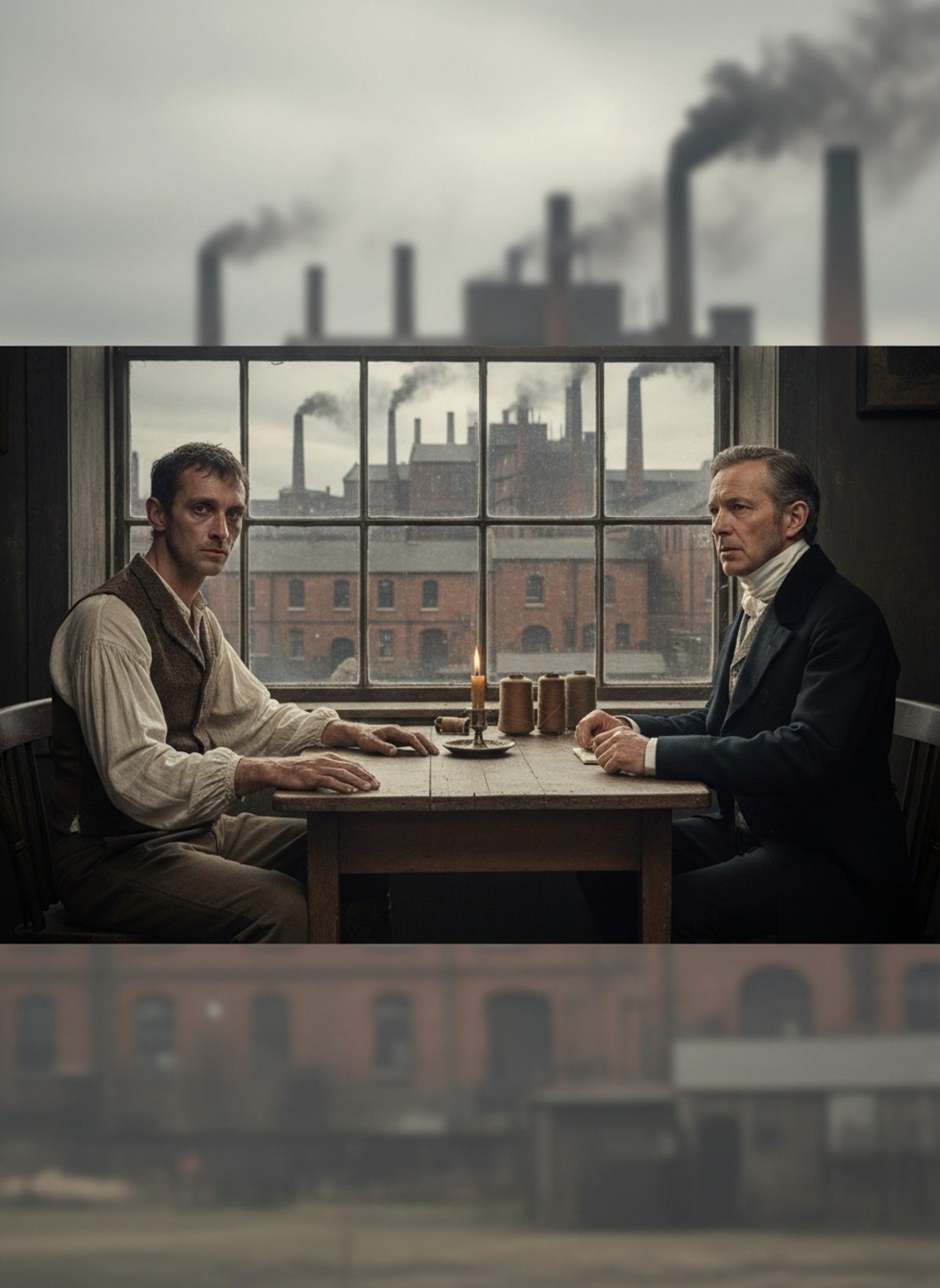
Robert Blincoe's life began as a bleak testament to Britain's industrial hunger. At seven, he was bartered like an unwanted trinket, a pauper child thrust into the grinding maw of a Nottingham cotton mill. The air was dense with cotton dust, acrid and suffocating. Ancient machines clattered and whirred, their iron jaws perpetually hungry for the unending cycle of labor. His days stretched into fourteen-hour marathons, where time carried the burden of an unyielding yoke. This was the world of industry that Britain celebrated—a world buoyed by child labor, where Robert and many others became the invisible cogs in its merciless machinery.
In the shadowed corners of the mill, Robert learned the contours of cruelty. Overseers wielded both power and brutality, with scars carved into tiny bodies as silent proof of defiance quashed. There were nights when Robert's dreams were invaded by the relentless hum of spinning frames, the specters of his toils ever present. Yet, his spirit, though caged, remained unextinguished.
Whispers of Resilience
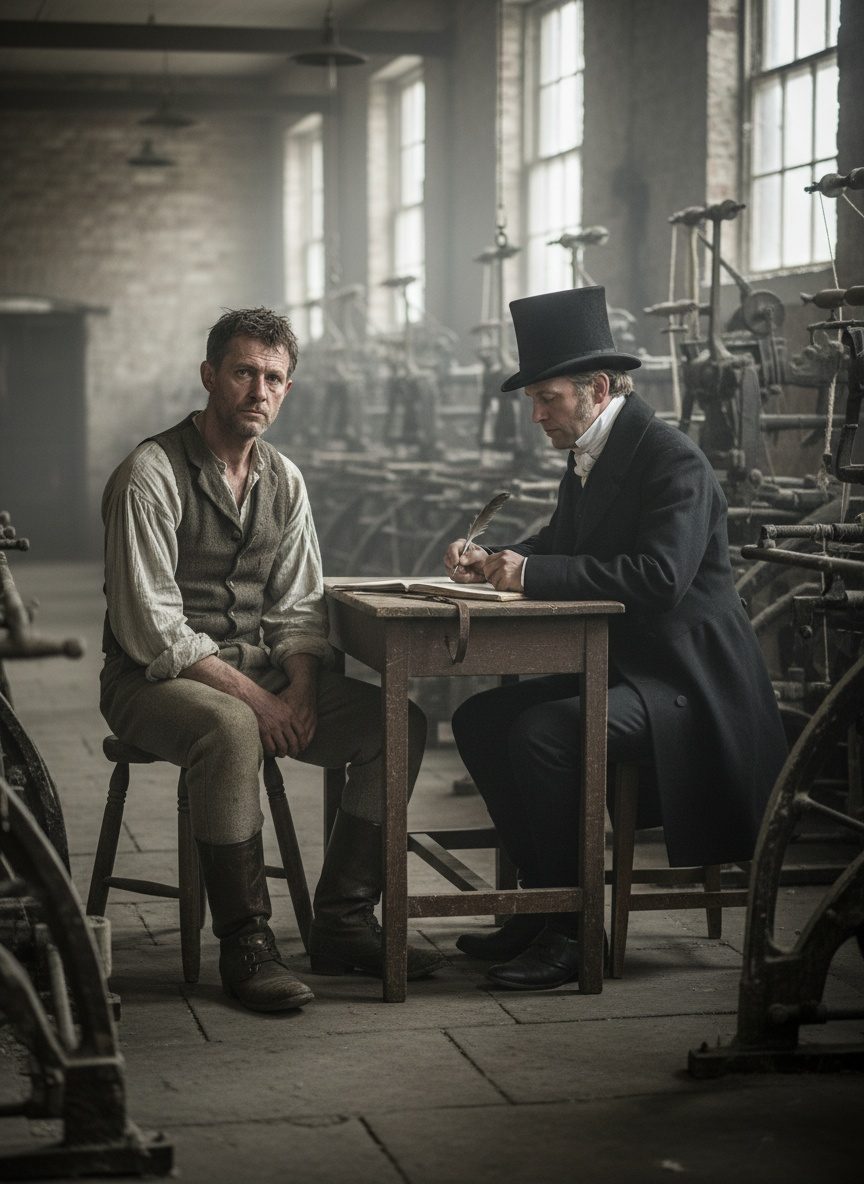
In an age where silence was the expected currency of survival, Robert opted for a different path—the precarious road of truth. His encounters with journalist John Brown became the catalyst of change, turning whispers of suffering into a clarion call that reached the ears of the powerful. It was not easy to summon the courage to recount those years of endurance, pain, and loss. Yet, through the flickering light of another era, Robert's voice emerged as a beacon.
Read next: The Day a Mill Owner Walked Into Parliament for His Children
The narrative Robert shared was raw and unvarnished, a tapestry woven with the threads of hardship. It spoke of children who grew haggard before their time, their limbs worn down by repetitive toil, and their hearts weighed heavy by the absence of childhood. The mills of Manchester and beyond echoed these stories—an entire generation fashioned in the likeness of unyielding labor. Each testimony John Brown documented painted a collective picture of a world in dire need of reform.
The Power of Words
When Michael Sadler stood in Parliament to lay bare Robert's words, the assembly quieted, the tension almost audible. As he read, an unsettling stillness fell, wrapping around the room as the horrors of exploitation became undeniable. This was a history unwritten, demanding to be heard, to be rectified. Sadler's passionate delivery transformed Parliament into a court of conscience, where the invisible became visible, and the neglected were finally acknowledged.
Among the listeners, a transformation began. The testimonies of Robert and his peers became a mirror, reflecting the moral darkness beneath Britain's industrial veneer. The reality of children, condemned to unending labor, forced the nation's leaders to confront the ethical implications of economic triumph at any cost. It was not mere statistics that stirred this awakening but the harrowing stories of real children, their innocence eroded by relentless exploitation.
The Dawn of Reform
The Factory Act of 1833 emerged as the first legislative step toward a new dawn, catalyzed by the courageous voices like Robert's. It was more than ink on paper; it was an acknowledgment of the human cost underpinning industrial success. The Act imposed crucial limits on child labor, setting a precedent for future generations. The mills, once untouchable bastions of hardship, now found themselves under the scrutiny of an awakening conscience. This was the first flicker of change—a testament to the fact that even the smallest voice, when amplified through collective will, could alter the fabric of society.
Robert Blincoe's story transcended the narrative of an individual struggle, shaping itself into a broader societal movement. It served as a poignant reminder that history often belongs to the silent, waiting for someone brave enough to speak up and demand the telling. In the corridors of Parliament, where once his story was a whisper against the tide, it became a catalyst for change, challenging the nation to redefine its moral compass.
The tale of Robert Blincoe is a legacy etched not just in the annals of legislative reform but within the moral awakening of a nation. It asks us to reflect on the cost of progress and consider those left voiceless in the machinery of advancement. As long as there are stories of injustice waiting to be told, Robert's spirit endures, reminding us of the power a single, unwavering voice holds to change the world forever.