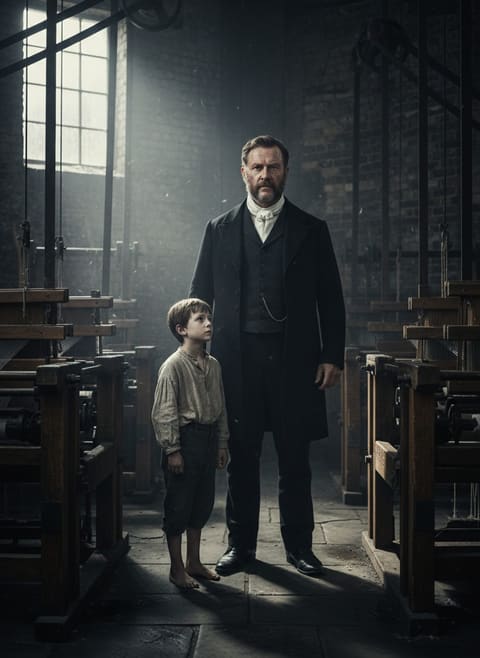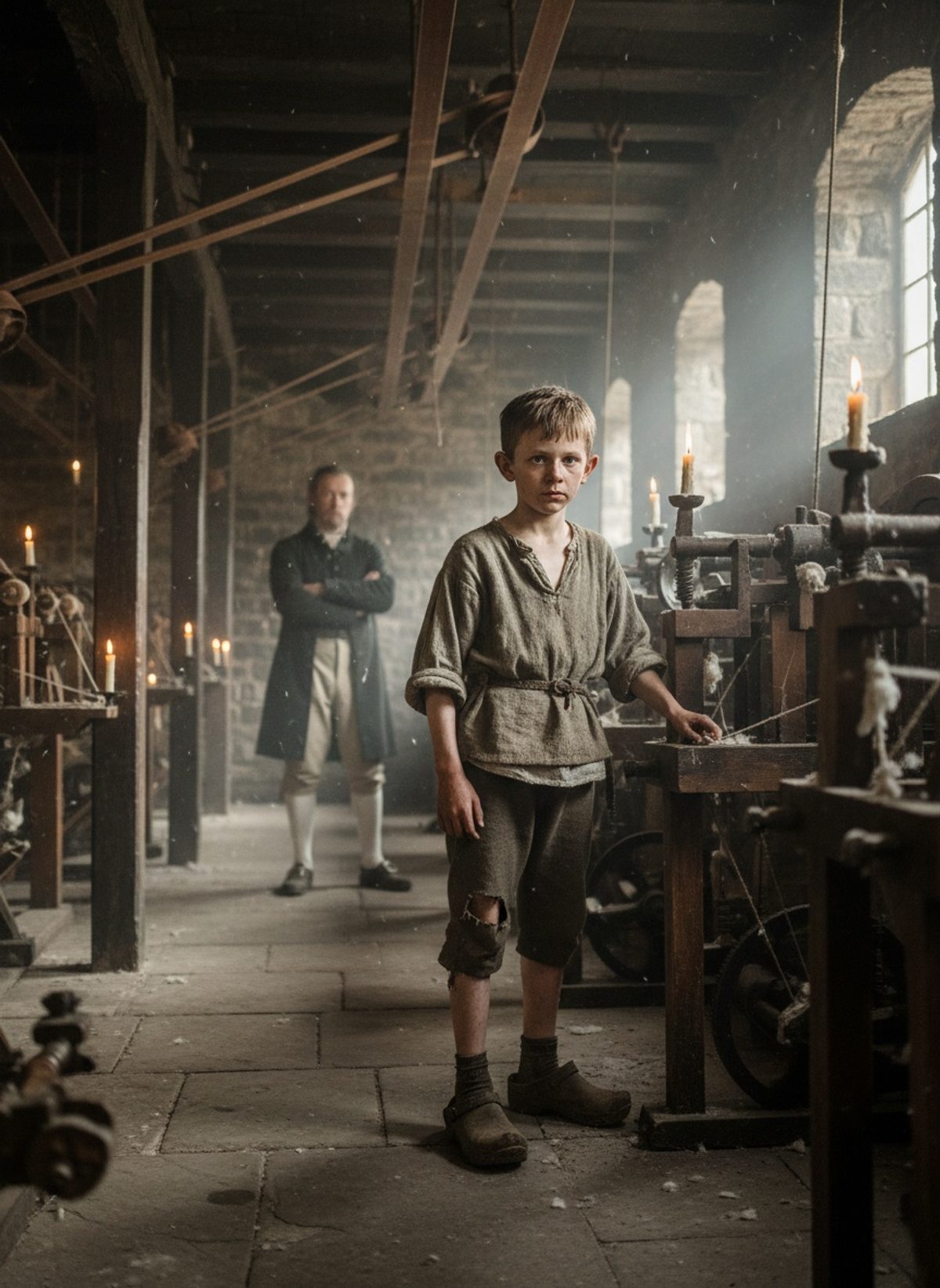
The skies above Manchester were heavy and gray, their oppressive weight mirrored by the rows of grim brick factories stretching as far as the eye could see. The rumble of machinery within was a constant backdrop, drowning any attempt at silence in a cacophony of industry. The streets lay in shadow, the soot-stained buildings standing like sentinels of this new industrial age. Here, in this bustling heart of 1796, amidst the clatter and clang of cotton mills, an invisible tragedy was unfolding. Children, some as young as seven, labored tirelessly inside the mills, their bodies too small for the massive machines they tended. Among these silent workers was Robert Blincoe, a boy sold into labor, whose suffering carried the weight of thousands of unheard voices.
The Silent Suffering in the Mills
Within the labyrinthine walls of Manchester's cotton mills, young pauper children were not just workers; they were cogs in a relentless, unforgiving machine. The air inside was thick with lint, scraping at throats and making each breath a labor in itself. The mills operated on daylight hours extended far beyond the sun's natural arc, and their ceaseless machines offered no reprieve for little hands. The clamor was deafening, with the roar of spinning frames and the ceaseless clatter of looms creating a din in which even screams were lost. Here, a child's day began long before the first light of dawn and ended well into the night, an endless cycle of fatigue and monotony.
Robert Blincoe, barely seven years old, was one of the countless children purchased by the mill owners. His tiny fingers, though agile, bled daily from the spindles they guided. His story was sadly typical, a narrative shared by the nameless individuals plucked from the workhouses, their lives exchanged for profit. These young laborers were commodities — stripped of identity, stripped of dignity. Yet they bore a cruelly imposed resilience, forced to mature in a world where innocence was a luxury none could afford. Their juvenile presence within these walls illuminated the bleakness of industrial progression, revealing an underside darkened by exploitation.
The Man Who Listened
The plight of children like Robert Blincoe might have remained confined within the dusty corridors of Manchester's mills if not for one man's steadfast determination. A printer, unnamed in the eternal records, came across the testimony of this young worker and was moved by the injustice in his words. The echoes of Robert's story resonated deeply, a piercing cry that could not be ignored. Though the narrative was uncomfortable and threatened to challenge the burgeoning industrial prosperity, the printer recognized it as a truth that demanded a voice, a beacon to expose the shadows lurking behind progress.
Read next: The Day a Clockmaker's Son Stopped Child Labour Cold
This courageous individual took to his press, imprinting each page with the sorrowful tale of child laborers. He defied the silent complicity that allowed such horrors to persist, ensuring that Robert's story would not be swallowed by the industrial beast. The printed words acted as a catalyst, stirring emotions and igniting conversations among those who had long averted their gazes. Through his actions, this printer gave agency to Robert Blincoe and his peers, their names finally inscribed in the annals of history, carving a path for reform that would ripple far beyond the city lanes.
Echoes of Silent Voices
The account of Robert Blincoe, made public in an age teetering on the brink of change, challenged the very foundations of the Industrial Revolution's silent agreements. The narrative broke through the cacophony of machines, lending a voice to the voiceless and casting a light on the dark truths underpinning industrial wealth. It posed a critical question: at what cost should progress be measured? The printed story tapped into a burgeoning awareness that even the deafening machinery could not drown — the recognition that childhood was not a resource to be extracted until despair set in.
Read next: The Day a Weaver's Son Lit Britain's First Public Railway
The impact of the brave printer's work resonated beyond its initial audience. The words, printed in small font but formidable in message, planted seeds of change. They reached legislators and philanthropists, igniting a spark that would fuel the fires of reform. The children in the mills, their small hands worn and weary from toil, found unexpected allies among those who began to see them as more than a means to an economic end. They were children devoid of choice but rich in spirit, and slowly, society began to reckon with the profound injustice they faced.
The tale of Robert Blincoe and the man who gave voice to his suffering remains a lesson enshrined within history's pages, an uneasy reminder of the human toll of progress. It speaks to an enduring truth — that even in the face of overwhelming darkness, a single voice has the power to illuminate paths toward justice and empathy. The echoes of Robert's story remind us that beneath the gears of history lie forgotten children, waiting for someone brave enough to reveal what others refuse to see. It is a testament to the conviction that a compassionate world is built upon hearing and heeding the silenced.