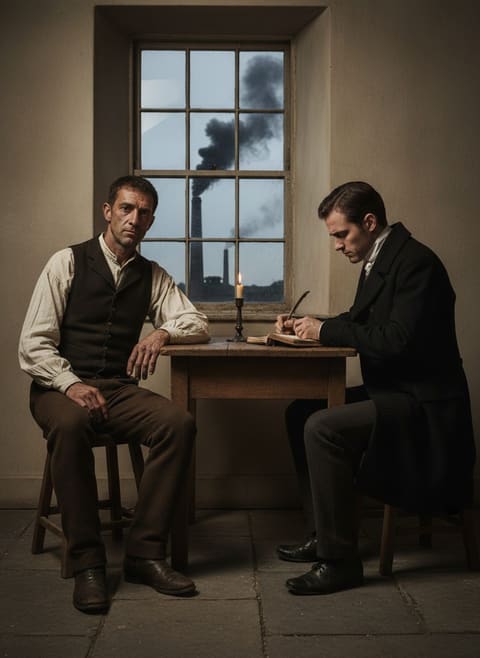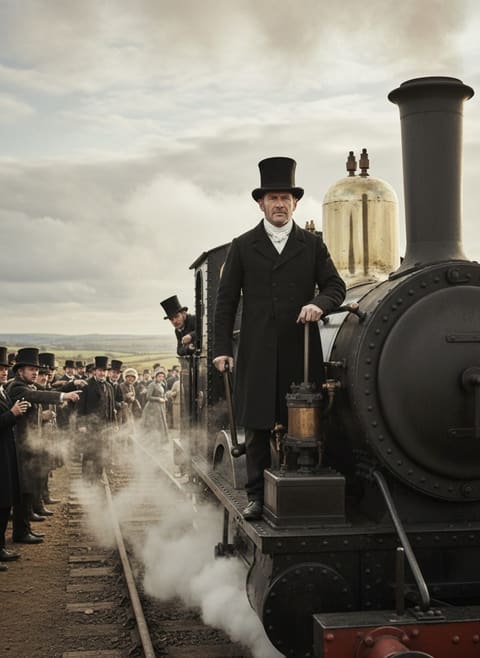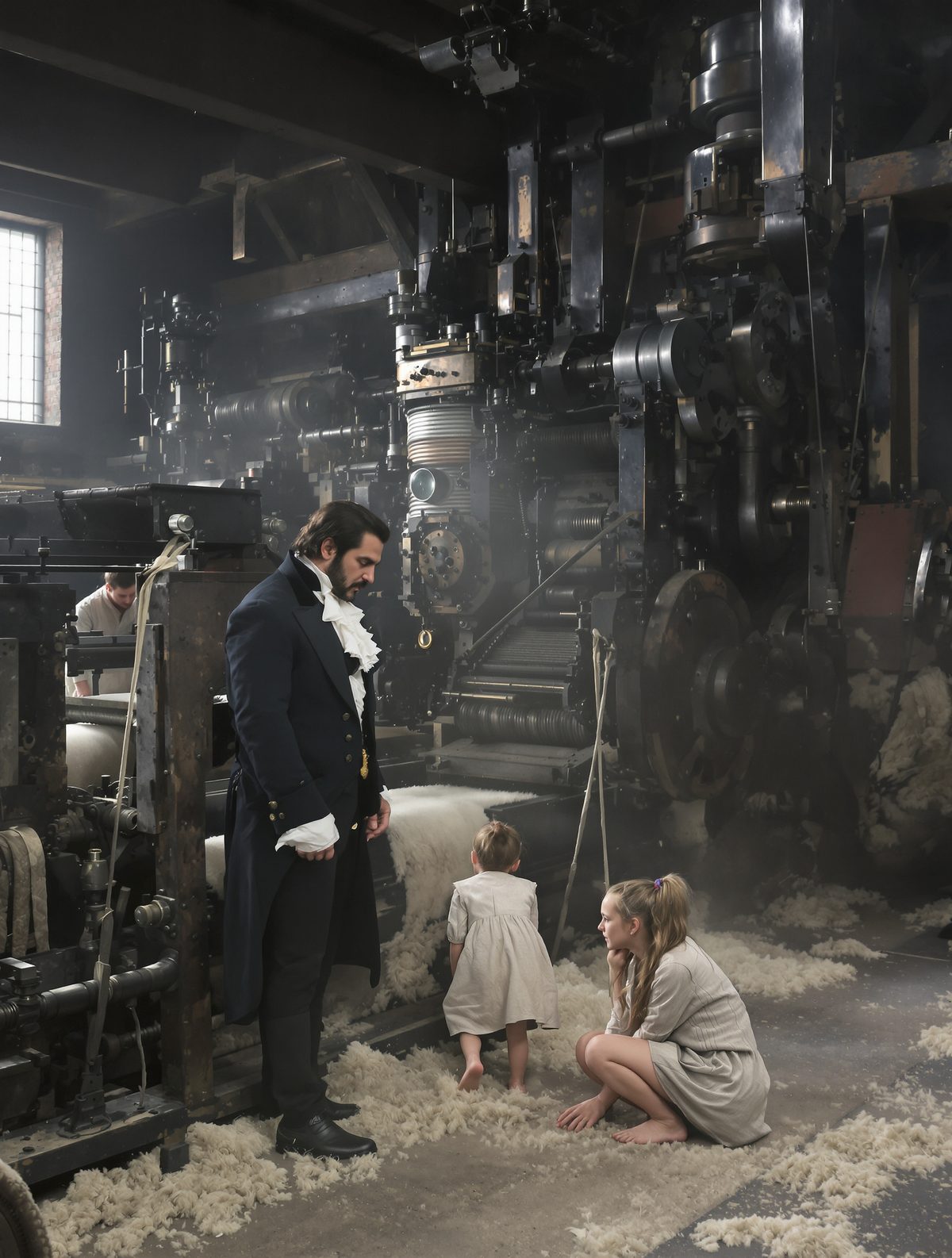
September 1832. The clang of machinery filled the air, drowning out the desperate whisper of a thousand tiny breaths.
The Unlikely Advocate
Richard Oastler was a man better accustomed to the whispers of the Yorkshire fields than the din of industrial ambition. Born and raised in an era of great transformation, Oastler was employed as a land steward, a role he filled with diligence, managing estates rather than lives. Yet, a fateful visit to a wool mill in Yorkshire shattered the pastoral calm of his existence. It was here, among the relentless rhythm of machines, that Oastler's path intertwined with that of the invisible army toiling in squalor — the mill children.
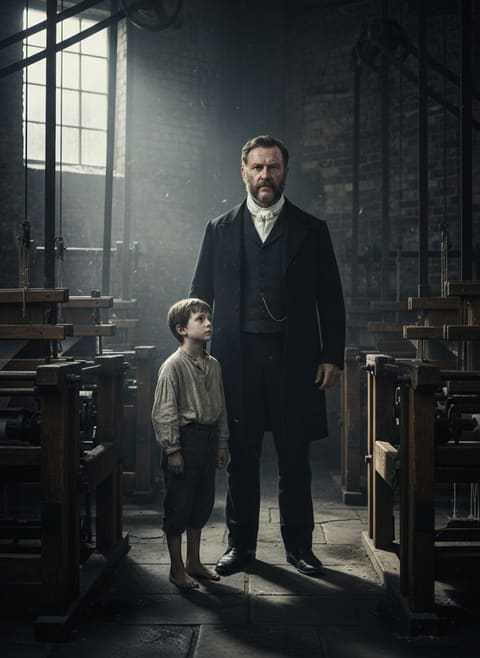
The Industrial Revolution heralded an age of progress, but beneath its gleaming facade lay a world stark and cruel. Factories, many of which relied heavily on cheap labor, emitted more than steam; they exhaled the cries of children as young as six, turned into mere cogs in the industrial machine. Oastler watched, transfixed and horrified, as nimble fingers darted between looms, deftly dodging the metal jaws of machinery. The scars etched across their small bodies told a tale of relentless abuse and desperation.
Driven by a newfound fervor, Oastler penned a letter that was nothing short of incendiary. He poured his outrage into every line, condemning the conditions he witnessed. 'Yorkshire Slavery is real,' he proclaimed, his words echoing the harsh truths hiding in plain sight. This epistle became a rallying cry that reverberated far beyond the county lines, resounding in the urban hearts of Britain where such injustice had been tacitly accepted.
Read next: The Day a Blind Weaver's Son Gave Children Back Their Hands
The Awakening
As Oastler's letter blazed its way onto the front pages of newspapers across the nation, it ignited a profound awakening. The England of the 1830s was a land accustomed to tide of change, yet unversed in the plight of its youngest laborers. The industrial Titans, long admired for their ingenuity, now stood naked before public scrutiny. Factories, once symbols of progress, were revealed as dark abysses where children toiled for up to 16 hours a day.
The day Oastler picked up his pen, he became an unwitting architect of reform. Though no politician, his words wove a tapestry of human empathy and outrage. Speeches, debates, and pamphlets grew in the fertile ground his letter prepared, as society — rich and poor alike — began to grapple with the morality of child labor. The imagery laid forth in Oastler's letter steered the national dialogue away from the abstract concepts of profit and efficiency, refocusing it instead on the moral imperative to protect the vulnerable.
Campaigns for legislative change gained momentum. Charitable organizations were formed, both to alleviate immediate suffering and to ensure lasting reform. Voices joined Oastler's in calling for laws that would at last limit the hours children could be legally be put to work. This coalition of conscience marked the start of a profound shift in public perception and policy, one where the line between economic growth and moral decay was decisively redrawn.
Read next: The Day a Mill Owner Paid His Workers Not to Work
The Legacy of a Letter
Though the mills continued their relentless grind, the machine of societal reform would not be halted. Oastler's letter was not an isolated blast but rather the opening volley in a far-reaching campaign to awaken Britain's conscience. By 1833, a year after Oastler's missive, the Factory Act began to translate the public's newfound awareness into actionable law, finally placing age and hour limits on labor for children. Slowly, the wheels of injustice began to slow, though for many it was already too late.
The legacy of Richard Oastler is not merely found in legislative acts but in the hearts and minds of the nation he stirred. His courage to speak against the grain paved paths for others who would stand against oppression and injustice. His letter, impetuous but earnest, inspired a worldview where ethical economics and social responsibility became inseparable allies. Oastler taught a nation to consider the human cost of its industrial triumphs.
In our own time, where progress and ethics still jostle for precedence, Oastler's story offers a resonant lesson. The power of one voice to disrupt the status quo poses a timeless challenge to our collective consciousness: to ensure that in the pursuit of greatness, we do not lose sight of our humanity. The machines may have long since fallen silent, but Oastler's echoes remind us that real progress transcends profit to nurture the human spirit.