July 12, 1174. The cobblestones of Canterbury were cool beneath his bare feet.
The Royal Contrition Unfolds
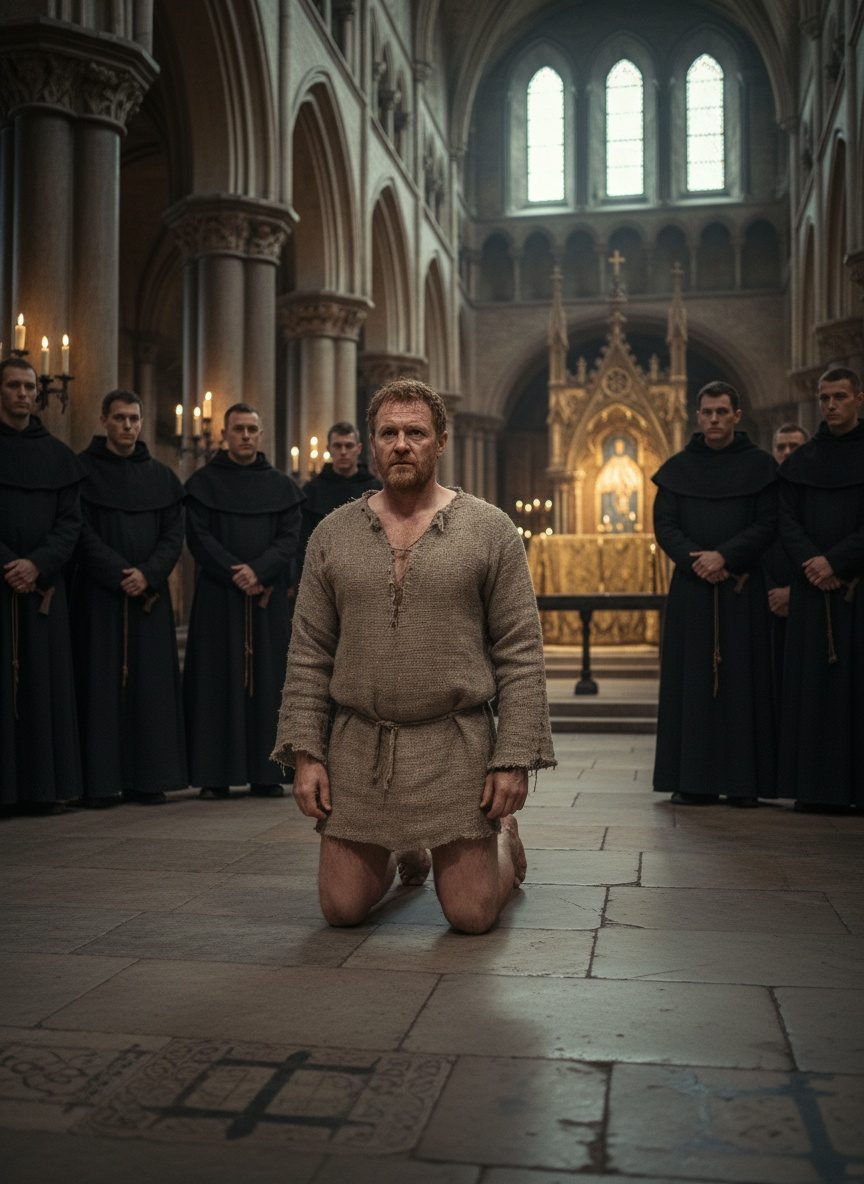
The spectacle unfolding that day in Canterbury was one of stark humility and penitence, scarcely fitting for a king, and yet unavoidable for Henry II. The monarch, formerly wrapped in the opulence and power of his position, had stripped down to a simple hair shirt that clung to him like a penitent’s embrace. He had set aside his armored grandeur and fine garments, opting instead for attire associated with hermits and supplicants. The city watched, whispers of shock and curiosity rippling through the crowd, as their ruler embarked on a pilgrimage not of conquest, but of contrition.
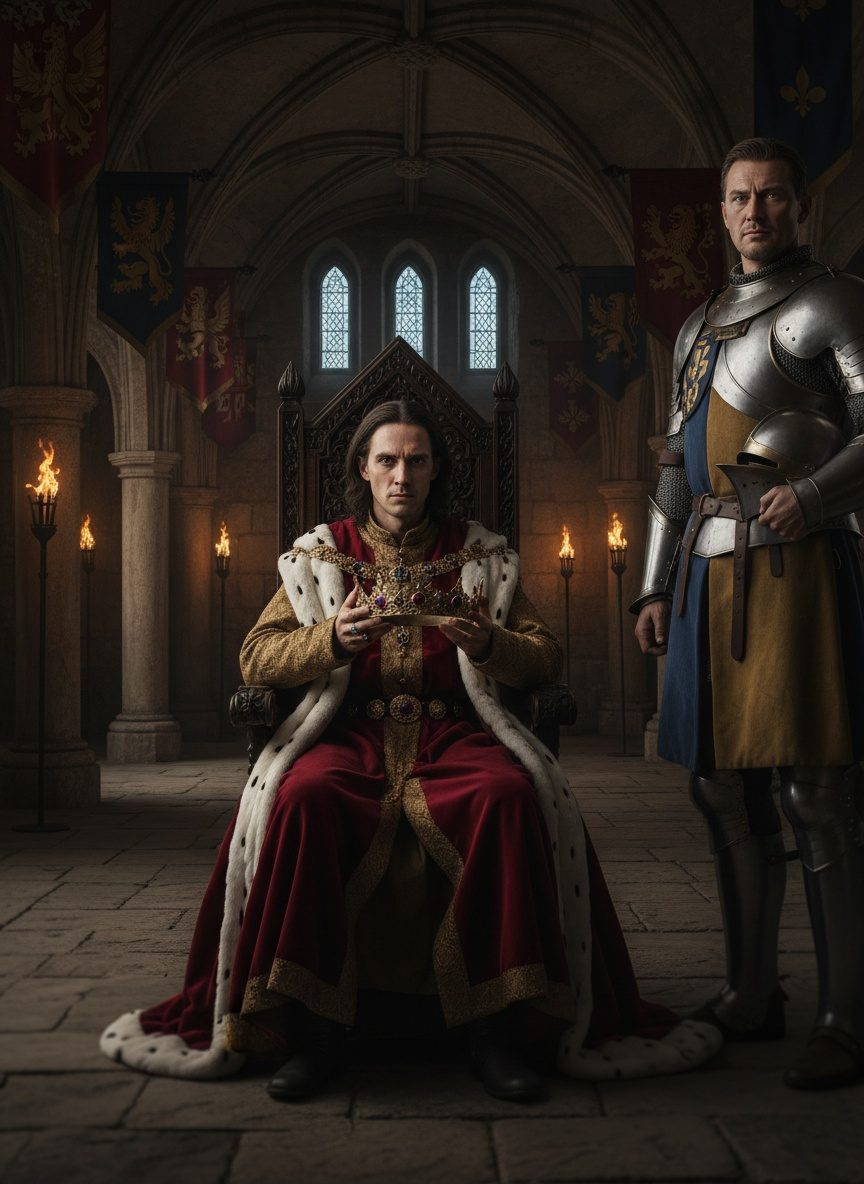
Why was a king walking barefoot, humbly bowing before the people and places once under his absolute command? Henry might have possessed the wealth to command armies and the political acumen to outmaneuver many of his contemporaries, yet here he was, consumed by the need for forgiveness. This act, steeped in medieval symbolism, came as the result of four rash words echoing with unintended consequences. Four words that had done more than bind them to his royal lips; they had been the harbinger of a legacy marred by controversy and death.
From Kinship to Catastrophe
Inside the ecclesiastical corridors of power, a friendship had once blossomed between the king and Thomas Becket, whose fate now haunted Henry. Once Chancellor of England, Becket was not merely a political ally but a cherished confidant to the king. But elevation to Archbishop of Canterbury brought something neither had anticipated: a transformation that turned the former allies into adversaries.
Read next: The Day a Defeated King Sailed Away and Never Looked Back
Becket’s newfound ecclesiastical fervor clashed vigorously with the king's secular ambitions, spiraling their relationship into one of bitter conflict. Retribution and loyalty became entangled; Becket would not yield to regal whims, asserting the church's authority where Henry sought supremacy. As tensions escalated in this dangerous dance of wills, the English realm bore witness to the growing divide that fissured church and crown.
Then it happened. Four impetuous words uttered in anger, an unintended death sentence spoken: “Who will rid me...?” The rest is known—the murmurings, the murmurs that trickled down to the knights eager to earn royal favor.
A Cathedral Witnesses Regret
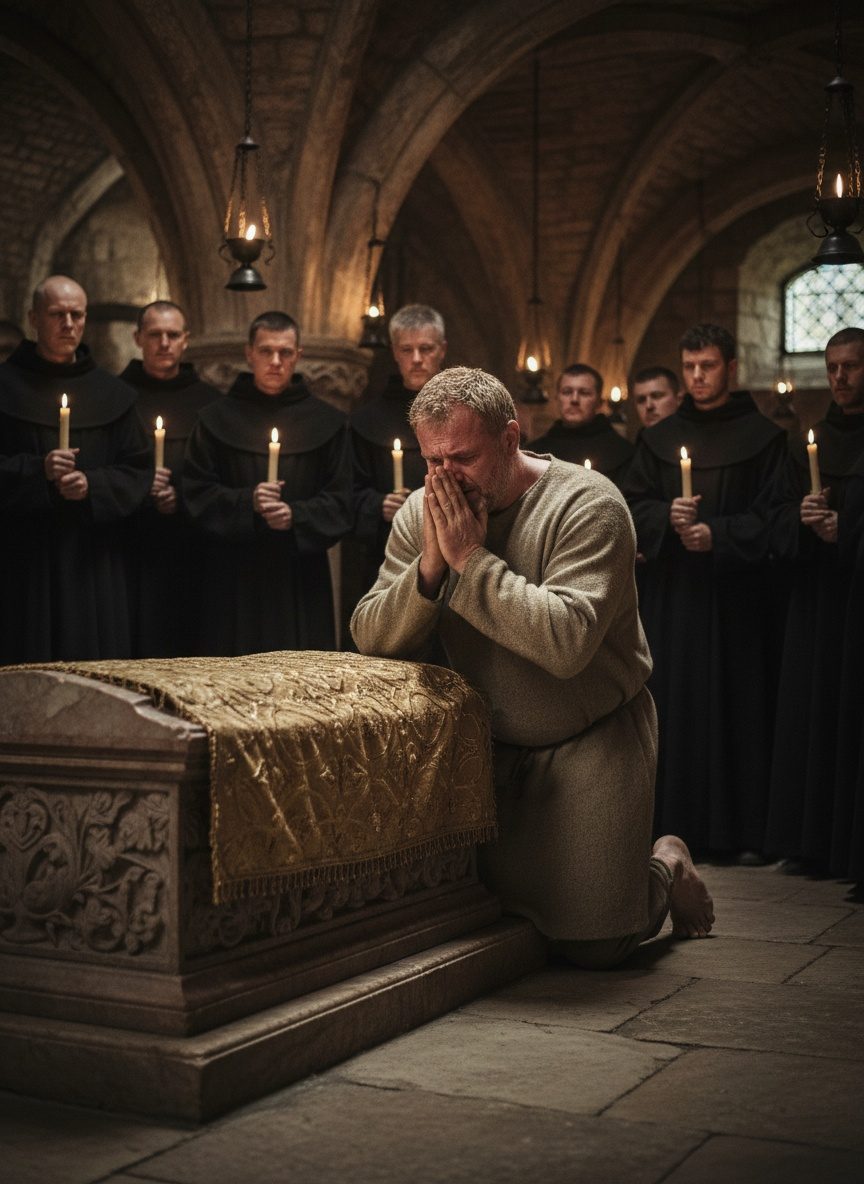
Thus, it was in the echoing silence of Canterbury Cathedral, its cool stones witnessing both life and lifelessness, that desperation's full weight settled upon Henry's shoulders. Before the revered altar where Becket’s martyrdom had been brutally enacted, Henry knelt—here the heart of his remorse ceased to be a private burden and became a public spectacle.
The monks, draped in the shadowy austerity of their order, approached the king. In strict adherence to his own command, they bore the instruments of atonement, their whipcords marking the monarch’s back with every lash—a ritualistic penance marking the repentance of a wayward sovereign. Each stroke was an echo of the act that had shattered peace and claimed a life.
The cathedral’s ancient stone bore witness to this deep confession, the Latin chants of the monks reverberating through its arches as Henry II, a ruler accustomed to control, wept openly for the absolution he so desperately craved.
A World Holds Its Breath
Court chronicles would later reflect on this extraordinary mortification, a king brought low by the insurmountable power of regret. It wasn’t merely a spectacle for the annals of history; it was a moment in which power was willingly surrendered. For a time, the world held its breath as they watched this once-mighty monarch bend his knee not just in apology to a saint, but to a world he had inadvertently thrust into turmoil.
Every city’s stone knew its share of whispered stories, and Canterbury was no exception. The solemnity of the act sparked debates across the kingdom and beyond as to the nature of kingly penance. It became a tale told in hushed tones, of a king who acknowledged—the rumors asserted—that the greatest crown bore the weight of conscience heavier than any coronet of gold.
The Layers of Legacy
This tale is not a mere footnote of medieval drama, but a compelling narrative of humility eclipsing might. In Henry’s contrition lies an enduring message about the weight of words and the heavy cloak of leadership. Even the most powerful sovereign is not immune to the soul’s unrest and the pursuit of redemption.
For a moment in time, the king's penitence altered perceptions and redrew the map of royal authority. The legacy resides not only in the political ramifications following the king's act but also in the idea of responsibility that transcends position—a shared culpability even a monarch could not escape.
Thus, in recounting the day Henry II walked barefoot to Canterbury, we stumble upon an unexpected lesson threaded into the tapestry of time. It is a singular reminder that no crown, no realm, no ambition is untouched by the human heart’s capacity for regret and reconciliation. And, as the cobblestones return to silence and the stones of the cathedral sleep on, we find ourselves, like Henry once was, seeking solace in the enduring journey for pardon.