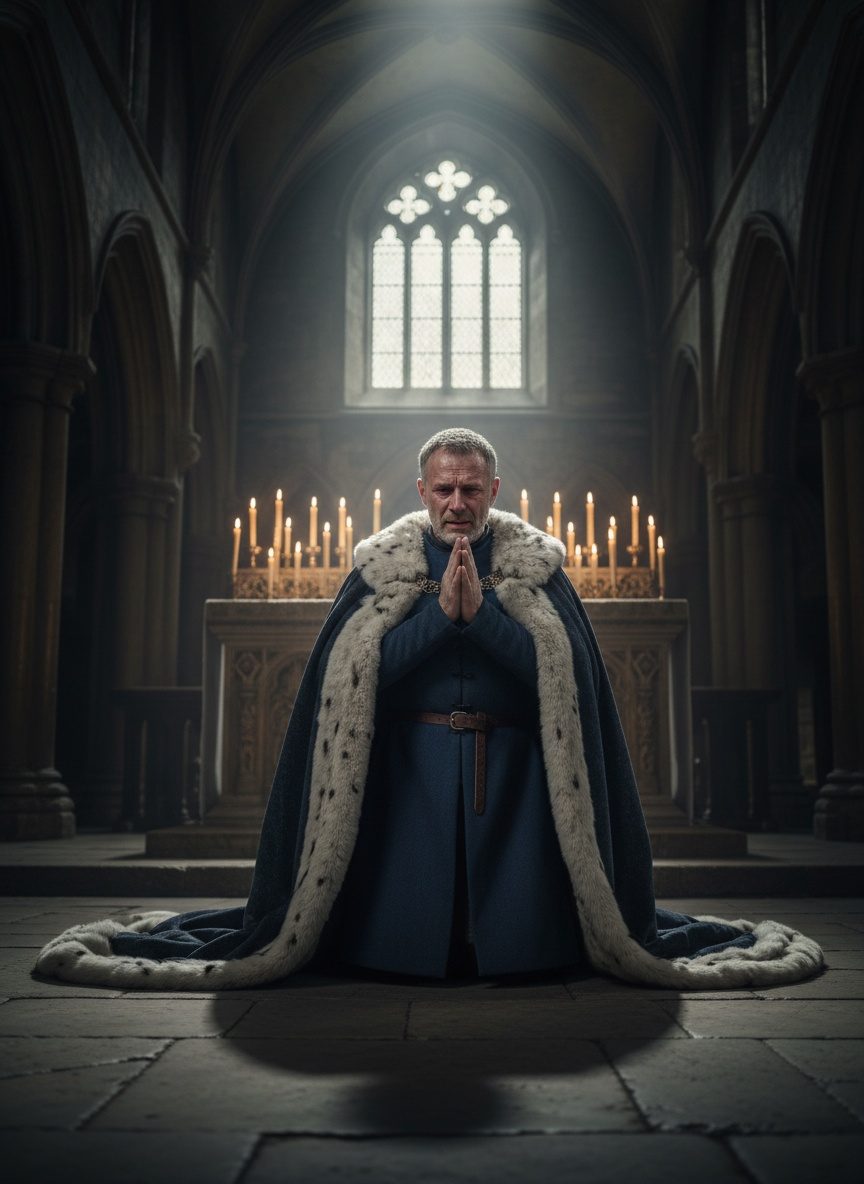
The clamor of steel boots echoed through the great stone hall, each step of King Henry II carrying the weight of a terrible burden deeper into Canterbury Cathedral. Eyes, red and weary from a night of restless visions, focused on the altar where Thomas Becket had taken his last breath. Henry's heart pounded like the distant rumble of thunder, a harbinger of the storm he knew would be unleashed upon his reign. He fell to his knees, the cold stone biting through his regal attire, each heartbeat a whisper of regret reverberating through his soul. He spoke the unthinkable, asking forgiveness from the man whose death he had unwittingly set into motion.
The King’s Rage
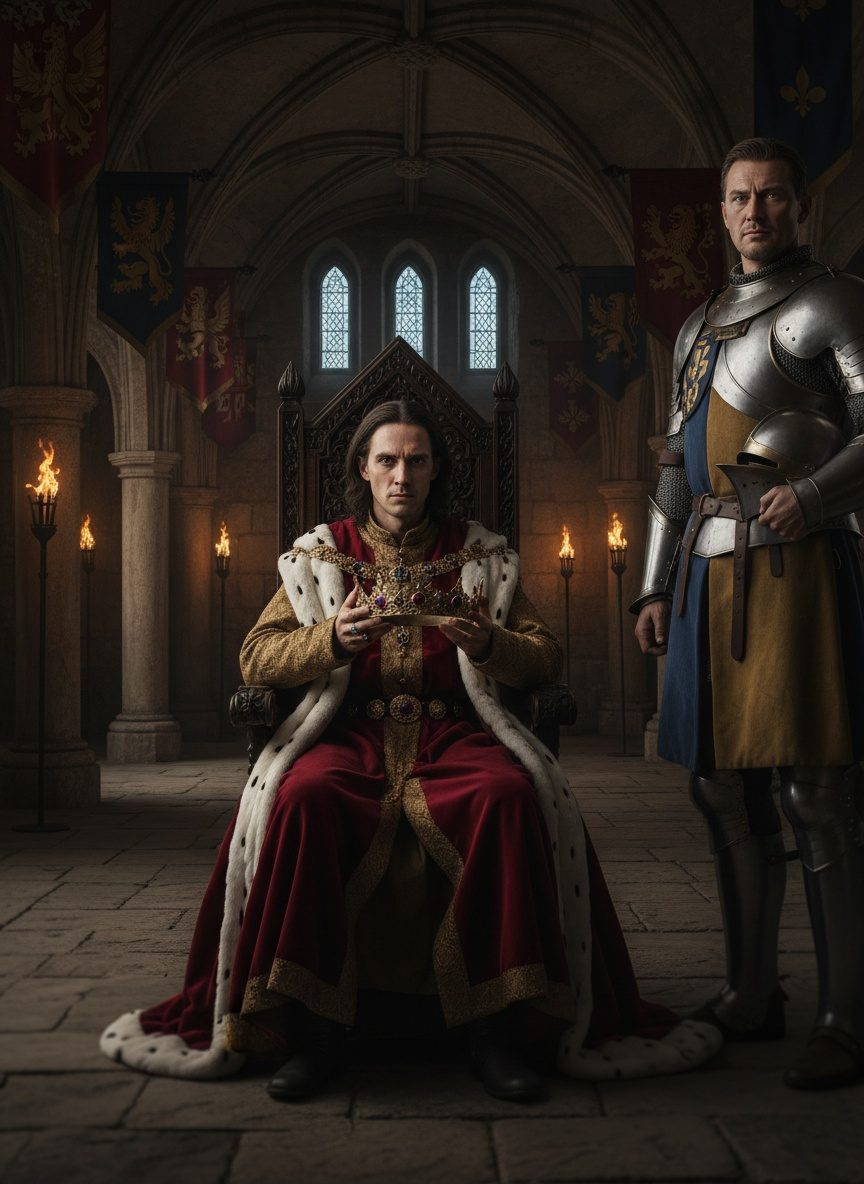
In the court of England, Henry II was feared for his mercurial temperament as much as he was revered for his shrewd governance. The air often crackled with tension when his anger was roused; even the boldest advisors knew to tread lightly. In the heady days of December 1170, that rage found a new target in Thomas Becket, Archbishop of Canterbury. Their friendship, once said to have been forged in the fires of mutual ambition, had deteriorated like the weather-worn tapestries in Henry's drafty halls. Becket, clad in the power of his ecclesiastical robes, had crossed the king one too many times by exiling himself and then returning to openly defy Henry's legal reforms.
It was during a court session that the fateful words burst forth from the king's mouth, like an arrow released from a bowed shaft: "Who will rid me of this turbulent priest?" It was a rhetorical lamentation, the exasperated cry of a monarch frustrated by Becket’s relentless challenge to royal authority. Yet, the court was silent, save for the rustling of four knights—Reginald FitzUrse, Hugh de Morville, William de Tracy, and Richard le Breton—who took Henry's words as a divine mandate, a position that held enough ambiguity to fire their zeal.
The Unholy Night
The night of December 29, 1170, bore witness to a chilling echo of steel against stone as the four knights marched with grim determination under the cloak of darkness towards Canterbury. The cathedral loomed majestic yet daunting against the starlit sky, a sanctuary turned execution chamber. Candle flames flickered in the drafty aisles, casting monstrous shadows that seemed to dance in anticipation of the unholy act that would unfold before them.
Read next: The Day a Defeated King Sailed Away and Never Looked Back
Becket stood resolute at the altar, a beacon of defiance against the king's unsanctioned decree. The murmurs of evening prayer faded into gasps as the knights' swords unleashed a fury unmatched by the turbulence in Henry's words. "Traitor!" they echoed through the holy halls, striking Becket down even as he offered his final breath to God. The sacred carpet bore crimson testimony to a martyr born, leaving the serene cathedral enveloped in a haunting silence that spoke of destiny altered in the heat of misjudged loyalty.
King and Martyr
News of Becket's death swept across the land like wildfire, sparking outrage that threatened the very scaffoldings of Henry's authority. It was a masterstroke of irony; Becket, the thorn in his liege's side, became a martyr, his blood sanctifying the earth as pawns plotted in the great game of thrones. Mourners thronged the cathedral to glimpse the site of the Archangel's fall, the place where Becket's courage and Henry's folly collided to rewrite the annals of ecclesiastical history.
Henry's anger curdled into a deep-seated remorse as he faced the wrath of the Church. The Pope's disapproval loomed like a specter over his crown, threatening excommunication and a divine retribution the king dared not tempt further. Ensnared by politics and pushed by his own demons, Henry knew he must atone, a pilgrimage for forgiveness that would paint history not with the hubris of a monarch, but with the humility of a penitent king.
The Pilgrimage of Repentance
It was January 1170, a time when frost still clung to the stones and the wind carried the desperation of a king determined to seek absolution. Donning the vestiges of penance—a hair shirt beneath his regal finery—Henry made his way to Canterbury. Each step was a testament to the emotional pilgrimage he endured, every scrape of his knees along the cobblestone a humbling refrain hearken back to the sinner's octave.
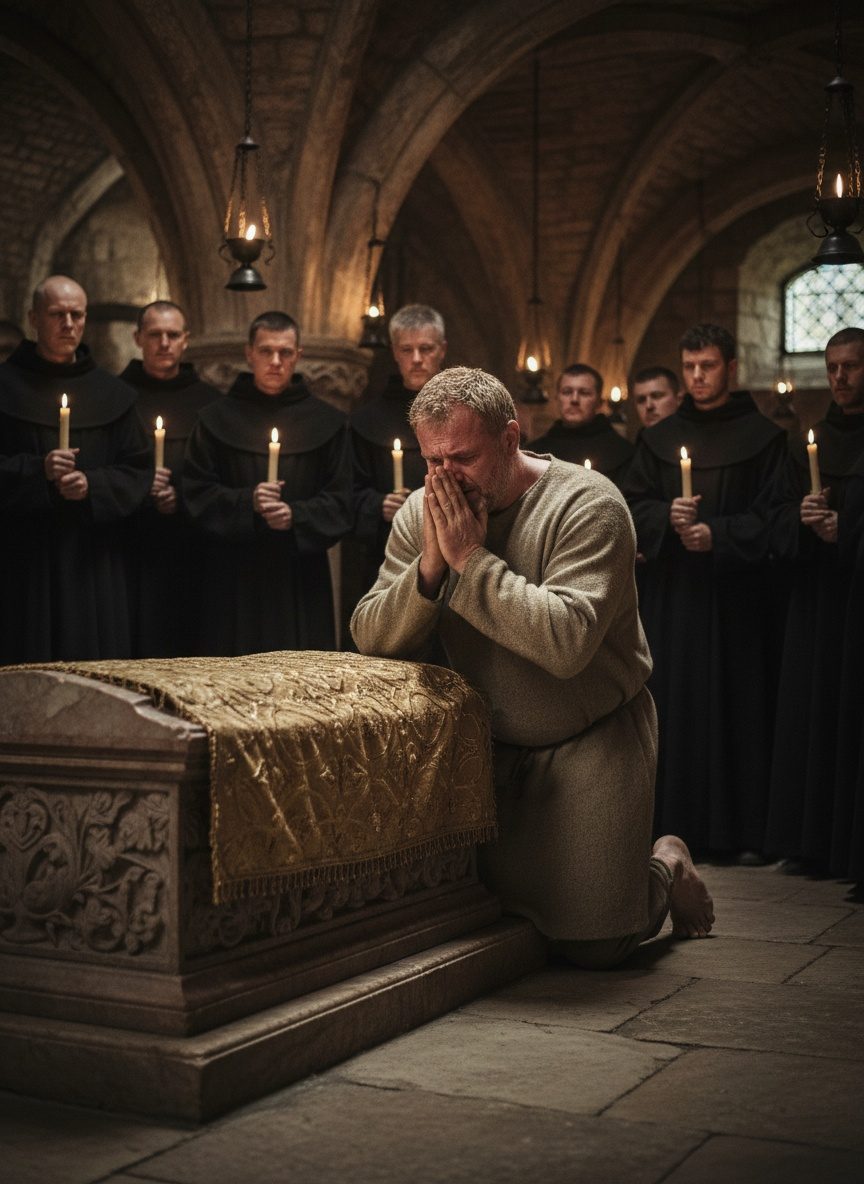
The cathedral stood before him, a monument to his guilt and redemption. Kneeling at Becket’s tomb, his whispers were soaked with a vulnerability that even his courtiers had never seen. He wept openly, tears carving a path through the dirt and daylight stubble, their salty warmth mingling with prayers for the archbishop’s spirit to soften the entropic judgment upon his soul. In this transformative moment, Henry became a pilgrim stripped of his kingly crown, a solitary man cloaked only in the universal confession of human frailty.
The chronicles of this day remind us that power, unchecked and undirected, can unravel the mightiest of rulers and cave human will into insidious tragedy. Henry's plea at Becket's martyr site endures as a cautionary tale of words' potent force, an eternal reminder of how whispered wrath can mutate into deeds of despair if left untempered. Here, under the shadow of the altar, history murmurs the ceaseless tension witnessed whenever a crown grows heavy with the specter of its own mislaid might, a story solemnly inscribed in the new lexicon of humility and redemption.