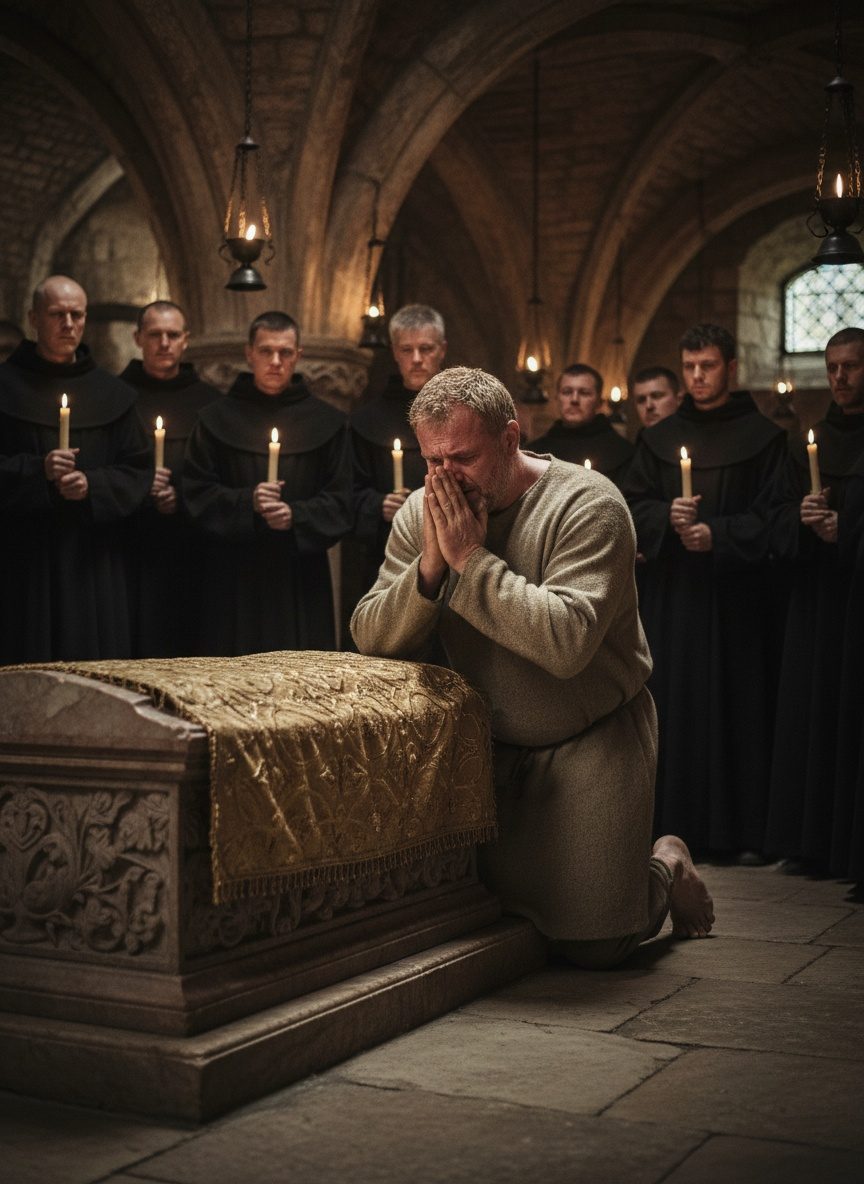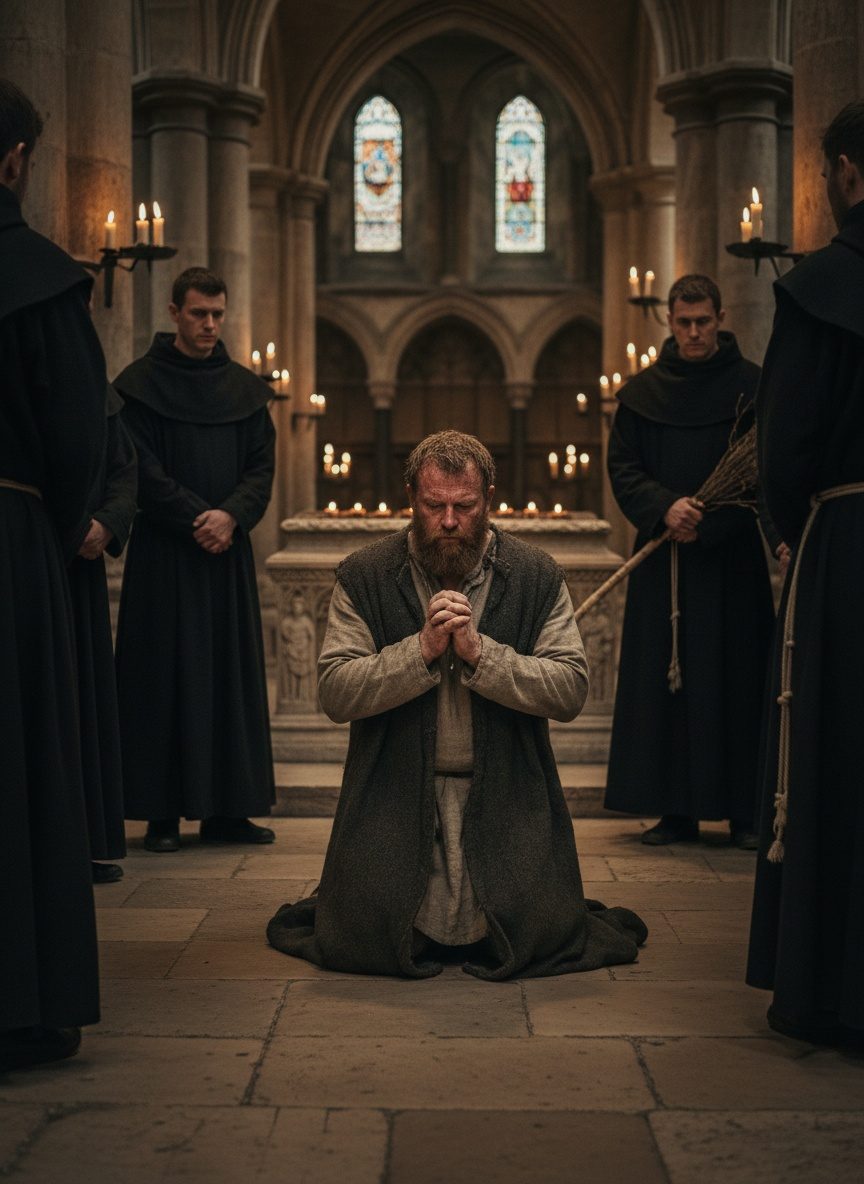
Henry II once ruled a vast realm that spanned England and parts of France. Yet, in July 1174, he found himself crawling, barefoot, through the streets of Canterbury, humbled and shamed.
A King Torn asunder
In 1170, Thomas Becket, the Archbishop of Canterbury, was murdered within the sacred walls of his own cathedral—a shocking act that sent reverberations across Christendom. The culpability of this heinous crime rested heavily upon the shoulders of Henry II. While he hadn't explicitly ordered the murder, his outburst of frustration with Becket's obstinance—“Will no one rid me of this turbulent priest?”—was enough for his loyal knights to interpret as a royal directive. Their steel met with Becket's flesh, turning the cathedral’s hallowed ground into a grisly scene of political martyrdom.
For years, the aftermath of this event shadowed Henry's reign. A stern monarch, fiercely ambitious, not prone to displays of contrition, Henry now faced upheaval. The murder of Becket ignited a spiritual rebellion against him, casting a long shadow over his rule. In the court of public opinion and within the ranks of the church, murmurs of his culpability refused to die down. As the years passed, the whispers grew, evolving into open defiance and a thinning of alliances. Becket became not just a martyr, but an emblem of ecclesiastical power that defied the king.
Even in death, Becket wielded an influence over Henry's reign. The king wrestled with guilt that grew unbearable with each passing year, his conscience festering from within. Ultimately, Henry was compelled to perform a most profound act of penance for his perceived involvement in the assassination of his former confidant and arch-nemesis.
Read next: The Day a Defeated King Sailed Away and Never Looked Back
Canterbury’s Unexpected Pilgrim
Four years after that fateful assassination, Henry embarked on a journey no English monarch had dared to undertake. His destination was Canterbury, a site now redolent with the piety and sympathy of pilgrims from across Europe. Enwrapped in a humble hair shirt, a stark emblem of his penitence, Henry arrived barefoot, stripping away the layers of royal decorum and symbolic authority he had amassed over a lifetime.
Canterbury's cobblestone streets felt unyielding beneath his feet as he moved toward Becket's tomb. The king was no longer the formidable ruler surrounded by an entourage; he was now a solitary man, seeking absolution from a world left ever turbulent by the act of violence he indirectly set into motion. The irony wasn’t lost on his subjects—the ground he tread brought an undeniable sting of humility, both physically and spiritually.
Inside the cathedral, eighty monks awaited the king. These men bore with them a simple yet profound task—to subject the king to the ritual flogging, a symbolic purification for his tainted soul. As they administered the lashes, the air thickened with a silence punctuated only by the intermittent thwacks against his back, his penitence made visible in each strike. Henry's form, hunched in submission, bore the weight of the kingdom's disgrace, a king undone by his own words.
In this act, Henry abdicated his royal dignity, laying it at Becket’s tomb as if hoping to trade it for divine forgiveness. His tears flowed freely amid the gathering of monks and witnesses, each crimson trickle of blood a testament to the depths of his remorse. The sight of the mighty Henry II reduced to such a state could not have been borne without profound impact on those who witnessed it.
The Echo of Redemption
The narrative of Henry's penance at Canterbury did not merely resolve the spiritual turmoil that had haunted him; it also reverberated far beyond the physical confines of the cathedral. In the eyes of his subjects and the wider world, the royal submission held lasting weight. It brought to the forefront a dynamic that would ripple through history—the unavoidable tension between secular ambitions and ecclesiastical authority.
This public act of penance was more than a plea for divine forgiveness; it signified a rebalancing of power within the kingdom. The Church did not just restore its dignity with Becket's canonization but clawed back a moral supremacy over the crown—a precarious equilibrium both fraught and symbiotic. In this medieval world, where the sword commonly provided judgment, Henry’s surrender of power to the lash was a rare and formative moment.
Yet, beneath the veneer of a king’s repentance, the seeds of doubt were sown. Was this humility genuine, or a political maneuver orchestrated from necessity? Historians debate the strategic component of Henry’s submission—a deft if desperate gambit to regain control over a fractious kingdom and a divided nobility. Either way, his act of contrition allowed his kingship to endure beyond its immediate crisis.
Henry's abasement before Becket’s tomb became an indelible narrative, underscoring the complex interplay of guilt, power, and absolution. The tale of the barefoot monarch in Canterbury resonates today, reminding us that admission of fallibility is an act of strength. More than a personal redemption, it was a reconstitution of faith between crown and altar, a lesson in humility that echoes across the annals of history.