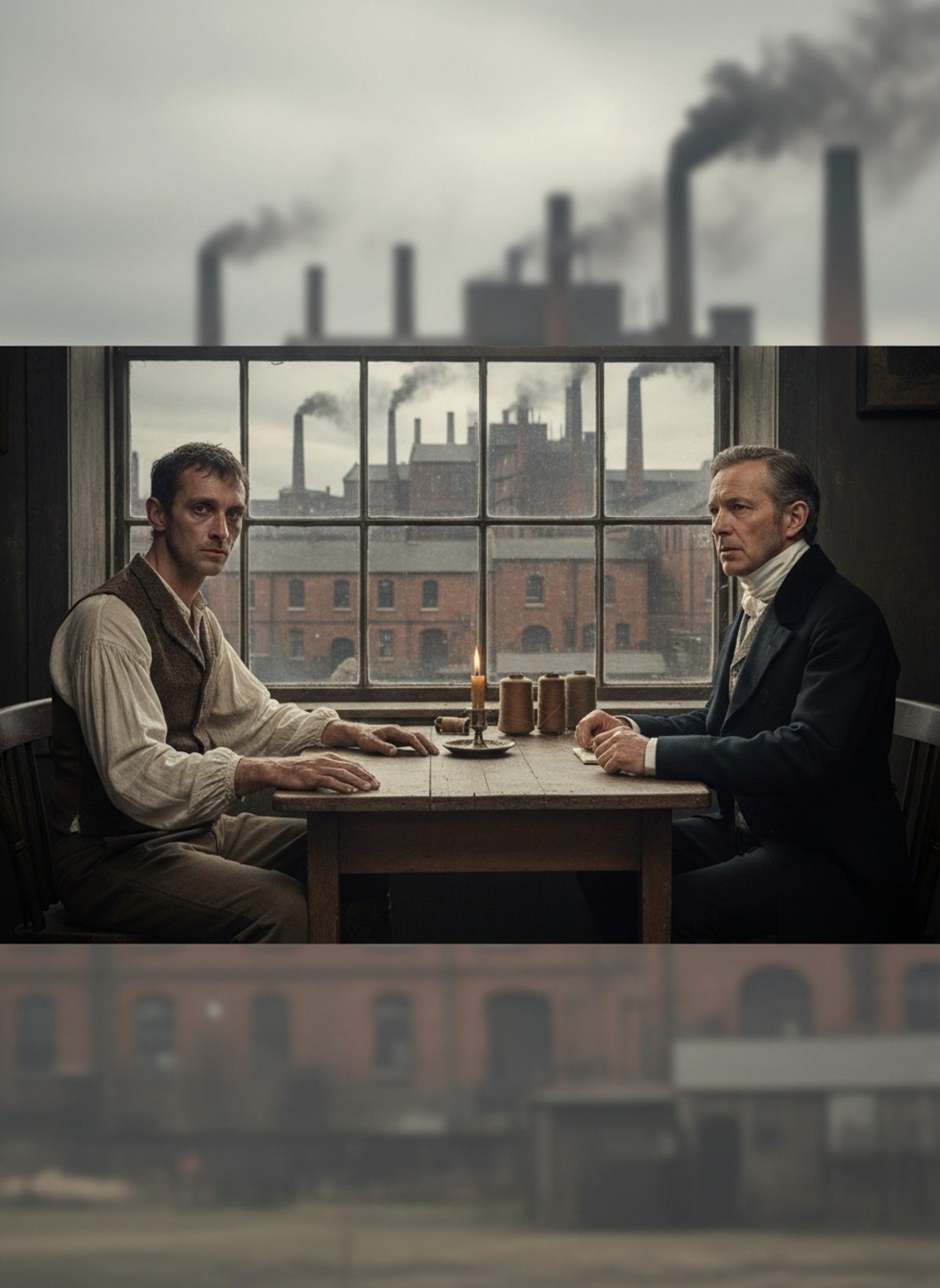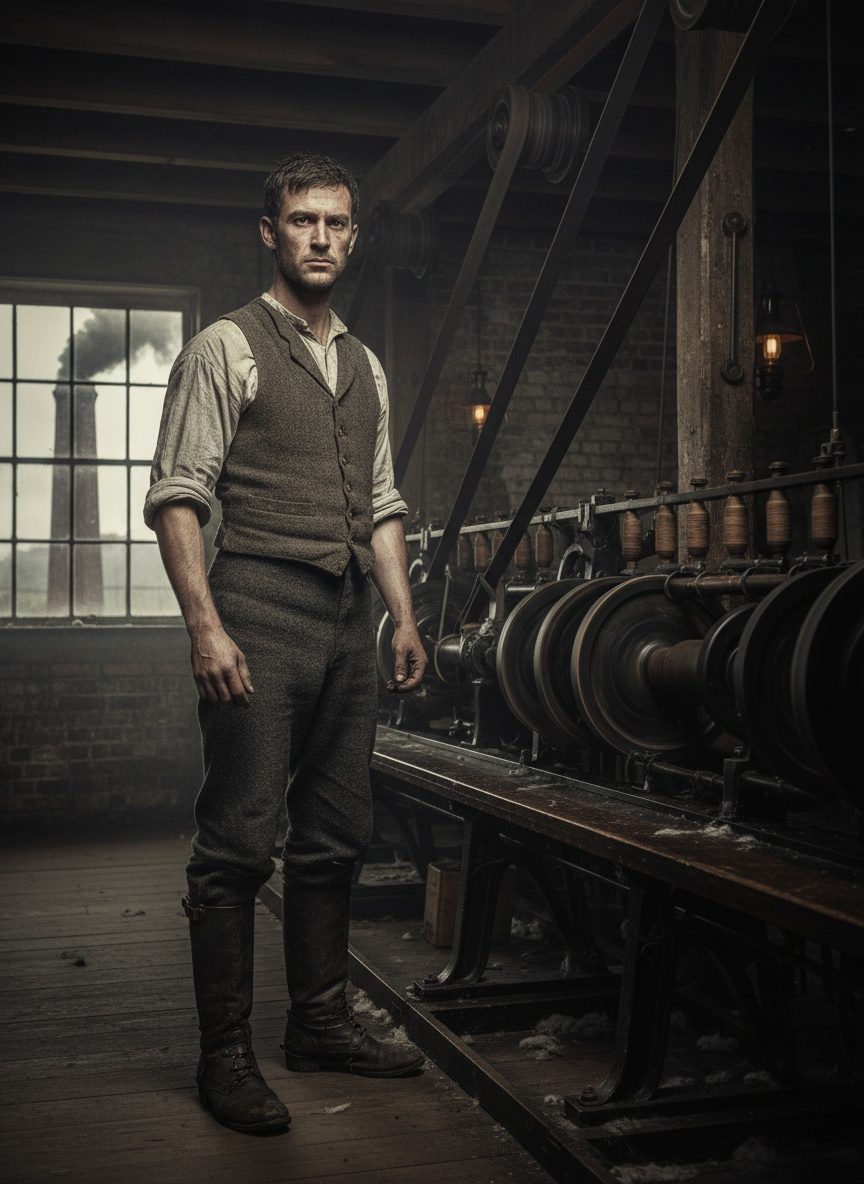
The flicker of a dim oil lamp cast long shadows across the mill floor as Robert Blincoe, sweat dripping down his small, ten-year-old face, paused to catch his breath. The relentless clatter of machines thundered around him, swallowing his momentary stillness in the mechanical roar. His task was to dart between the spinning frames, fingers nimble and quick, all too aware that any delay could earn him a swift, punishing strike from the overseer’s cane.
Robert Blincoe was just one among many pauper children thrust into the industrial maw of the early 19th century, when the dark heart of the cotton mills beat a relentless rhythm of human toil. The factory floor in Lancashire was a harsh place, a cavernous expanse of darkness and danger where time wove together misery and mistreatment. Blincoe, having entered the mills as a sold child, was not just battling the deafening machinery that dominated his days but also an oppressive system that treated children like expendable cogs in an industrial machine.
Yet, this young mill hand possessed a grit born of survival and a determination that transcended his dire circumstances. Years later, as the smog of industrial England settled into the fabric of society, Blincoe made a bold move that would reverberate through the halls of power. He dared to speak. To testify. To expose the gruesome realities within the looming brick walls of the cotton mills. It was a story that had been whispered in the shadows, passed among workers with knowing nods and haunted eyes. Now, it was to be unveiled under the scrutinizing gaze of the public and the ears of lawmakers -- a nation was listening.
When Robert Blincoe first shared his story with a sharp-eyed journalist, it was a call to the conscience of a nation on the brink of reform. With the Industrial Revolution sweeping across Britain like an unstoppable tide, tales like Blincoe’s were incendiary. They described a different aspect of the widespread prosperity heralded by the age; they spotlighted the human cost buried beneath the veneer of progress. Blincoe's voice was at once harrowing and hopeful, a paean for the unseen and unheard who labored tirelessly, bound not by choice but by circumstance.
Read next: The Day a Mill Owner Walked Into Parliament for His Children
His arduous journey from frightened child to formidable critic captured the plight of many like him. As Blincoe's words etched themselves into print, the factory owners of England reacted with outrage. Accusations of deceit flared in the heated debates that filled smoky rooms. They called him a liar, a provocateur with stories spun from imagination, not fact. Yet, Blincoe stood firm, his account unwavering even as cynics and critics sought to dismantle his credibility. His resilience was a beacon to those who had shared his despair, a testimony to the endurance of those who had suffered in silence for far too long.
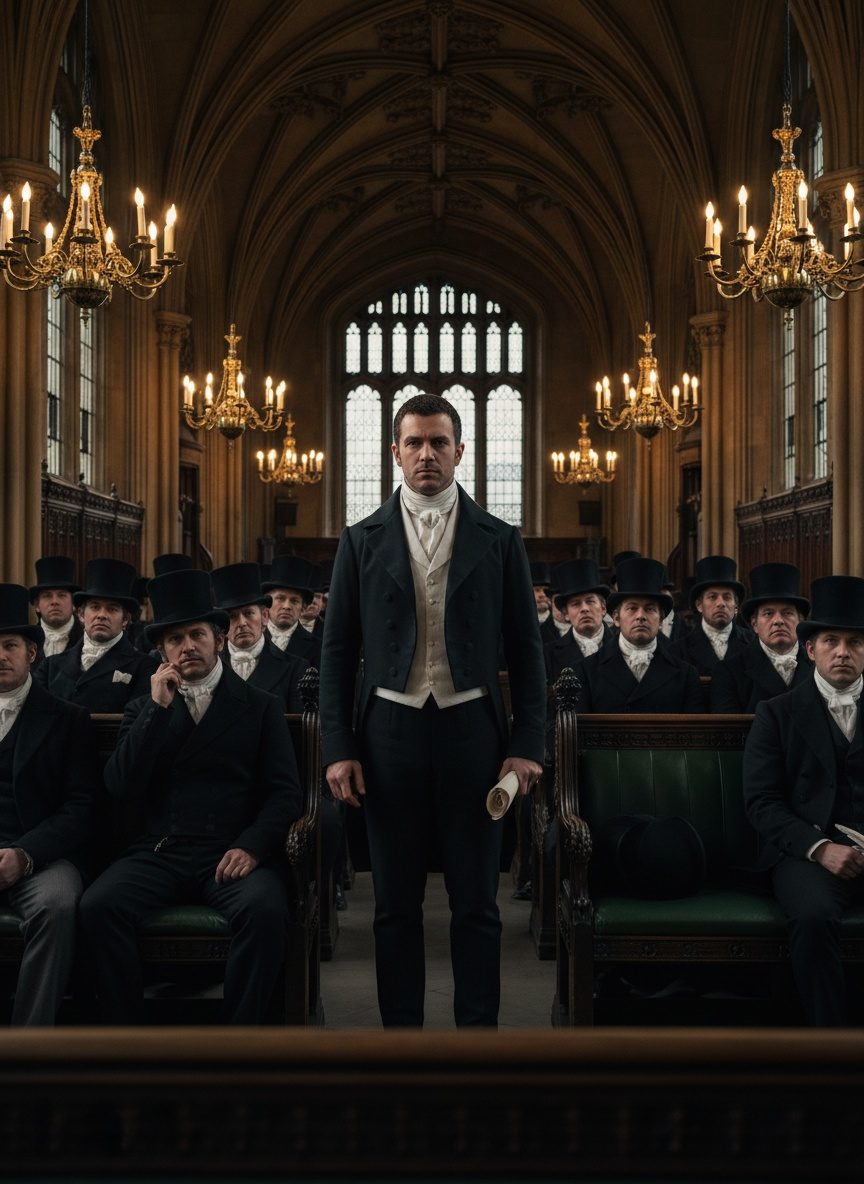
It was a moment of reckoning for the machinery of power. Parliament, stirred by the swelling tide of public opinion, turned its attention to the dark underbelly of industrial life. Blincoe's experiences, raw and undiluted, cast a spotlight on the urgent need for reform. His story carried the echo of countless voices stifled beneath the din of progress. It insisted on acknowledgment, demanding that the invisible forces of child labour and exploitation be dragged into the light for all to see.
Through his testimony, the grim realities of the cotton mills—the hazardous work conditions, the unchecked abuse by factory overseers, and the systematic neglect of children's welfare—were laid bare. The evocative imagery of his accounts replaced abstract notions of industrial labour with vivid, visceral realities, transforming perceptions and prompting action. Parliament, wrestling with the moral imperatives laid before it, began to consider legislation that would redefine the relationship between industry and its workforce.
The tale of Robert Blincoe forced a nation to pause and consider the journey from child to mill worker, from silence to advocacy. His narrative captured the turbulence of a pivotal moment in history, when the values of a society were contested against its economic ambitions. Through Blincoe’s lens, the world saw not only the triumphs of the Industrial Revolution but also its profound human costs, sparking a dialogue on the worth of human dignity and the price of progress.
Robert Blincoe’s courage to confront the powerful forces of industry reflected the resilience of the human spirit, a reminder that change often begins not with a summons of strength, but with the simple act of standing up and speaking out. In his perseverance lay not only the hopes of countless child laborers but a palpable call to the world—a reminder that the tales they leave out of textbooks are often those that teach us the most about justice, compassion, and the power of truth.