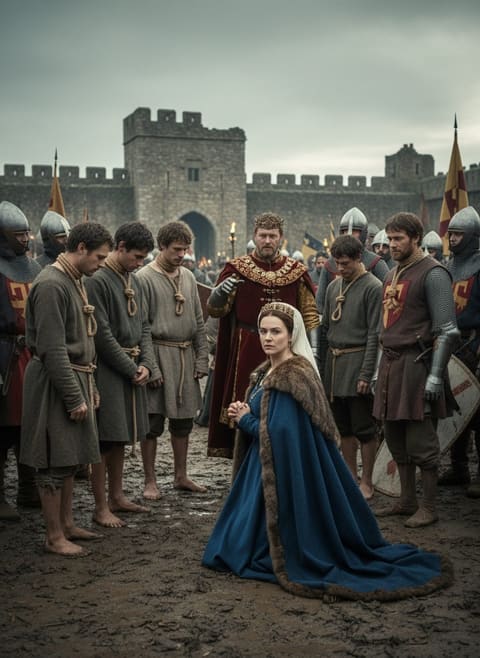
A peasant's rebellion barely registers in history. Yet in 1381, they nearly toppled the English crown.
The Unlikely Uprising
In the summer of 1381, England simmered under the weight of tyranny. Peasants, laborers, and skilled craftsmen, weary from enduring crippling taxes and oppressive feudal duties, found a spark ignited by outrage. This wasn't just any uprising—it was a storm gathering over the fields of Essex and beyond. The rebellion, unlike anything England had seen, wasn't simply a disorganized mob clamoring for justice. It was a welling tide of human frustration, coalescing into a force that would shake the very bedrock of medieval society.
The story spins back to the infamous Poll Tax, burdening every adult, regardless of their wealth, with the same levy. It wasn't just the financial blow that rankled but the sheer unfairness of it. For people who toiled dawn to dusk, this tax was the last straw. Their fury grew into a palpable force, one that didn't rely on the traditional rules of engagement. It was raw, unyielding, and ready to challenge the knights and barons of England.
The March on London
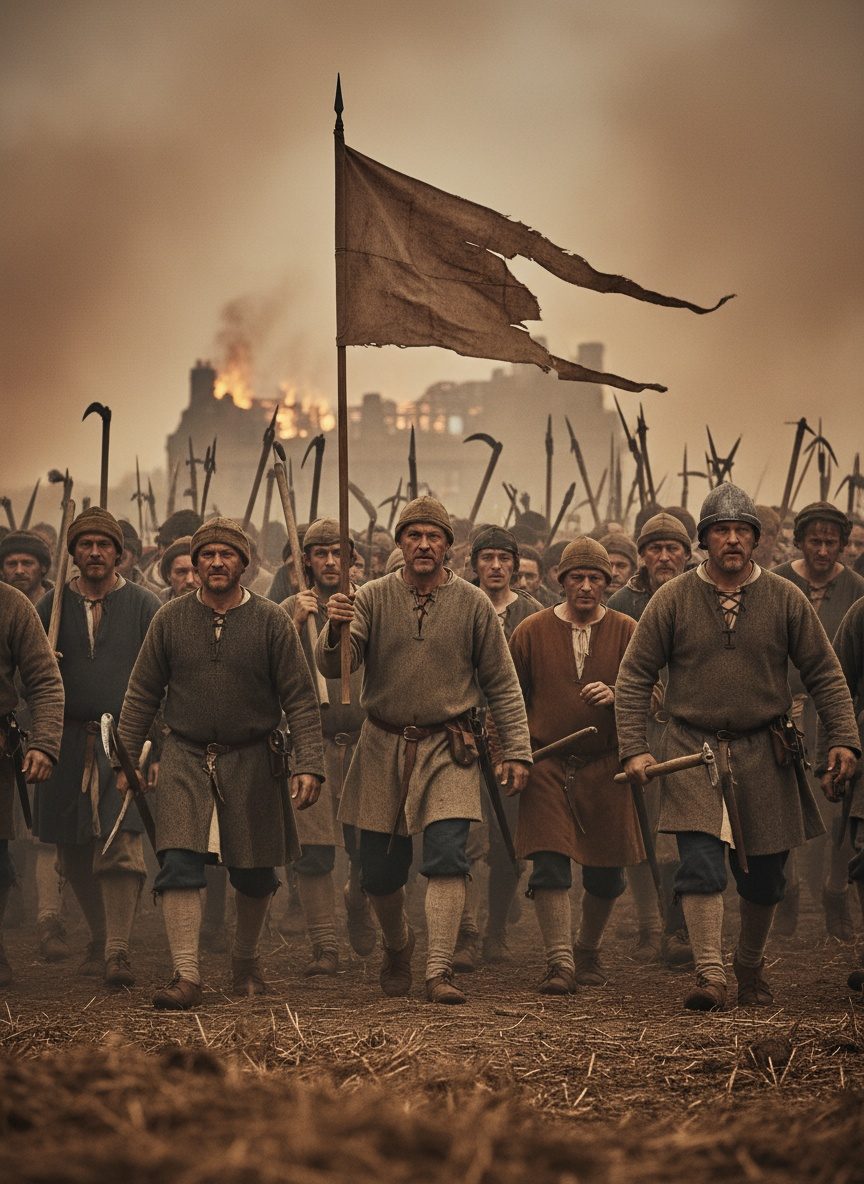
As news spread, the countryside awoke with a unified voice. From Essex and Kent, the cry for revolt gathered numbers and strength, like streams feeding into a mighty river. With burning pent-up anger, thousands marched toward London, brandishing farm tools and scavenged weapons. These were not trained soldiers, but their resolve was steelier than any armor worn by their noble counterparts.
Read next: The Day a Welsh Girl Barred the Door on a King's Army
The sight of this ragtag assembly sweeping the land was more than an extraordinary spectacle—it was an event laden with the potential for profound change. The medieval world order was predicated on a rigid hierarchy, but here was a challenge, unanticipated and unwelcome, forcing its way to the heart of English power. When the rebels reached London, they weren't merely knocking on the gates—they battered them down and claimed the city as their own.
The Kingdom's Great Lords: Cornered Prey
The upper echelon of England was unprepared for the force that surged through their capital. Among the most notable events was the burning of the Savoy Palace, a symbol of grandeur reduced to ashes by resolute hands. The opulence burned hot and quick, a vivid testament to the schism between the haves and the have-nots.
Tales from the time recount the tension in those narrow London streets—a city frequently occupied and rarely free. Even the Archbishop of Canterbury, a figure of considerable power and influence, met his end at the rebels' hands. Each act of defiance sent ripples and shocks through the very fabric of rule: ancient, steadfast, and now teetering on the edge of ruin.
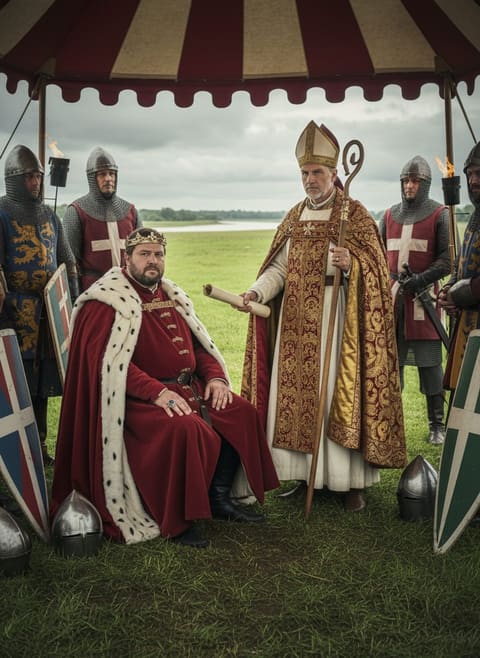
In the midst of chaos stood a teenage king, Richard II. With his court evaporating under the heat of rebellion, he was left with no option but direct confrontation. The act was audacious at best, reckless at worst. Yet it's crucial to pause and consider the impact: a reigning monarch, isolated and vulnerable, negotiating directly with the forces of his realm's disgruntlement, exemplified the shifting balance of power in those days.
Read next: The Day a Medieval Mayor Knelt and Saved Six Condemned Men
England Turned on Its Head
For four days, the world was upside down. Rule by the nobility, the sacred tenet of medieval life, was temporarily suspended. It was a moment when the proverbial boot shifted from neck to foot—for a short fragment in time, the downtrodden were ascendant. No longer was England a foregone conclusion, a predictable sequence of lords and vassals. It was fevered chaos, uncertainty looming at every corner.
The events of June 1381 cast long shadows and echoes through time. The compelling urgency of the peasant voices, the clatter and clamor in London’s heart, served not only to disrupt but to challenge the rationale of feudal exploitation. Even though the rebellion ultimately did not bring a lasting ripple of systemic change, its very existence sent a clear and forceful message: the people, ignored and underestimated, had power more formidable than the sharpest blade.
The Peasants' Revolt reminds us of a truth hard to look away from: that the chords of history, sometimes plucked with unexpected fervor, resonate far deeper than their immediate sound. Amidst this chaos, England learned a profound lesson—one about the fragility of rule, about burgeoning consciousness among its lower tiers, and about the undeniable strength in unity. It stood as both a warning and a reflection; for absolute power, even cloaked in armor, is never absolute.