The morning sky over Calais was a taut canvas of grey, clouds hanging low, choking the light out of a world already weighed down by desperation. The air was still, heavy with the pungent scent of salt and sweat, and the soft, steady murmur of the English Channel seemed a cruel lullaby to the hundreds whose fates clung by a thread, swaying precariously between life and death. In the besieged city below, the gaunt faces of its inhabitants bore witness to months of torment. Eleven long months, where each day mirrored the last in an unyielding testament to medieval warfare—a drawn-out specter presaging hunger, disease, and an unending dread of what might come next.
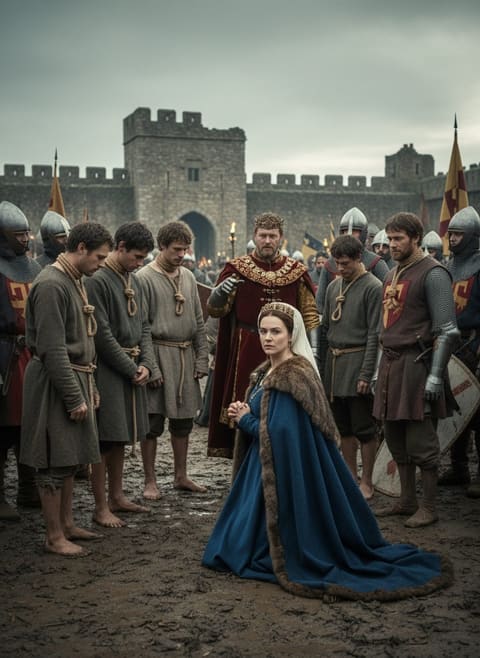
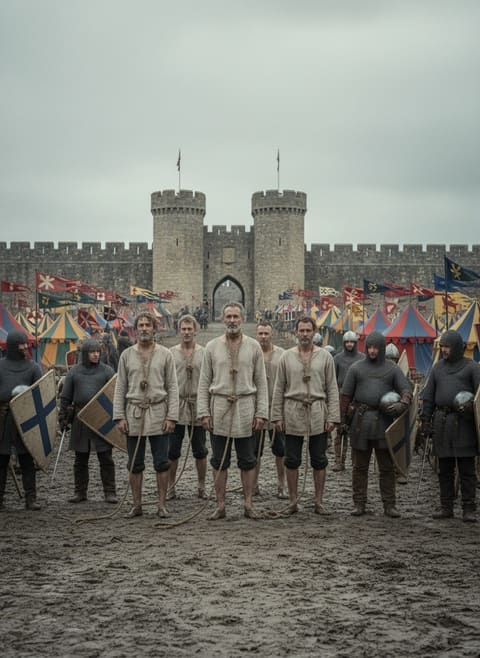
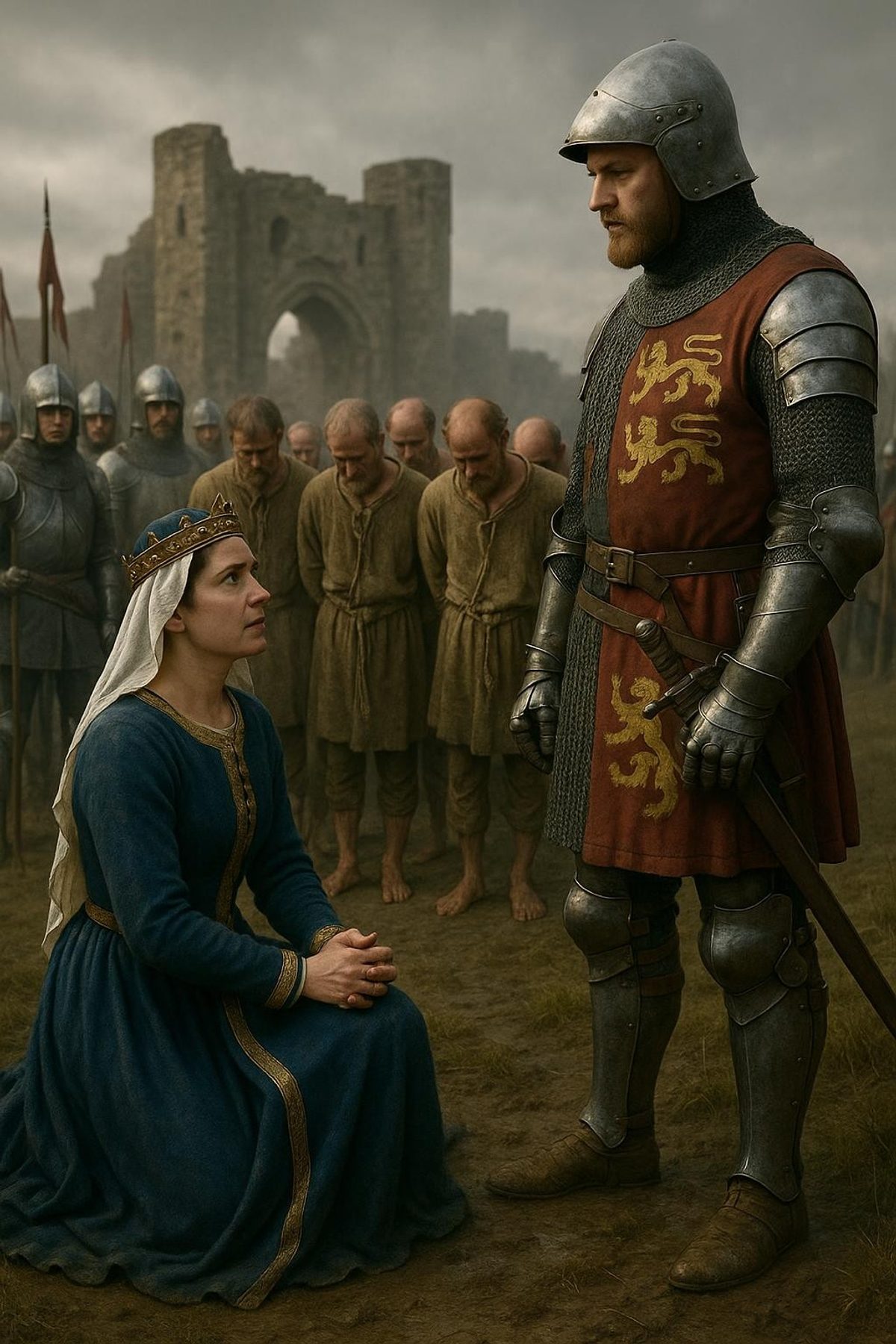
It was in this muted theater of despair, amidst the echo of distant battle horns and the rattle of armor, that history teetered on the knife's edge of a promise—a king’s oath that had pledged a gruesome conclusion to this costly siege. Edward III had vowed to hang them all: the leading men of Calais. Resolute and unsympathetic, his decree seemed as immutable as the stones that made up the walls his army had besieged. Yet, as six skeletal men trudged barefoot from the city gates, ropes biting into their necks, the true theater of the day unfolded not in their execution but in an unexpected, poignant act of mercy.
The Queen's Plea
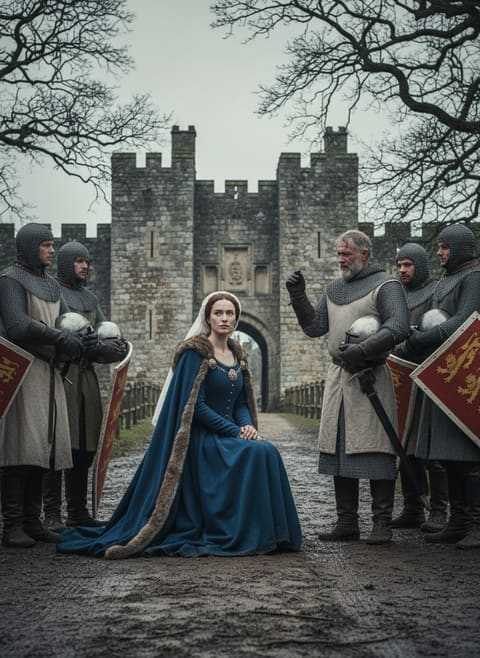
To the onlookers—both parched citizens and the battle-hardened soldiers who encircled their prey—what emerged next was astonishing. From the midst of knights and squires, Queen Philippa emerged, her condition unmistakable. Heavy with child, she radiated a serenity that belied the turbulence within her husband's camp. Her steps traced a determined path through the mud, her garments sullied by the wet earth yet untouched in dignity. Before the gathered assembly, she dropped to her knees, not in submission to a king, but in devotion to mercy.
In a voice clear and unwavering, she addressed Edward, not with the distance of courtly formality but with the intimate appeal of a wife to her husband, a mother to the future. She implored him to reconsider, to retract the sentence that loomed over the heads of the men who knelt to him in despair. Edward's eyes held a storm of calculations. Mercy seemed a betrayal of victory, a crack in the stern armor of authority. Yet here was Philippa, embodying a wisdom transcending the battlefield—a wisdom rooted in compassion and the echoes of a legacy that might someday define his reign.
Read next: The Day a Welsh Girl Barred the Door on a King's Army
The gathered host stood silent, the tension fraught between the recalcitrant justice of a king and the warm entreaty of a queen. It was as if time hesitated, poised on the precipice of decision. The queen's plea was more than an appeal; it was a testament to the strains of diplomacy that even war could not sever. Edward's hand, poised to execute, now wavered under the weight of her words, disarmed not by might but by a simpler, profound urge to preserve honor in victory.
The Human Cost of War
Philippa's intervention was not without precedent, yet it stood apart due to the circumstances surrounding it. The siege of Calais represented more than a mere military campaign for land or resources. It was a crucible where the raw realities of medieval politics, ambition, and human suffering intertwined dramatically. The English army had encircled the city for close to a year, cutting off supplies and inducing famine. The defenders, beleaguered and bedrocked by resilience, faced starvation, each man and woman within its stone walls living on the precipice of annihilation.
For Edward, the capture of Calais symbolized a strategic foothold on the Continent, essential for his claims in France—a linchpin in the Hundred Years’ War. Cutting through the political veneer, however, were the faces of flesh and bone: The inhabitants of Calais, reduced to skin-clad skeletons, embodiments of desperate resistance. Even in the fourteenth century, the ethical quagmire of war was apparent, where grand strategies clashed tragically with the intimate sorrows of common people.
The historical records—often penned by victors—tell us the military logic behind the siege but seldom pause to reflect on the lines that separate mercy from cruelty. Philippa's appeal thus emerges not just as a deviation from brutality but a humanizing axiom in an often relentless narrative. By granting clemency to the six men, Edward honored not only Philippa's request but also acknowledged an unwritten code, that even the starkest skirmish should not obliterate the essence of honor or the hope of reconciliation.
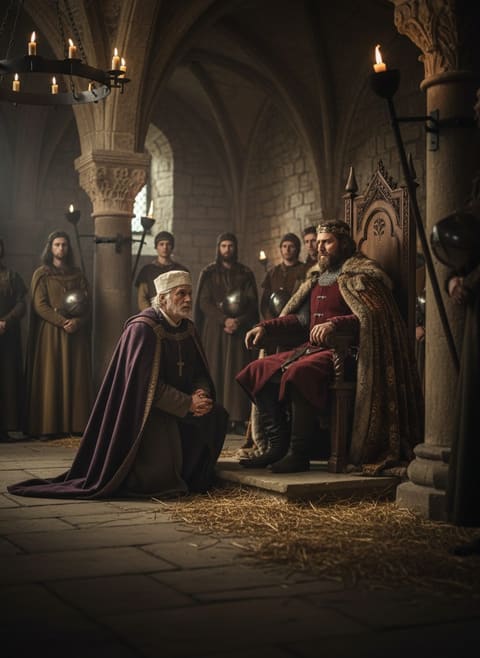
Read next: The Day a Medieval Mayor Knelt and Saved Six Condemned Men
The Enduring Legacy of Compassion
As the sun filtered weakly through the clouds, its tepid warmth barely noticeable, the decision set in motion reverberations that lasted far beyond the siege itself. Six men walked back from the brink, their lives spared by the moral courage of a queen who, in that moment, defined true strength. The relief snaked through the desperate ranks of Calais, a fragile hope threading through the suffocating pall of defeat.
Many chronicles have since captured this event—a fleeting act of grace overshadowing the darker hues of conquest. For the people of Calais, the memory of their sparing became a crucial balm in the city's collective consciousness, a tangible reminder of the unpredictable mercy nestled within the vagaries of power. To the English crown, it showcased the unexpected potency of compassion over strength alone, a gesture that resonated through the annals of medieval chivalry.
The actions of Queen Philippa and the clemency of Edward III speak to a timeless human struggle, the ever-present potential for kindness in the shadow of authority. In the wisdom of her petition, Philippa did not just save six men—she restored a sense of humanity to the grim calculations of war. This tale, like many left out of textbooks, reveals that beneath the trappings of power, a core of empathy holds sway, capable of reshaping destinies, etching a line between history and legend, and inviting reflection on how we choose to wield our influence.