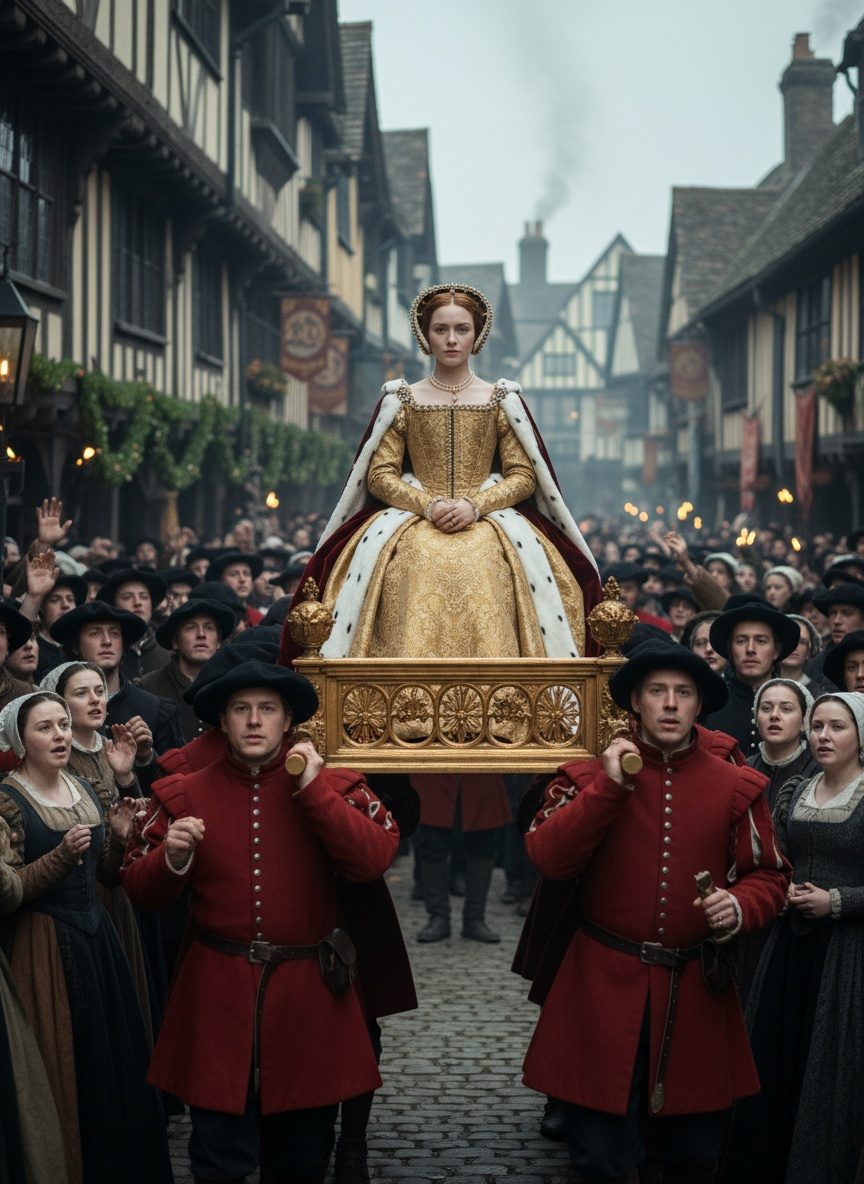
The air was crisp, biting at the skin with every gust of January wind. The horses' hooves clattered against the cobbled streets of London, their breaths visible in the air like dragon smoke. Elizabeth Tudor, regal and poised, sat atop her mount, her vibrant auburn hair catching the cold winter sun. She moved through the thronging crowds, her gaze steady, her smile unbroken. Her people roared her name, their cheers bouncing between buildings like an echo of change. Elizabeth was heading to Westminster Abbey, not as the daughter of scandal but as England's sovereign.
The Journey of Shadows
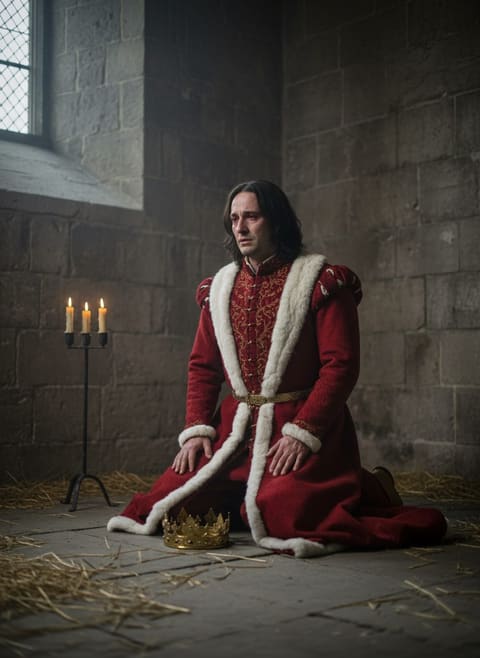
Elizabeth Tudor's life was an intricate tapestry of power plays and whispered conspiracies, spun from the day she was born. She was the daughter of Anne Boleyn, the queen executed by her father's decree, King Henry VIII. Elizabeth's legitimacy had been questioned time and again; her fate seemed as uncertain as the tide. Twice declared illegitimate, she grew up in the shadow of her father's whims and her sibling's rivalries. Her sister Mary had once imprisoned her in the cold confines of the Tower of London, where Elizabeth awaited a destiny that lay in the hands of others.
But this story arcs away from shadows. It was 1559, and England's sky held promise as well as clouds. Elizabeth stood unrelenting, informed by the ghosts of her past. Her resolve steeled by her time in the Tower and the complexities of Tudor politics, she was ready to walk into the halls of power alone.
The River Procession
The river procession was a spectacle befitting a burgeoning monarch. The River Thames glinted under the wintry breath of the sun, carrying the young queen toward Westminster as if transporting hope itself. The barge, draped in resplendent colors, parted the waters with an elegant grace that matched its occupant. London's populace gathered along the banks, an undulating sea of humanity eager to glimpse their future.
Read next: The Day a King Wept and Gave His Crown to His People
Elizabeth reveled in the transport, waving and acknowledging her subjects, each gesture carefully calibrated to inspire loyalty and reassurance. Every shout of "God save the Queen!" puffed solace and unity into a country weary of religious turmoil and dynastic uncertainty. Her shoulders may have been light, but they bore the expectations of an entire kingdom.
The Threshold of Power
The threshold loomed as she alighted from the barge and approached Westminster Abbey. Here, on this sacred ground, where the thrones and crowns of generations awaited, she walked with unparalleled confidence. An unwed, twenty-five-year-old woman of slight stature but immense presence, Elizabeth stepped into history alone. Her footsteps resonated through the hallowed halls — the drumbeat of a reign about to unfurl.
Inside the Abbey, the air was electric, charged with the anticipation of possibilities. Elizabeth's entry was both literal and symbolic. No armored guards flanked her; she needed no male proxy to validate her claim. Her cerulean robes flowed like a living river behind her, her crown yet to be set but already deemed fitting by the gathered nobility.
The Coronation
The rituals of the coronation, enshrined in the liturgy of power and continuity, unfolded around her. Each anointment, each uttered oath, pulled on threads tied to centuries of monarchy. The oil, the crimson, the golden orb — these were the props of sovereignty, but it was Elizabeth's poise that commanded the scene.
Read next: The Scots Girl Who Became Britain's Most Loved Queen
Her ascension, though rooted in tradition, beckoned a new era. The fierce fidelity of her councillors, many of whom once doubted or slighted her, now orbited her like planets around a warm, vibrant sun. Elizabeth knew well the chessboard she entered; she had studied it from within the Tower walls and from the vantage of exile. Her mind, sharp as the winter’s bite, mapped out a reign that would come to symbolize the English Renaissance.
The Dawn of an Era
As Elizabeth departed the Abbey that day, crowned but still very much herself, the cheers that had greeted her arrival erupted once more. The skepticism that lurked in the shadowed corners of courtiers' minds dissolved with the weight of the crown upon her head. The bells of Westminster rang with a clarion call to a nation adrift — it was time to anchor and rebuild.
Elizabeth's walk into her own coronation, independent, unapologetic, marked the genesis of a reign that would shape an epoch. She forged her identity not through the appendage of a king but through the breadth of her intellect, her political acumen, and her deep understanding of her people's heart. Here was a monarch who was equally mythic and human, born from trial but burned into history by her own resolute light. The echoes of that bitter January day resound through the ages, a testament to the power and potential of walking unaccompanied into one's own destiny.