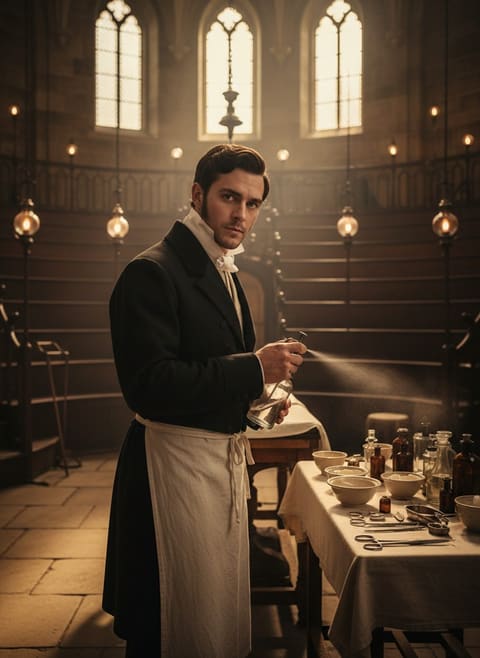
The pungent scent of antiseptic hung heavy in the air as Joseph Lister entered the bustling ward at the Glasgow Royal Infirmary. Bed after bed, men lay silent, some feverish with infections that had taken root after what should have been clean surgeries. Lister surveyed the room, his brow furrowed with determination. If his theory held true, these men might survive the very operations that had sealed the fate of so many before them.
The Surgeon's Revelation
Joseph Lister was no stranger to the harsh realities of surgery in the mid-19th century. Despite the skillful hands of surgeons, a spectre haunted every operating room: the terrifying spectre of post-operative infection. No matter how precise the incision or careful the stitch, the invisible threat of germs claimed more lives than the sharpest scalpel.
Unlike those who accepted post-operative infections as inevitable, Lister was driven by a radical idea he drew from the work of French chemist Louis Pasteur. Pasteur’s research suggested that microorganisms were not just bystanders in the air—they were lethal agents of infection. Inspired by this, Lister hypothesized that these unseen germs were the true killers, not the surgery itself. And so, he set out on a path that would challenge the very foundation of surgical practice.
Carbolic Acid: A Revolutionary Choice
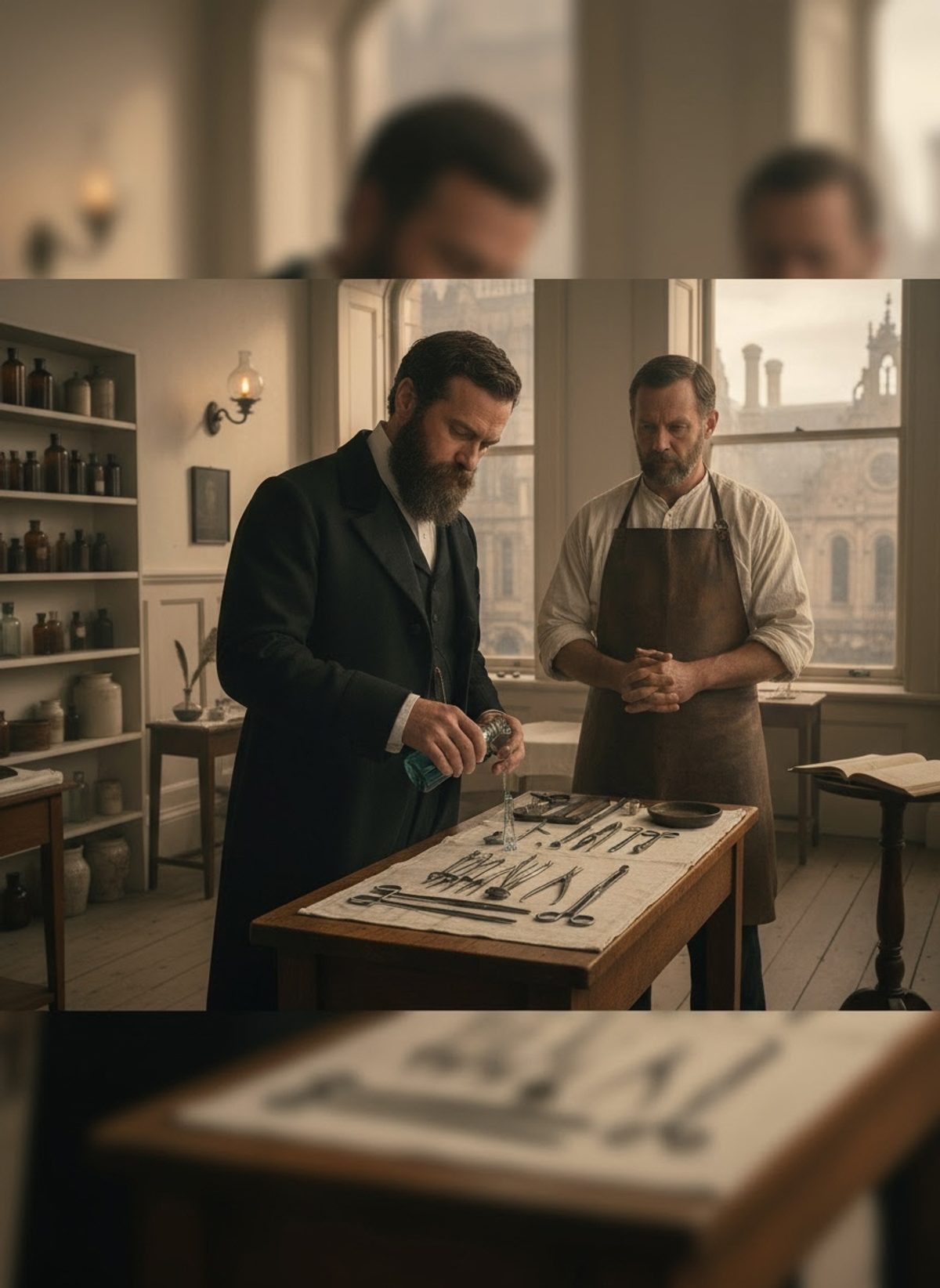
In 1865, Lister implemented his bold experiment at the Glasgow Royal Infirmary, testing the power of carbolic acid. Known for its ability to deodorize sewage, carbolic acid had the potential to do much more. Lister believed it could kill the germs that haunted his patients' wounds.
Read next: The Day a Blacksmith's Son Measured the Distance to the Sun
He began to soak his surgical instruments and clean wounds with the acrid solution, applying it liberally with sterilized, soaked bandages. The pungent smell filled the operating theatre, and nurses adjusted to this new regime, adding another duty to their already arduous routines.
The results were astonishingly quick and evident. The number of infections plummeted. Patients who once would have faced gangrene or sepsis began to recover; the ward that had witnessed so much tragedy saw survival rates blossom in the most unexpected way.
The Doctors' Dilemma
While Lister's results were indisputable, not all of his contemporaries were quick to applaud. Skepticism ran deep within the ranks of the more established medical professionals, who deemed his methods unnecessary meddling. Many were resistant to change, their traditions firmly rooted in practices honed over centuries. Some whispered disdainfully about the peculiar Scotsman who fussed over invisible enemies as if they were as real as a bullet or blade.
Despite the resistance, Lister found allies among a new generation of surgeons eager to learn. The evidence was too compelling to ignore, and slowly, word of mouth spread the news of Lister’s success beyond the confines of Glasgow. Curious—and brave—physicians in England and Europe began to adopt and adapt Lister’s methods, observing similar decreases in infection rates in their own hospitals.
Read next: The Day a Scots Weaver's Son Gave the World Its Telephone
Beyond the Ward: A Global Phenomenon
The impact of Lister’s work grew, shifting the entire paradigm of medical treatment. As word of his success spread, hospitals around the world began to embrace the practices of sterilization and antiseptic procedures. Instruments were no longer the only recipients of carbolic washes; entire operating rooms began to be scrubbed under Lister's methodology.
Desks of senior surgeons became battlegrounds where old notions of surgical inevitability were rigorously challenged by fresh data. The notion that surgeons could directly combat infection was a liberating thought, ushering in an era where the scalpel was no longer a death sentence.
The Legacy Left Behind
The transformation wrought by Lister’s insights into the menacing world of germs extended far beyond one ward in Glasgow. The understanding that microbes caused infection fundamentally altered how medicine approached healing. Lister’s pioneering use of carbolic acid was not just an innovation; it was an essential part of a seismic shift towards modern surgical and medical practices. His legacy redefined the art of healing, reminding us that curiosity and determination could defeat even the most daunting of foes.
In a world once resigned to death as a likely consequence of necessary medical intervention, Joseph Lister's dogged pursuit of truth saved untold human lives. His work is more than a footnote in medical history; it is a beacon illuminating the relentless quest for understanding that drives innovation and saves lives. And in that quiet ward, when invisible dangers met their end, Joseph Lister proved that the fight against ignorance could indeed tip the scales toward survival.