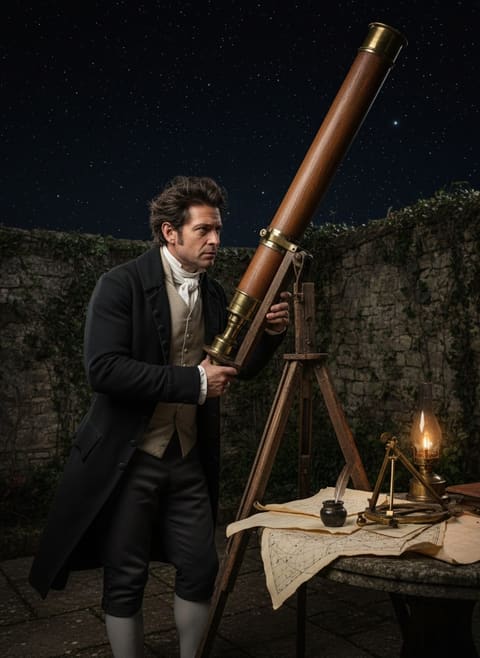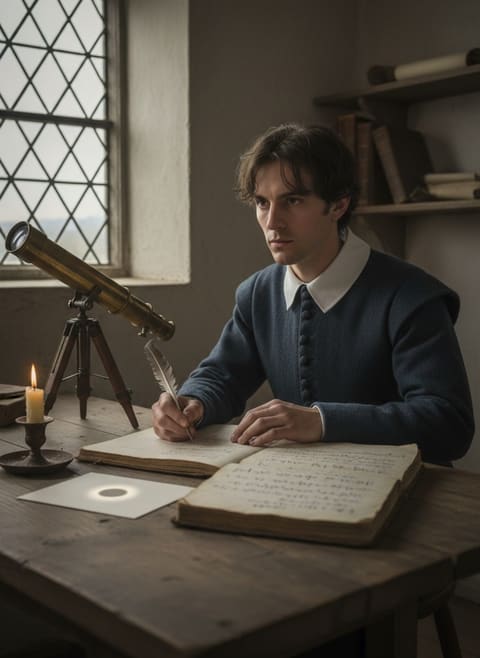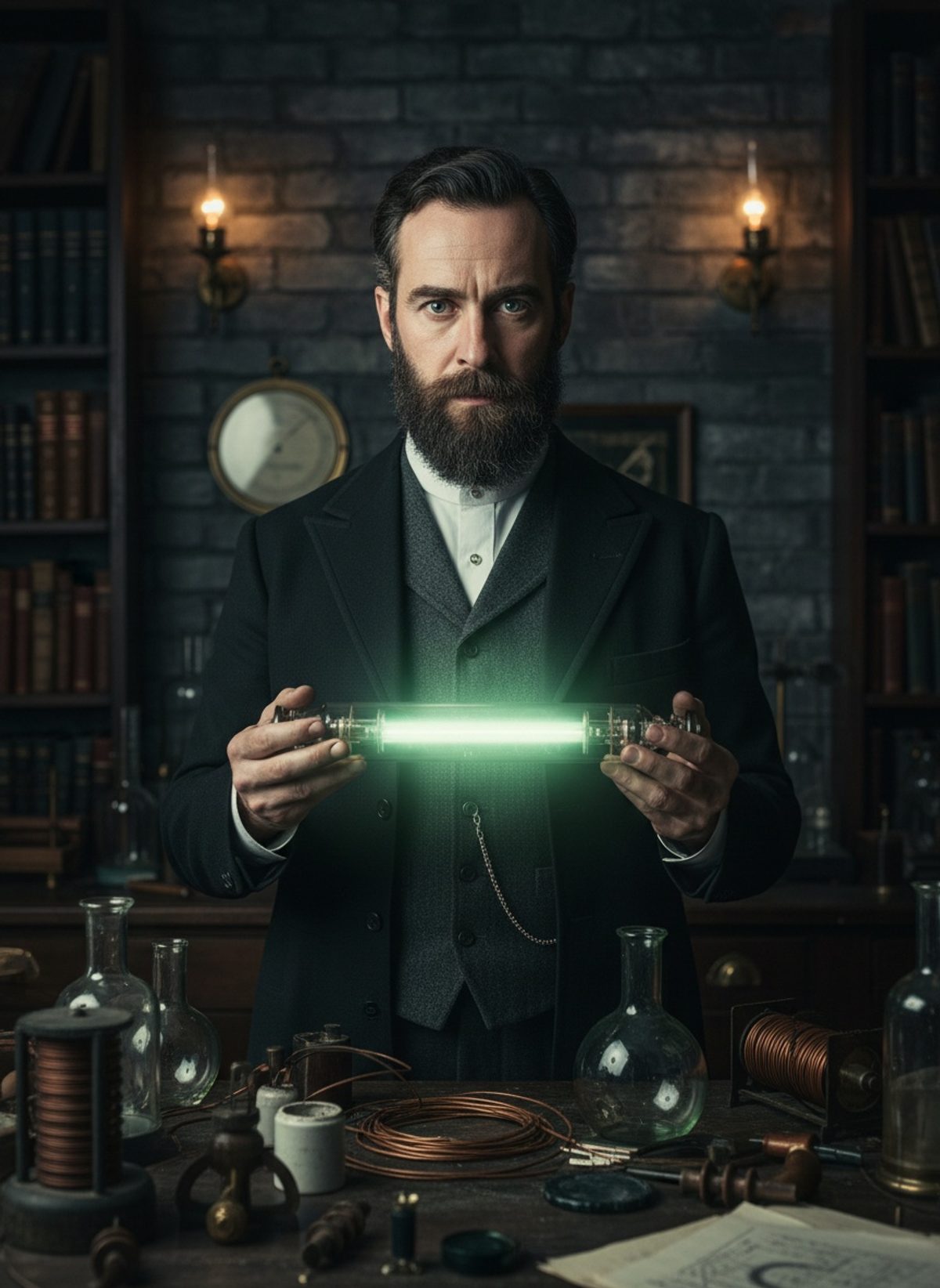
William Crookes was just another Victorian experimenter. Except he wasn't. His hands, weathered and calloused from making his own scientific instruments, would forever change our understanding of the invisible world.
The Humble Beginnings of a Blacksmith's Son
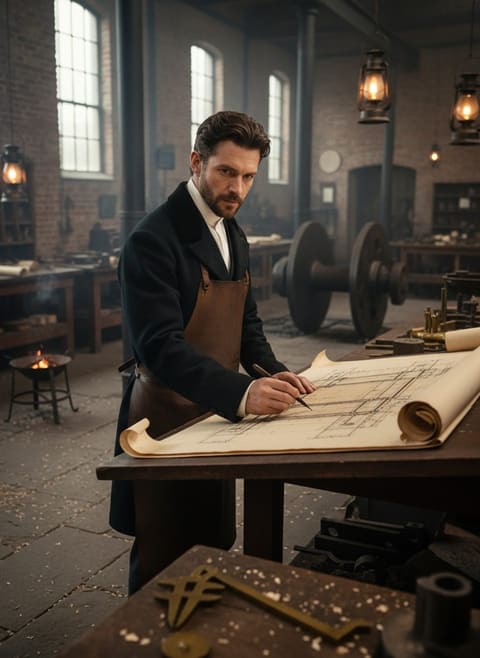
In the narrow, winding streets of mid-19th century London, a young boy named William Crookes lived amidst the clang of metal and the hiss of steam. His father, a blacksmith by trade, worked tirelessly each day, shaping iron with a strength and precision akin to artistry. The family’s modest home stood as a testament to hard-earned craftsmanship, where skill and curiosity went hand in hand.
Crookes, with bright eyes and an insatiable thirst for knowledge, grew up not in the grand halls of academia but in the raw vibrancy of his father’s forge. It was here that Crookes' own journey began, learning first to mold metal with his hands and later shaping scientific instruments with a similar, meticulous care. With no university degree or wealthy patron to fund his ambitions, Crookes pressed forward, carving his path among the intellectual giants of his time.
A Room Shrouded in Darkness
By the 1870s, industrial London was the beating heart of innovation, a whirlwind of steam, soot, and scientific discovery. It was into this charged atmosphere that William Crookes introduced his experimental apparatus, an unassuming sealed glass tube that would soon unveil a secret of nature. Unlike many of his contemporaries, Crookes favored simplicity, relying on his keen sense of observation rather than elaborate instrumentation.
Read next: The Day a Tanner's Son Mapped the Human Body From Inside
Imagine a darkened room, the only light a flicker dancing above a glass tube. Crookes, with a steady hand and simmering anticipation, fired electricity through the tube. Before him, a ghostly green luminescence blazed across the glass, revealing what had until then remained hidden from human eyes. The green glow came to life, casting eerie shadows on the walls and illuminating the face of a man who, through sheer persistence and vision, had stumbled upon the building blocks of the electron age.
The Mysteries Revealed
The experiment conducted by Crookes was pioneering, for what he observed was a phenomenon that would come to be understood as cathode rays. These rays, originating from the cathode terminal of his tube, seemed to beckon with a story — an invitation to explore a world beneath the fabric of known reality.
This new realm promised insights into previously untouched domains of physics, and Crookes could scarcely grasp the magnitude of his discovery at that moment. England, still reeling from the strides of the Industrial Revolution, now stood on the brink of an altogether different kind of transformation — the kind that happens at the subatomic level.
The potential implications were staggering. Cathode rays opened questions that would lead scientists like J.J. Thomson to later identify the electron, profoundly altering the future of chemistry and physics. Crookes, unwittingly perhaps, had set the stage for innovations that would sweep across disciplines and ultimately revolutionize technology itself.
An Overnight Success Years in the Making
Despite his monumental discovery, Crookes did not gain immediate recognition. The skeptical gaze of the scientific community was sharp and unyielding, fueled by tradition and hierarchy. Without the endorsement of prestigious institutions or influential figures, his work was scrutinized, debated, sometimes dismissed.
Read next: The Day a Tanner's Son Proved the Earth Was Millions of Years Old
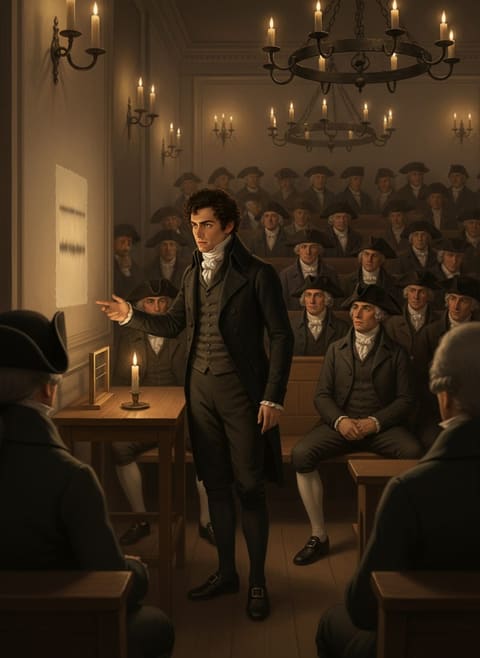
Nevertheless, unwavering belief in his own data and observations drove Crookes to present his findings to those willing to listen. Gradually, as others replicated his experiments and confirmed his results, the world began to take note. Lectures were given, papers published, and slowly, the blacksmith's son won over even the most cynical minds.
The tide turned, and with it, Crookes was no longer the lone experimenter in a shadowy room. Instead, he became a respected voice in the scientific community—a beacon for those who dared question and explore the fringes of the known world.
From Darkness to Dawn
Looking back on that moment in 1878, when Crookes first saw the ghostly glow through his apparatus, it is impossible not to reflect on the power of curiosity unbounded by formal education or privilege. Here was a man, born to the clangor of hammers and blistering heat, who peered into the very essence of matter itself and changed the course of science. He mapped the unseen blood coursing through the world of physical phenomena, revealing that even the invisible could be understood with the right vision—and tenacity.
William Crookes’ story matters not just as a chapter in the history of science but as a testament to the relentless human spirit—the drive to understand, to innovate, and to shed light on the unknown. His legacy serves as a reminder that sometimes, the greatest discoveries come from those who follow the hum of curiosity, wherever it leads, regardless of their origins.