Most people assume that kings rule without question. In June 1215, a gathering in a field proved that assumption wrong.
The King, the Meadow, and the Murmurs of Discontent
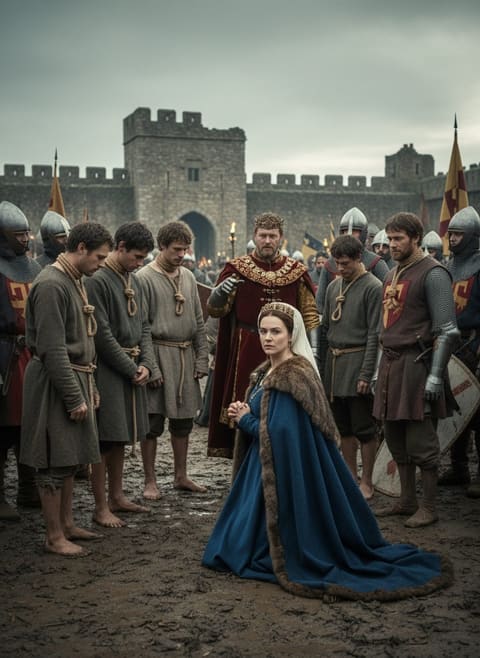
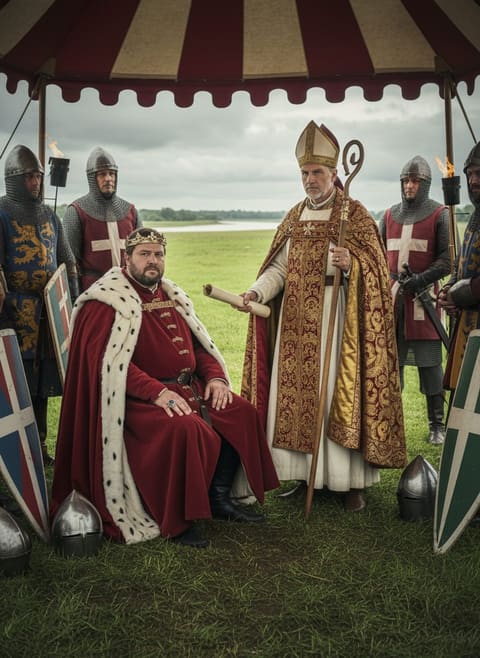
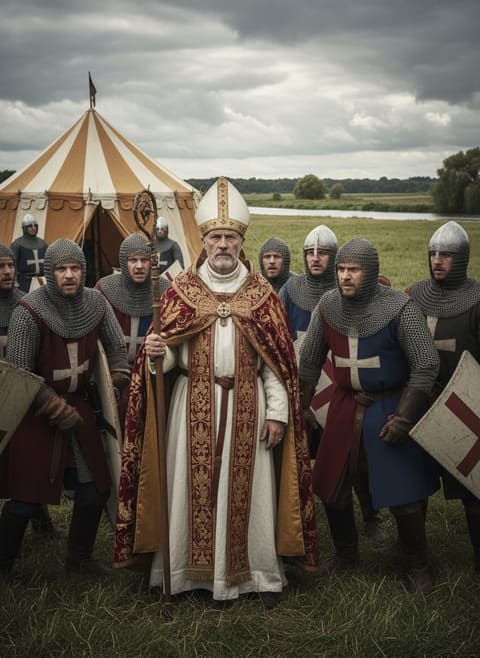
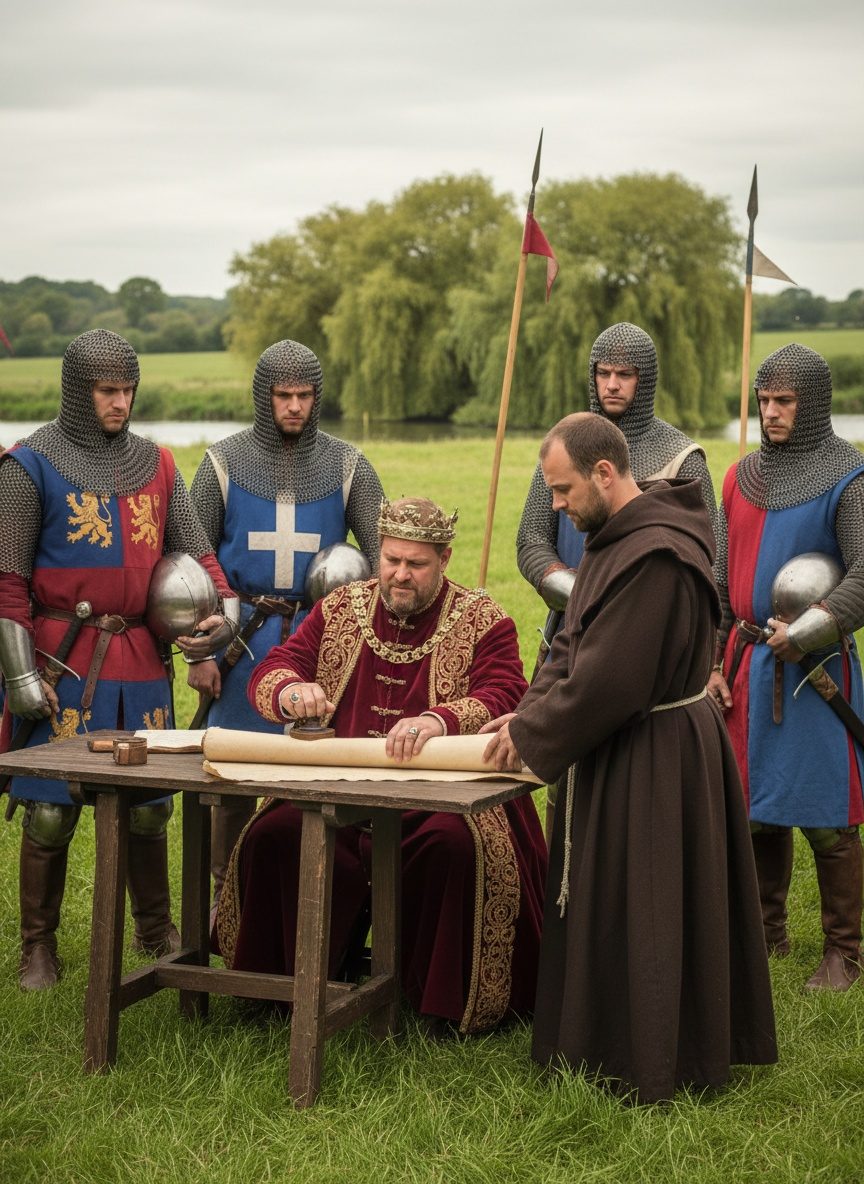
Runnymede, a meadow nestled along the tranquil banks of the River Thames, was not the place one would expect an extraordinary historical shift. Yet, in June 1215, the verdant expanse bore witness to a scene both dramatic and inevitable: King John, his royal regalia contrasting sharply with the earthiness of the surroundings, faced a cadre of defiant barons. John, a monarch infamous for his iron grip and relentless impositions, was now ensnared by the very nobility who once served him. They were armed not just with swords and shields but with a powerful idea captured in ink — no one, not even a king, was above the law.
The medieval backdrop was ripe for rebellion. England was embroiled in a web of fiscal burdens and oppressive rules. King's John mismanagement, compounded by losses of French territories and failed military campaigns, stirred whispers of revolt that grew louder over time. As John's grip tightened, the discontented murmur of his subjects became a chorus too loud to ignore. The barons, fortified by their shared grievances, leveraged this climate of unrest to demand a transformation yet unseen in the corridors of power.
The Document That Altered the Realm
The Magna Carta, or the "Great Charter," was not just words on parchment — it was a lifebuoy thrown into the turbulent waters of medieval governance. The document was pragmatic in its approach, addressing specific abuses of royal power rather than establishing democratic principles as we might recognize today. Nevertheless, it sowed the seeds of what would eventually blossom into modern constitutions.
Read next: The Day a Welsh Girl Barred the Door on a King's Army
On that pivotal morning, the anticipation in the air was almost tangible. As the barons thrust the charter into the king’s hands, the dynamics of English rule began to shift. Among those orchestrating this bold stand were the sons and heirs of landed gentry and mere commoners—a diverse assembly of souls, including the son of a humble tanner. This collective representation was emblematic of a broader demand for accountability. It was as if the paper itself vibrated with the weight of history that was to be made, and under palpable reticence, King John signed. The Magna Carta might have started as a mere resolution to feudal grievances, but it became the cornerstone for aspirations of liberty and justice.
A King's Bow and the Dawn of Accountability
In bending to the will of his barons that fateful day, King John became an unwitting catalyst for systemic change. Indeed, the immediate impact was staggering and chaotic, as the seeds of the Magna Carta needed fertile ground of understanding to take hold. As John rode away from Runnymede, his heart heavy with the burdens of compliance, the realm transformed with echoes of burgeoning accountability.
Read next: The Day a Medieval Mayor Knelt and Saved Six Condemned Men
However, the king’s reluctance and the Pope’s annulment shortly thereafter plunged the nation into further unrest, hinting at the ephemeral effectiveness of the charter at inception. Yet, the indelible ink of the doctrine had been cast upon the template of governance. The very idea that monarchic and political power could be limited — that there existed a resurrection of ancient rights and guarantees against tyranny — had already inscribed itself onto the fabric of societal consciousness.
The Legacy in the Shadows of the Meadow
The meadow of Runnymede became more than just the site of a king’s capitulation; it grew into a symbol of liberty and the continued struggle against unchecked authority. As centuries unfolded, the Magna Carta’s principles were invoked in the crafting of constitutions and the plight of rights for millions around the globe. In the parchment's renewed reiterations and adaptations, including the treasured clauses about justice and lawful judgments, the legacy of Runnymede persisted through turbulent political tides and across vast oceans.
To this day, the irony of Runnymede lies in its dual nature as both a specific moment and an evolutionary catalyst in human governance. Born from dire necessity, the charter finds itself constantly renewed in the laws and ethos that govern free societies around the world. The son of a tanner and his compatriots could not have foreseen the impact of their actions, yet their determination etched itself into the annals of history. As generations reflect on the ideals sparked in that tranquil meadow, they find not just a document, but a call to uphold the enduring struggle for liberty and justice that remains more relevant now than ever.