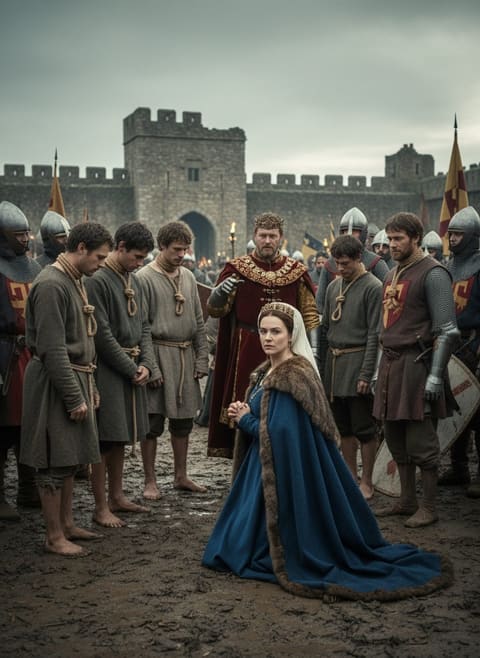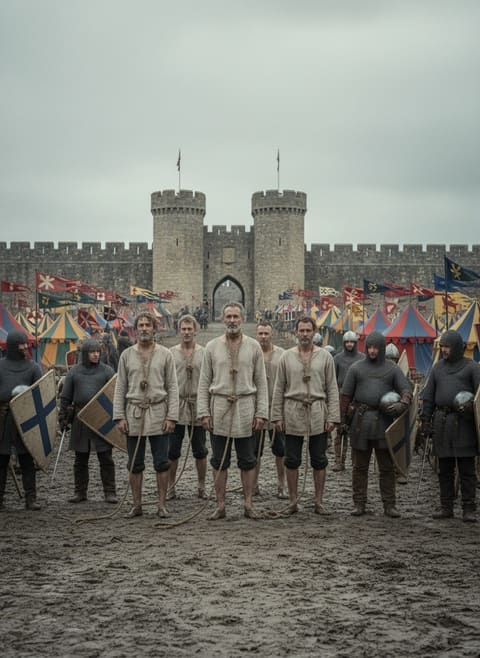
The day dawned beneath a heavy drape of gray clouds, casting a somber tone over the landscape of medieval London. A light drizzle began, joining the smoke that hung low from countless bonfires dotting the city’s outskirts. There was a chill in the air, an omen of the tumult to come. The murmur of nearly sixty thousand voices, angry and restless, pulsed like a heartbeat around the ancient walls as men gathered in grim determination. For England, this was a day of reckoning. The Peasants’ Revolt, a revolutionary uprising like no other, threatened to unseat not just the monarchy but the very essence of England itself.
Amidst this cacophony lay the heart of the crisis: the adolescent King Richard II, untested and just fourteen years old. A boy on the cusp of manhood, he found himself thrust into a maelstrom of fury and desperation. Across the field of Smithfield, the King could see the aftermath of a bloody clash. Wat Tyler, the charismatic leader of the rebellion, lay dead, his lifeless form a stark reminder of the price of dissent. Tension electrified the air, every moment crackling with the potential for violence.
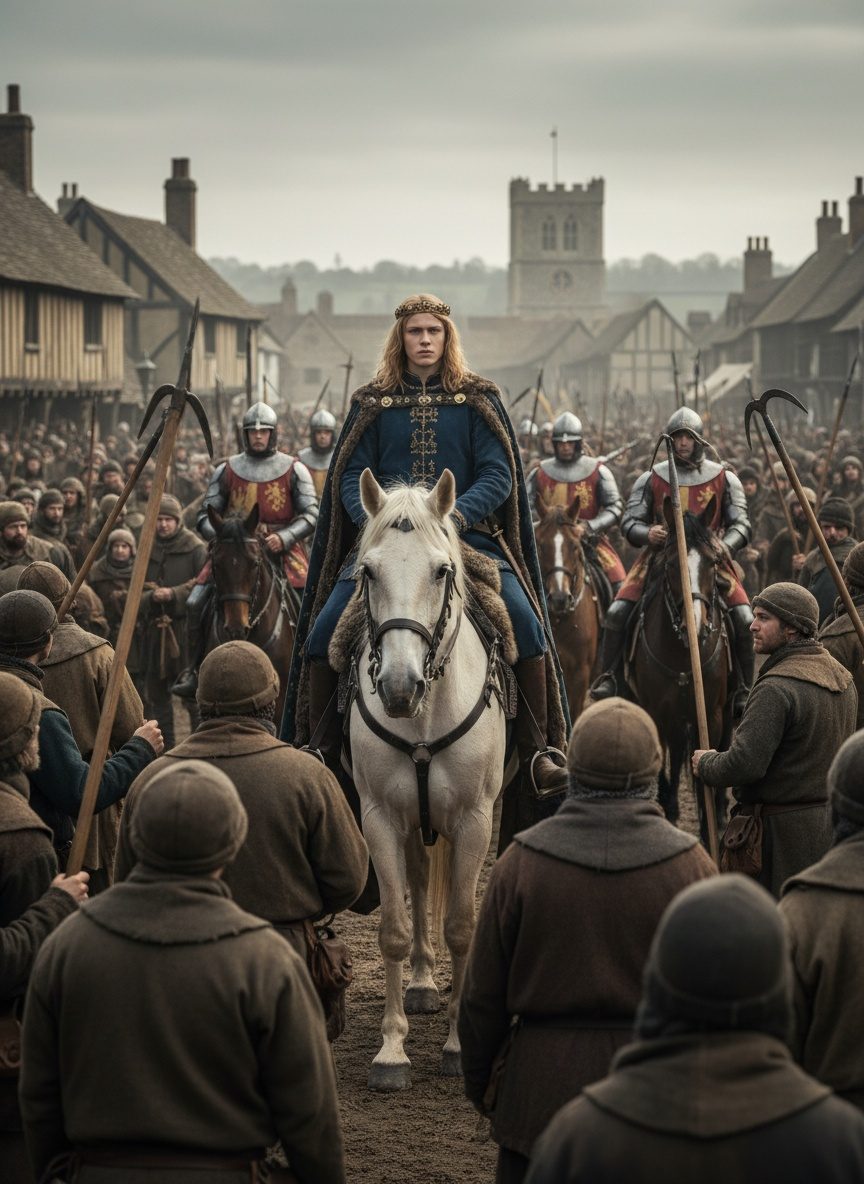
As chaos threatened to spiral beyond control, the young king’s retinue braced themselves for the inevitable. Their minds likely darting between routes of tactical retreat and thoughts of surrender. But Richard, his youthful face a mask of resolve, spurred his horse forward. The sudden motion sent whispers skittering through the crowd, drawing all eyes to the solitary figure on horseback, a solitary silhouette against the unfurling gray skies.
The scene before Richard was one of disarray: a sea of faces hardened by years of backbreaking toil, impoverished peasants demanding justice, their anger stoked by new taxes and a world that seemed indifferent to their suffering. The decision to act had fallen upon this young king—a decision that would determine the fate of a kingdom teetering on the brink.
Read next: The Day a Welsh Girl Barred the Door on a King's Army
The resonant clatter of hooves marked his progress as Richard advanced into the midst of the throng. Silence fell in his wake like a shroud, the tension palpable, the crowd holding its collective breath. Here was a king, unguarded, facing his people with no battlements to shield him. For a moment, time seemed suspended, every breath of wind a portent of what might follow.
His voice, when it came, broke the silence with astonishing clarity. Each word spun a thread into the tapestry of history, weaving a narrative that would reshape the fate of England. With an eloquence belying his years, Richard addressed the multitude: not with reproach or fury, but with a plea that resonated through the air like a bell of hope.
“You shall have no captain but me,” he declared, his voice carrying with it a promise of change, a chance for redemption. The effect was immediate and profound. Where before there had been disarray and anger, there now emerged a sense of unexpected unity, coaxed forth by the assurance of a sovereign willing to listen, to enact reform.
It was not just the words themselves, but the unflinching courage of a lone boy that stayed the hands of violence. In Richard, they saw a flicker of possibility, a leader who might yet right the wrongs that had driven them to revolt. The embers of rebellion that had threatened to ignite into an inferno were dampened, and once more, the precarious balance of power was restored.
Read next: The Day a Medieval Mayor Knelt and Saved Six Condemned Men
In a retreat reminiscent of a tide ebbing from the shore, the masses gradually relinquished their hold over London. Dispersed, but not defeated, the rebels carried with them the faint echo of a king’s vow, heading homeward with the understanding that their demands had not fallen upon deaf ears.
The day that could have marked the dismantling of an entire social order instead became a testament to the enduring power of dialogue and the ability of words to forge peace from the jaws of anarchy. The young king returned to the protective embrace of his court, wiser, albeit scarred by the ordeal, carrying the first true weight of kingship upon his shoulders.
Richard II would continue to reign for nearly two decades more, but the events of that fateful June day would endure as a defining moment in his turbulent kingship. It was a day when destiny came in the form of youthful bravery and the spontaneity of a king who dared to step forward alone—and in doing so, disbanded a siege, preserved a throne, and altered the course of history.
The Peasants' Revolt, despite its apparent failure, was a harbinger of change, its ripples influencing the centuries to come. While Richard's promises of reform eventually went unfulfilled, the revolt remained an enduringly powerful reminder of the collective voice of the people and the ceaseless pursuit of justice and equality. A teenager’s courage amidst a nation’s turmoil underscored a simple yet profound truth: that true leadership often requires riding into the storm, not away from it.