He was a simple archer from Wales. Yet, with a stroke of skill and destiny, he would alter the course of battles for centuries to come.
In the fierce light of a summer afternoon in 1346, King Edward III of England stood on the threshold of history. With the battle against the French looming at Crécy, Edward faced daunting odds. His army, weary from the long march through Normandy, was outnumbered, comprised of about 12,000 men against King Philip VI’s vast and well-equipped forces of over 20,000. On the surface, it appeared a foregone conclusion that this patchwork of English, Welsh, and allied troops would be swallowed by the French might. Yet, Edward had in mind a stratagem that, although controversial, promised to harness the latent power of the common soldier. He placed his trust in the hands calloused by string and steel—the Welsh longbowmen.
The medieval knight, with his gleaming armor and thunderous charge, was the epitome of medieval military might. His valor was legendary, his stature near-mythical. Yet Edward, in a move that would ruffle the feathers of many a nobleman, defied the established convention of chivalric warfare. He ordered his knights to dismount, positioning them as steadfast sentinels alongside the longbowmen. This was not merely innovative; it was revolutionary. By equalizing the roles across the echelon of his army, Edward turned the battlefield of Crécy into a proving ground for the longbow.
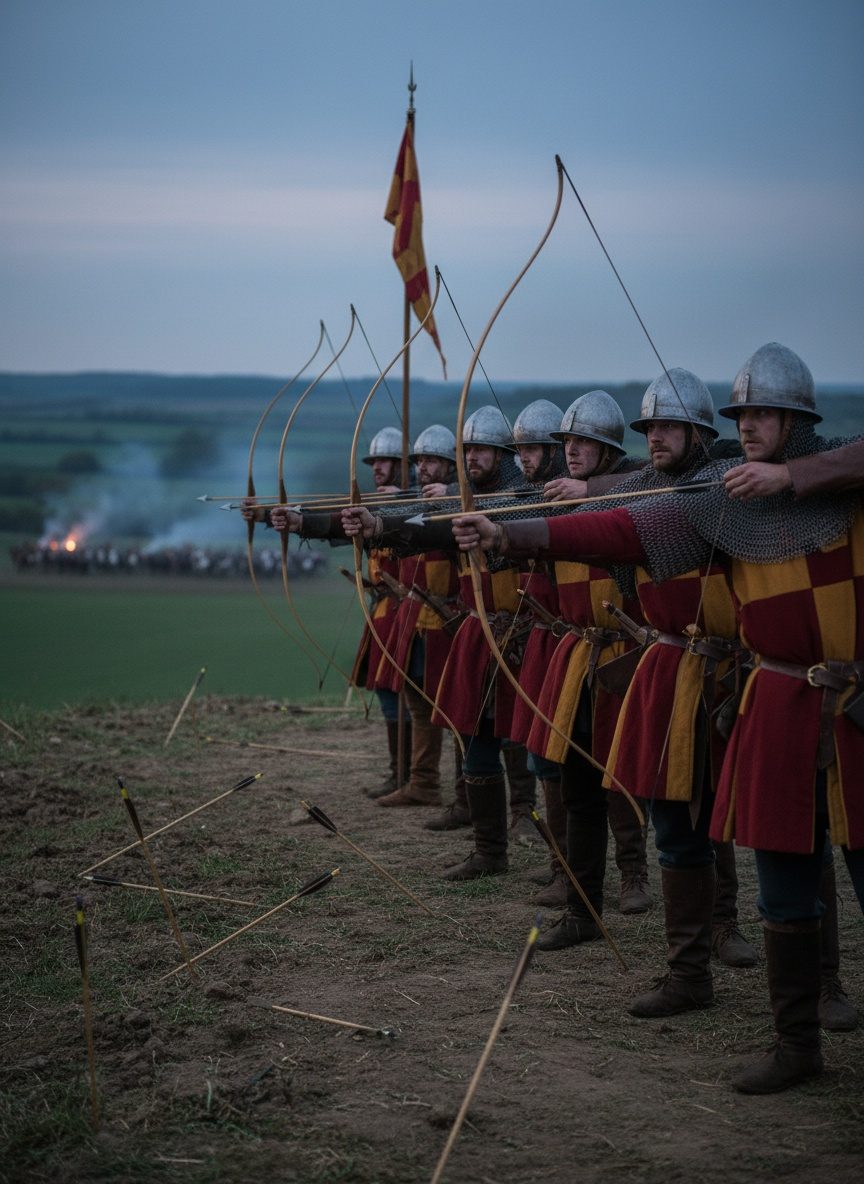
The scene was set on a ridge, choosing the high ground that offered a strategic panorama of the advancing enemy. Edward not only leveraged the terrain but honed the potential of his archers, exploiting their range and accuracy. The Welsh longbow, standing at around six feet in height, was a marvel of medieval engineering—a weapon that makers crafted from a single piece of yew, combining elasticity with deadly force. Capable of launching arrows over 200 yards with piercing power, it was the herald of doom for any encroaching infantry or cavalcade.
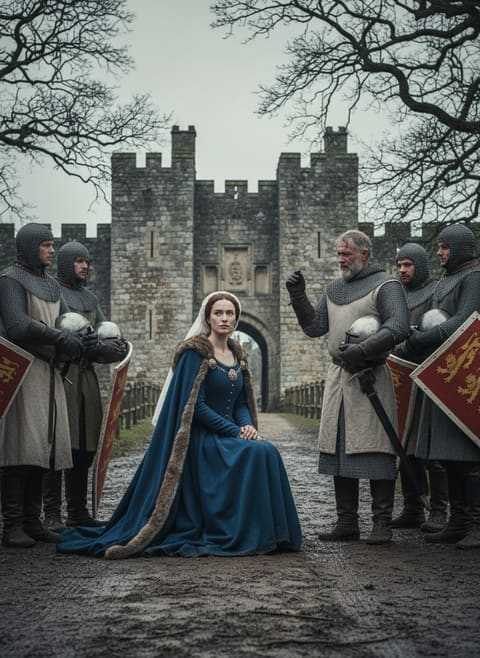
Read next: The Day a Welsh Girl Barred the Door on a King's Army
And then they came, like a tide of steel-tipped fury, Philip’s forces surged. Their ranks, densely packed and confident, saw an easy victory ahead. To any observer, the knightly charge was deafening, a storm of clashing metal and shouts that foretold calamity. Yet, as the French knights advanced, they realised, perhaps too late, the havoc the longbow could wreak. With a twang and a whistle, thousands of arrows ascended, arced, then descended, plunging into the flesh of man and beast alike.
The longbowmen worked with relentless rhythm, their arrows creating a veritable rain of death. Unlike any conventional assault faced before, the French knights found themselves bogged down, their armor becoming prisons, granting little protection from the agile, penetrating darts that felled both horse and rider. Renaissance chroniclers would later recount this with vivid imagery, painting a picture of an army caught in the throes of confusion and retreat, its rhythm broken by the continuous volley.
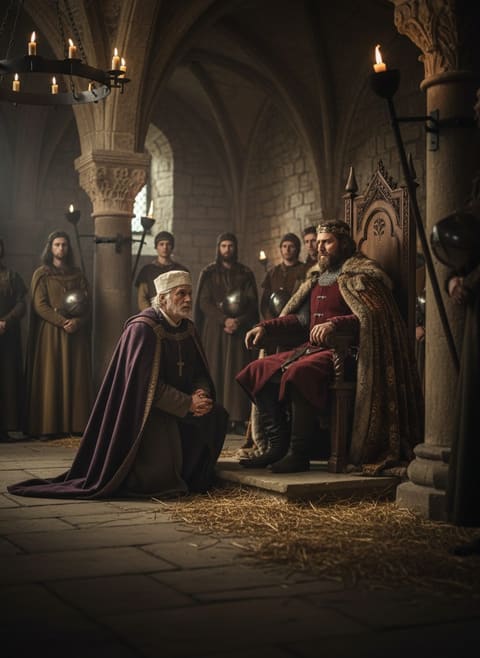
Read next: The Day a Medieval Mayor Knelt and Saved Six Condemned Men
What followed was not simply a rout but an awakening. The implications of Crécy reached far beyond the bodies left in its wake. The battle was a harbinger of a new era in warfare, where the value of common soldiers and their weapons would begin to eclipse the sheen of aristocratic valor. No longer could battlefield dominance be claimed simply by chainmail and courage; skill, strategy, and technological efficacy had earned their place on the pedestals of military power.
In the years to follow, the echoes of Crécy would linger in the halls and fields of Europe. Armies would reorganize, arm themselves anew, and adapt to a world where battles would not be won by numbers or privilege alone. The longbow itself became a symbol—of innovation over tradition, of the prowess that lay beyond the nobility’s typical sphere. Other rulers took heed; the Swiss pikes, the gunpowder-infused cannons, and various infantry units would rise to prominence, but it was the Welsh longbow that had ushered in this winds of change.
For King Edward III, the victory at Crécy was more than a tactical triumph. It forged a legacy of strategic ingenuity that would inspire how conflicts were orchestrated for generations. Yet behind the banners and the glory lay the realization that warfare had become a democratic theatre, where the skills of the many could shape the fate of nations more than the ambitions of a few.
As we draw lessons from those fateful fields, the Battle of Crécy serves as a poignant reminder of how innovation, often born in the hands of the unlikeliest figures, can redefine the very fabric of societal order. The longbowmen, once humble cogs in the machinery of medieval might, rose to define an age where power was to be earned, not inherited. In their hands was not just a weapon; it was a brush that painted the future of warfare across the tapestry of history.