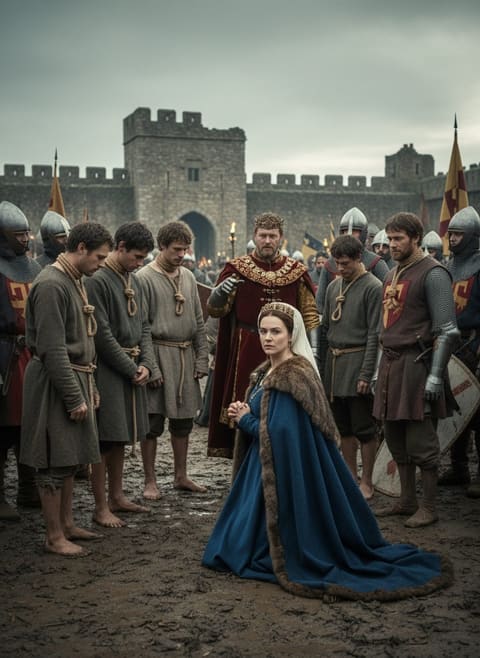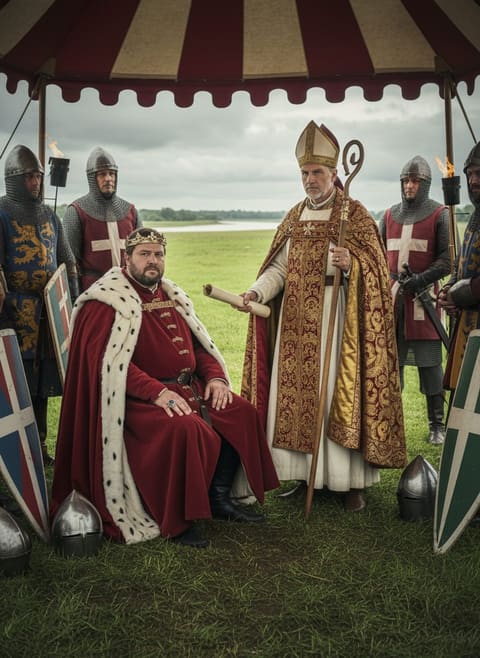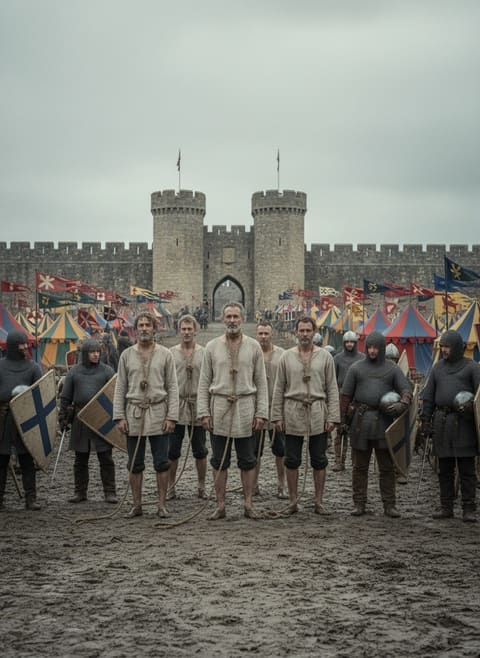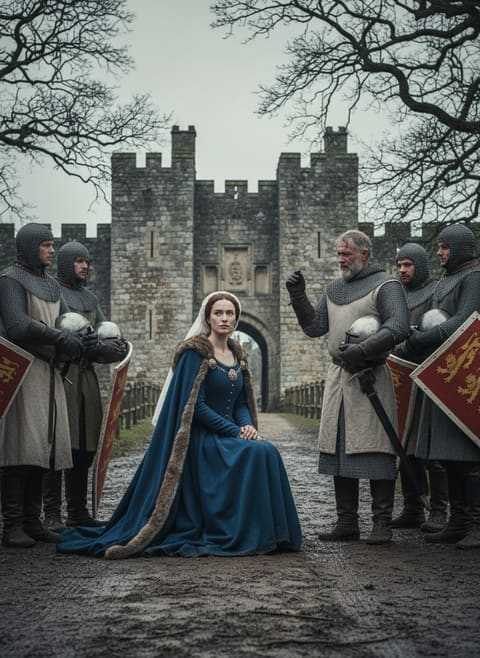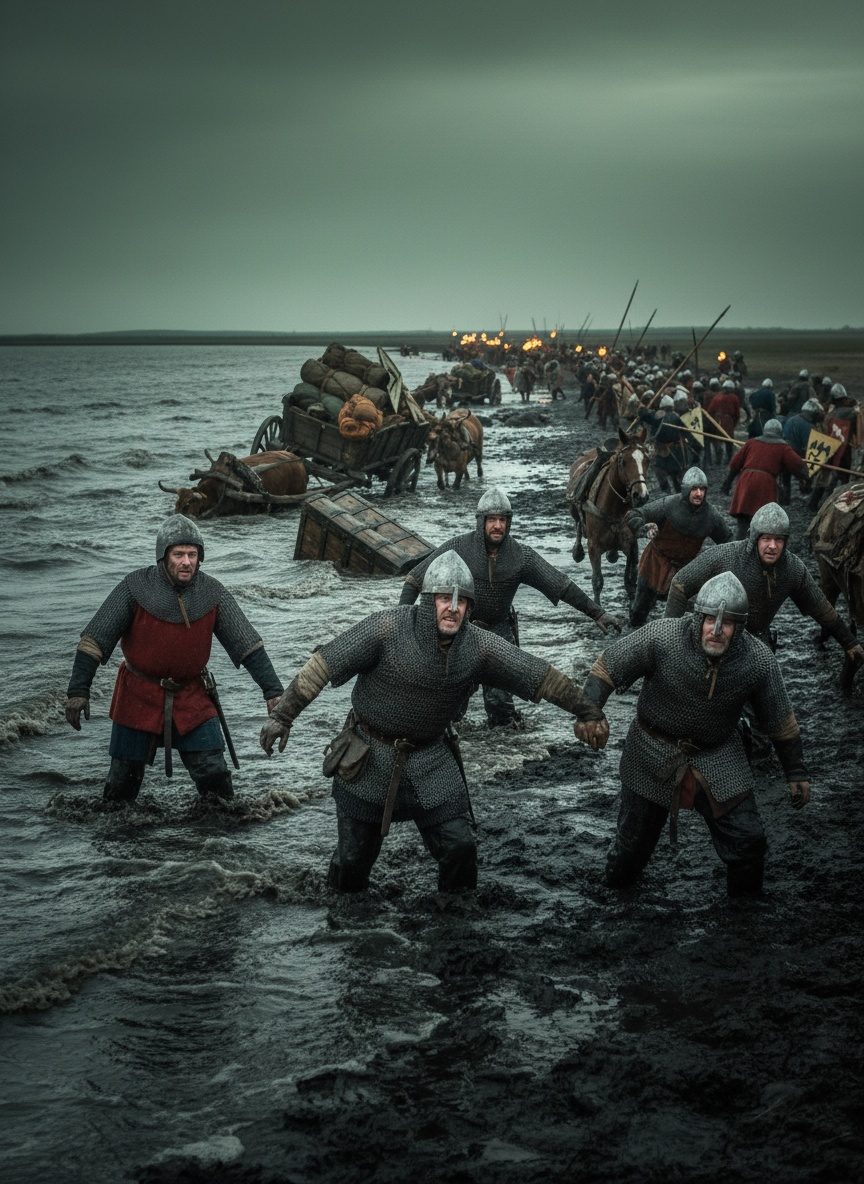
Beneath leaden skies, the chill in the October air seemed to carry a warning, but it was drowned out by the clamoring of men and the creaking of laden wagons. The ground squelched underfoot, each step an effort against the sucking mud of the estuary known as The Wash. The tide seemed innocuous at first, a mere murmur against the marsh but with an insidious force that lurked below. As the men hurried to traverse it, following their king's command, the sea began to reveal its treacherous nature. In the blink of an eye, the land beneath them seemed to dissolve, pulling cart after cart into a growing maw of brackish water and chaos.
The Costly Crossing
In October of 1216, amidst the civil strife known as the First Barons' War, King John of England found himself in desperate maneuvers both militarily and geographically. Having endured years of rebellion from his barons and the looming threat of Prince Louis of France, John was fighting to salvage what remained of his reign. Yet, fate would deal him another bitter blow, not by sword or pike, but by water.
Historians recount that John's decision to cross The Wash—a tidal estuary on the East Coast of England—was driven by the need for urgency. His itinerary had taken him north, seeking refuge and support, and his eyes were set on Lincolnshire. However, what should have been a strategic retreat quickly transformed into catastrophe. The tidal movements of The Wash can be notoriously deceptive, rising swiftly and with little regard for those who attempt to cross unknowing of its timings.
As the men and the countless wagons carrying the royal treasury and priceless crown jewels attempted the crossing, the sea betrayed them. Calamity unfolded as the tide surged faster than anticipated; valuable assets and those tasked with their safekeeping alike were swallowed by the merciless waters. The tales suggest not only material loss but a symbolic one—an entire baggage train, treasures untold and sacrificial soldiers claimed by the illustration of nature's relentless supremacy.
Read next: The Day a Welsh Girl Barred the Door on a King's Army
Treasures Beyond Measure
The loss John suffered that day was not just of strategic importance—it symbolized the erosion of his royal authority and opulence. The treasures were more than mere glinting baubles; they were the embodiment of a kingdom’s wealth and relentless pursuit of power. Among the relics believed to be lost were the sacred regalia, symbolic conduits of divine rule, whose possession meant more than any parchment of law or decree.
For those handling the haul, the devastation must have seemed like a mythic trial, where the ground beneath turned treacherous against human ambition. There were tales woven over the centuries about what exactly sank that day—a reflection of both the richness lost and the fear of an incensed king who was already widely scorned and distrusted.
The aftermath of the Wash was a demoralizing mark against John's reign, entering the annals of history not just as material misfortune but as a narrative carrier of foreboding. The crown jewels were never recovered, sinking into the depths not just of silt and tidal plain but into the tapestry of English folklore.
The King’s Final Days
Just as the sea had taken its toll on his material wealth, it seemed to have broken the king himself. With the loss fresh and melancholic views surrounding him, the king's days numbered towards an untimely conclusion. Nine days after the disaster, King John's corporeal struggles met their end, not upon a battlefield nor within a royal chamber filled with intrigue, but succumbed to illness, his body weary of the weight of his burdens.
There is an eerie poetry to the end of King John’s earthly trials; the earth and sea had both taken their piece. His reign, marked by devastating setbacks and shadowed by the implementation of the Magna Carta, culminated in a page of history that reads like a fable—of a king's hubris met by nature's ruthless claim.
Read next: The Day a Medieval Mayor Knelt and Saved Six Condemned Men
Into Legend and Folklore
The stories surrounding the lost treasure of King John have permeated through time, evolving from hushed tones of dread to vibrant legends sprinkled with speculative myths of hidden wealth. Some locals to this day claim pieces of the lost regalia may still rest beneath that altering, deceptive marshland.
The tragic loss serves as a reminder of how treachery is not always committed by man alone. What the king’s men faced that day was the unheeding immediate force of the natural world, indifferent to title or claim. In the centuries following, the idea of treasure lost to the tides captivates imagination, a shroud of mystery that both deters and invites exploration.
The Echoes of History
To recount the story of King John’s lost treasure in the context of British history is to confront the complex interplay between human ambition and nature's vast, indifferent power. The events at The Wash encapsulate not only a rapid shift of fortune but also illustrate the precarious nature of life and legacy in the medieval world.
In the grand tapestry of England's narrative, the images of a king's royal retinue succumbing to the sea symbolize both the fragility and folly of power. These events speak not just of John’s personal failings and ultimate demise, but of the ever-present equilibrium between human endeavors and nature's unpredictable will. A story consigned to both historical record and folkloric embellishment, it continues to echo as a reminder of the ostensible peace within a turbulent time.