Five hundred Englishmen would die in France on October 1415. But they took down 5,000 French with them.
The March to Misfortune?
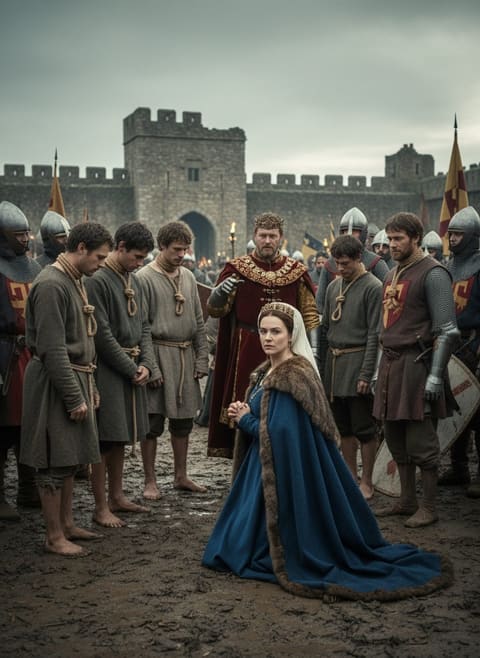
In the cool, mist-heavy morning of October 25, 1415, a ragged collection of English soldiers stood on the sodden fields near the village of Agincourt. Their king, Henry V, had led them into the heart of enemy territory, crossing from Harfleur on the northern coast through a now war-scarred France. For weeks, they had endured the awful effects of war without a break. Dysentery ravaged their ranks, food was a scarce commodity, and the incessant rain turned their journey of survival into a miserable plod through drenched and unforgiving landscapes. Their boots, once sturdy, were now leather tatters barely clinging to their feet.
On this bleak day, they stood severely outnumbered. With 6,000 to their name, most of them archers wielding the English longbow, they faced an imposing French force of 25,000 strong. It was a desperate predicament, akin to navigating a ship through an inevitable storm, yet with no harbor in sight. The French cavalry, renowned as the foremost armored forces in Europe, were hungry for vengeance. No Englishman who took their measure on that muddy terrain was ignorant of the waves of knights and men-at-arms ready to rend them apart. Yet there was no turning back, only peril in both retreat and advance, ringed by a kingdom yearning for its soil.
A King's Gambit
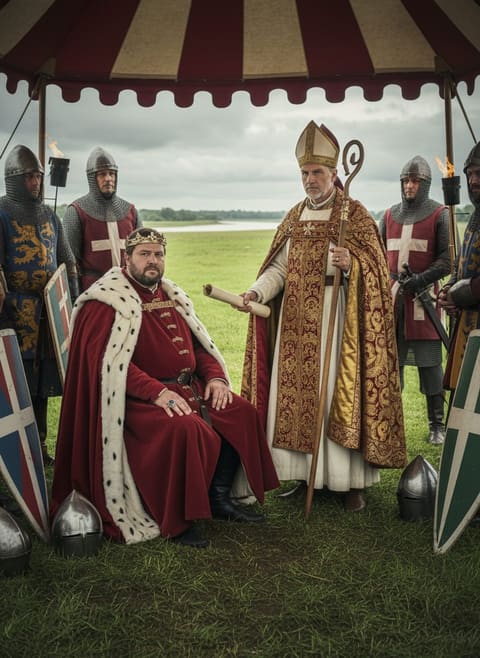
This was not just an invasion; it was a kingly performance bound at every step by Henry V's fierce ambition and tactical acumen. Henry's leadership was as much about the moral force he could muster as his strategic instincts on the battlefield. Outmanned and far from home, he presented to his men a version of kingship that thrived on the kind of chivalric courage romanticized in folk tales. Already a skilled warrior and keen tactician, Henry was also a master of gestural symbolism. Before the French lines, he sent out a single herald to demand ransom negotiations should he fall in battle—an unspoken challenge that stated powerfully his expectation to triumph.
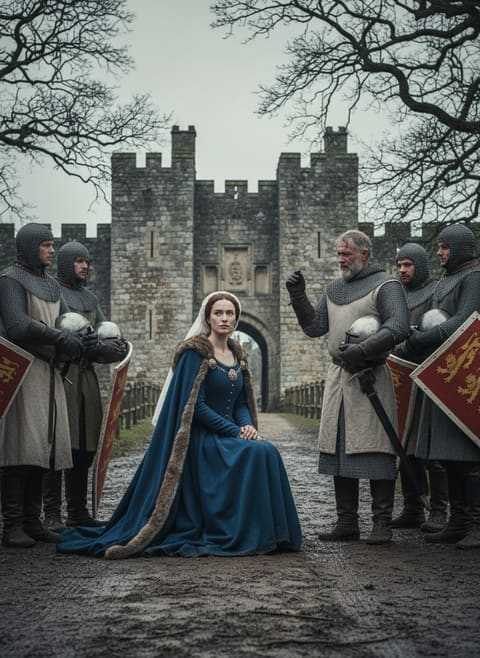
Read next: The Day a Welsh Girl Barred the Door on a King's Army
His men were not simply soldiers; they were vessels of his will, propelled by his unswerving determination. They knew the risky crossing in early August from England to France had sown a seed that demanded harvest. In the days since landing, they had claimed the port of Harfleur, paying dearly in suffering and lives. Now, with winter drawing near and supply lines stretching thin, their spirits rested squarely upon Henry’s courage to defy all odds.
The Longbow's Legacy
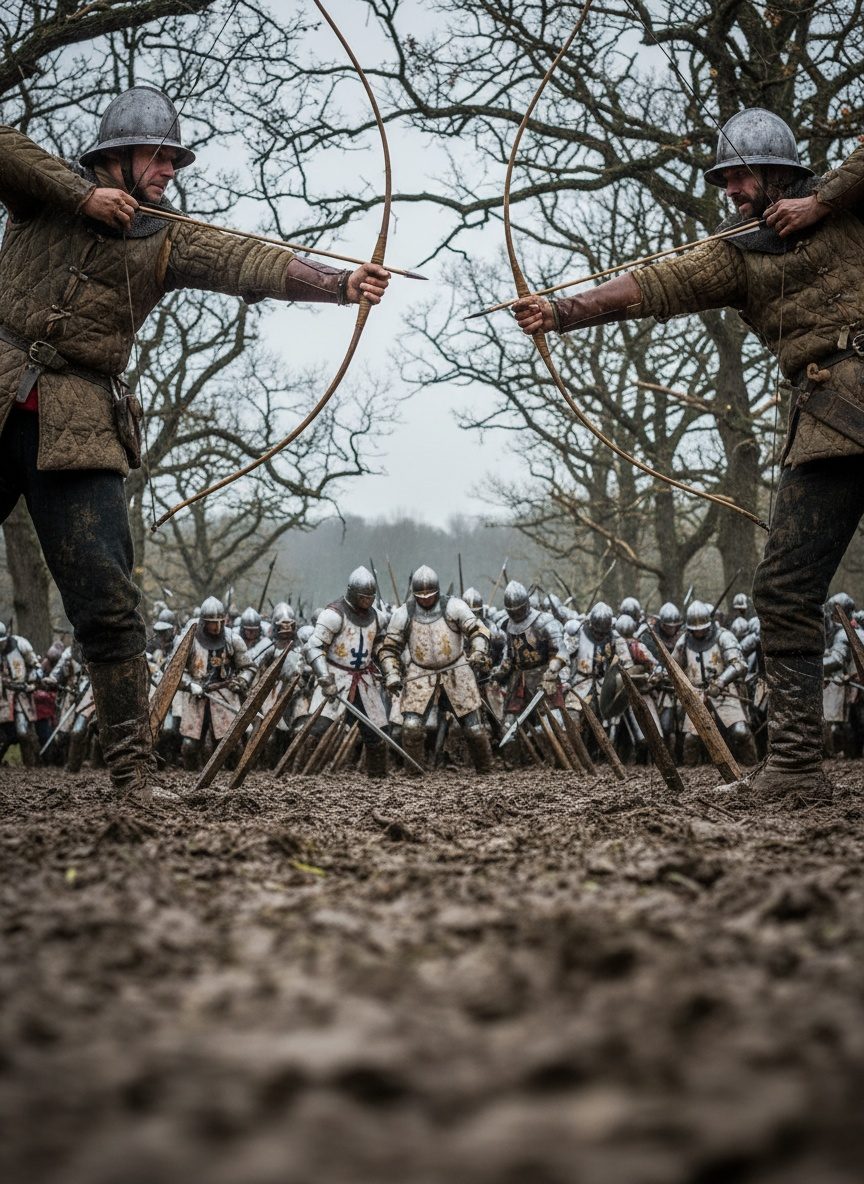
As dawn alighted upon them, the English longbowmen, clad in their simple leather jerkins, were stationed flank-wise along a narrow strip of land, flanked by woodlands. It was not just any weaponry they held; the longbow was a strategic equalizer, igniting a revolution in military tactics. In taut lines of yew wood, the longbows could launch arrows at an astounding rate and range. This weapon was the engine of legend here—a force so swift and lethal it seemed as if the sky itself showered death upon the armored knights failing at their charge.
When the French cavalcade raced forward, spurred by noble pride and a refusal to retreat, they encountered not merely an opposing force but ingenious weaponry that cut down swathes of horses and their armored mounts. The ground, churned to quagmire by both rain and the rushing hooves, became the greatest ally of the Englishmen, turning the weight and majesty of French armor into burdens as lethal as any arrow.
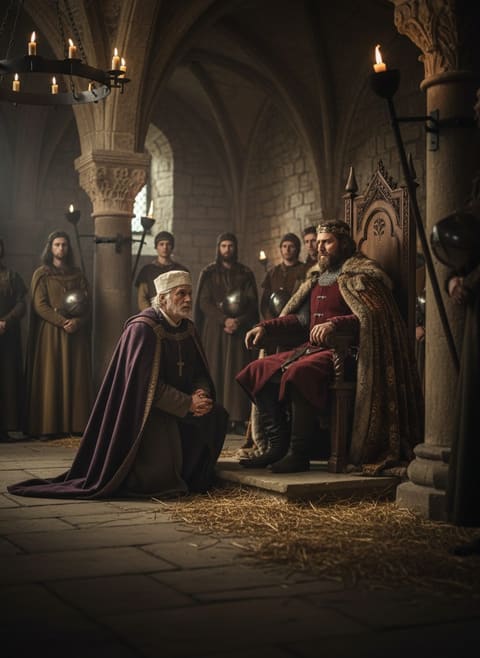
Read next: The Day a Medieval Mayor Knelt and Saved Six Condemned Men
Victory Amidst the Voyeur
Reports of that day reveal a battle scene that scarcely allows solace. The French, having charged once and been repelled, regrouped only to face the same fate. Those witnessing from the wings were rendered watchers in a tableau of chaos and courage. Against all horrors and hopes, the English swayed the flow of battle. Dusk saw the dejected remnants of the French host limping away, battered amidst rows of their fallen noblemen, sunken faces twisted in disbelief and gore.
Despite the victory, Henry's triumph was not one of unblemished glory. It highlighted gruesome stakes where many of his decisions, driven by survival, left awful memories carved into the annals of war. Some prisoners were executed in the heat of combat, a stark act that signaled Henry's desperation to secure his army’s survival against hostile waves.
A Tale Beyond Glory
In the aftermath, the significance of that October day resounded far beyond the fields of Agincourt. For centuries, all echoes of this unlikely English victory would pepper history as a testament to tactical ingenuity and the terrifying power of destiny at war's hand. While Henry’s path of conquest was far from over—uniting French and English crowns in pursuit of imperial dreams—what transpired at Agincourt floated timeless in the national consciousness as an example of when courage and circumstance align.
Yet it is essential to delve beneath the sheen of glory, understanding that such victories are built upon the backs of suffering men driven to extremes. The Battle of Agincourt wasn't just a struggle of nations; it was a moment when the world hinged on human will against all odds. A reminder, perhaps, that in history's long arc, the stories of the few tend to reshape the fate of the many, transforming uncertainty into the firm pages of legend.