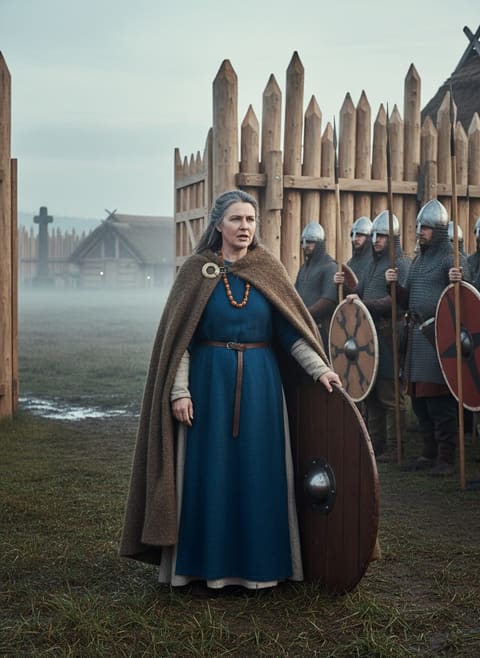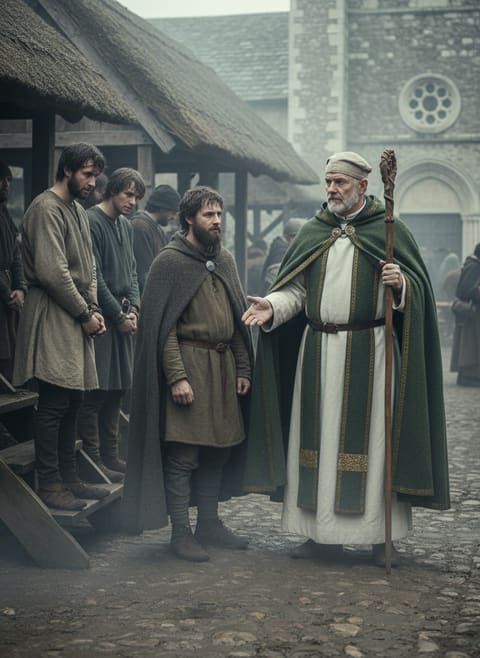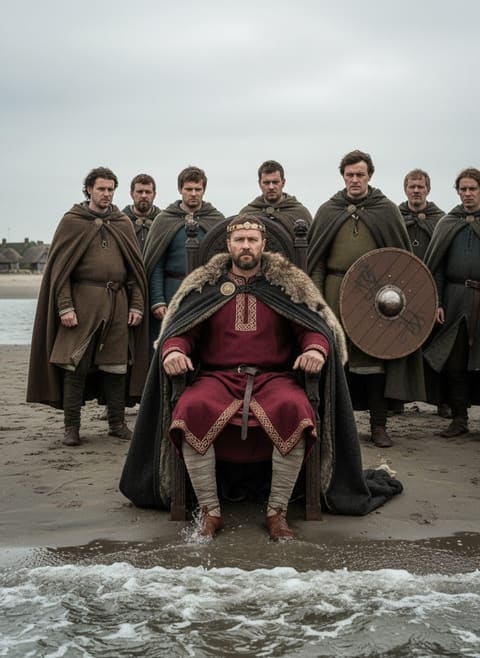
The November air hung thick with a penetrating chill as the sky over East Anglia transitioned to a dreary grey, mirroring the despair of its inhabitants. The wind rustled through the bare branches, whispering tales of the tumultuous times that had befallen the land. It was in this landscape, under an overcast canopy, that a fateful stand unfolded, one that would etch King Edmund’s name into the annals of time.
The Great Heathen Storm
East Anglia, in the year 869, was not just a backdrop of rolling hills and winding rivers but a contested theatre of warfare. The Great Heathen Army, formidable and unyielding, had swept through the lands, leaving a swath of conquest in its wake. Led by the fearsome Viking warlord Ivar the Boneless, the invaders brought trepidation as much as they heralded a new, ruthless order.
The Danes were not ordinary raiders; this was an army intent on conquest, seeking land and power. For the young King Edmund, the stakes were clear. To bend the knee was to invite disrepute, as much as it was to surrender a sacred duty to his people and his faith. To resist was to invite a martyr’s end, yet one lined with eternal honor.
A Choice Under Siege
King Edmund, only twenty-nine years of age, found himself at a pivotal crossroads. His kingdom was besieged, his forces decimated and scattered, leaving him isolated. The Viking leader, Ivar, proposed terms—ones dipped in apparent clemency but sharpened with guile. They offered mercy, a chance to rule as a vassal, so long as he renounced his faith and submitted to Danish overlordship.
Read next: The Abbess Who Turned a Yorkshire Ruin Into England's Powerhouse
Edmund, a king resolute and pious, stood unwavering. His Christian faith, an intrinsic part of his rule and identity, was not a bargaining chip. Edmund's refusal was not mere defiance but a steely resolve to hold fast to beliefs many others would readily yield for safety. His retort to Ivar was his own death warrant—a rejection of earthly power in favor of spiritual fidelity.
A Moment of Defiance
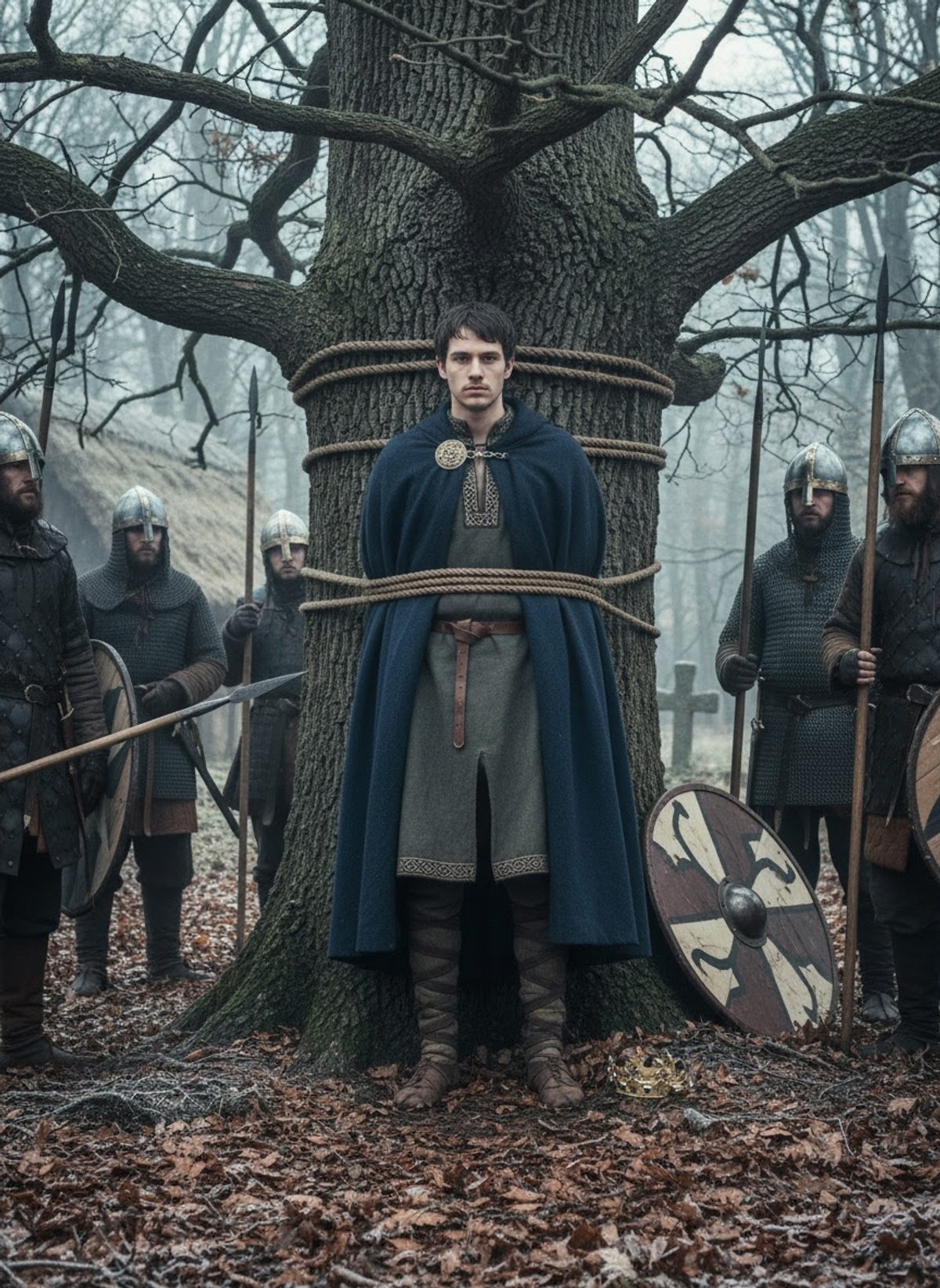
Bound to an oak tree, Edmund’s end was neither swift nor without suffering. Arrows pierced his flesh, a brutal testament to the invaders' relentless might and Edmund’s own unyielding spirit. The arrows formed a viscerally achromatic constellation against his stark figure, each one a dark reminder of his faith’s worth, his people’s plight, and his refusal to capitulate.
Many chroniclers, entranced by his final moments, recounted the scene with awe and reverence. For Edmund, death was no grim specter but a gateway to eternal peace and divinity. As his life ebbed away beneath a wide East Anglian sky, the oak stood not just as a tool of execution but a monument to resilience.
Aftermath and Reverence
The story of King Edmund, intertwined with the powerful mythos of martyrdom, reverberated beyond his final breath. His sacrifice permeated through generations, imbuing his kingdom with a moral fortress that even Danish cruelty couldn't raze. In time, this young monarch was canonized, deemed worthy of sainthood for the heaviest price he paid in defense of his faith and land.
Read next: The Day Hild of Whitby Turned a Cowherd Into a Poet
Edmund’s martyrdom inspired not just reverence but unity among a besieged people. His tale became a rallying cry, echoing through countless villages and darkened days where hope was the rarest commodity. The consequences of his decision reached far, carving a legend that upheld his stature not merely as a king but an indomitable spirit.
A Legend's Enduring Message
In the fabric of Britannia’s expansive tapestry, Edmund's stand emerges as a thread of gold. His resolve challenged the invasions, asserting an act of sheer courage set against the sharp steel of inevitable demise.
Even as time amasses new layers of history, his story radiates with profound vigor, compelling us to ponder the nature of leadership, sacrifice, and faith. Who Edmond was, persists as a haunting whisper from the past—a challenge, a legacy, and a question for every age that follows.