She was a commander in her own right. Aethelflaed, daughter of Alfred the Great, led armies against the fearsome Danes before most women of her time ever ventured beyond their homesteads.
Forging the Shield of Mercia
The shadows of invasion cast a long pall over England, their dark tendrils spreading as Viking longships docked along the English coastline, bringing a tidal wave of fear and destruction. Yet, amidst the chaos and the clashing of steel, one figure emerged, determined to reclaim what had been lost. Aethelflaed, the eldest daughter of King Alfred the Great, defied the conventions of her era, not with the gentle wisdom of benign rule but with the fiery spirit of a warrior.
Under her command, the Kingdom of Mercia became a bulwark against the Danish advance. Unlike many of her male counterparts who sought refuge or promised fealty to foreign invaders in exchange for peace, Aethelflaed chose to build defenses. She envisioned a formidable network of fortresses ready to ward off the marauding Danes at a moment's notice. Her strategy was both brilliant and audacious, highlighting her deep understanding of warfare fundamentals taught by her illustrious father.
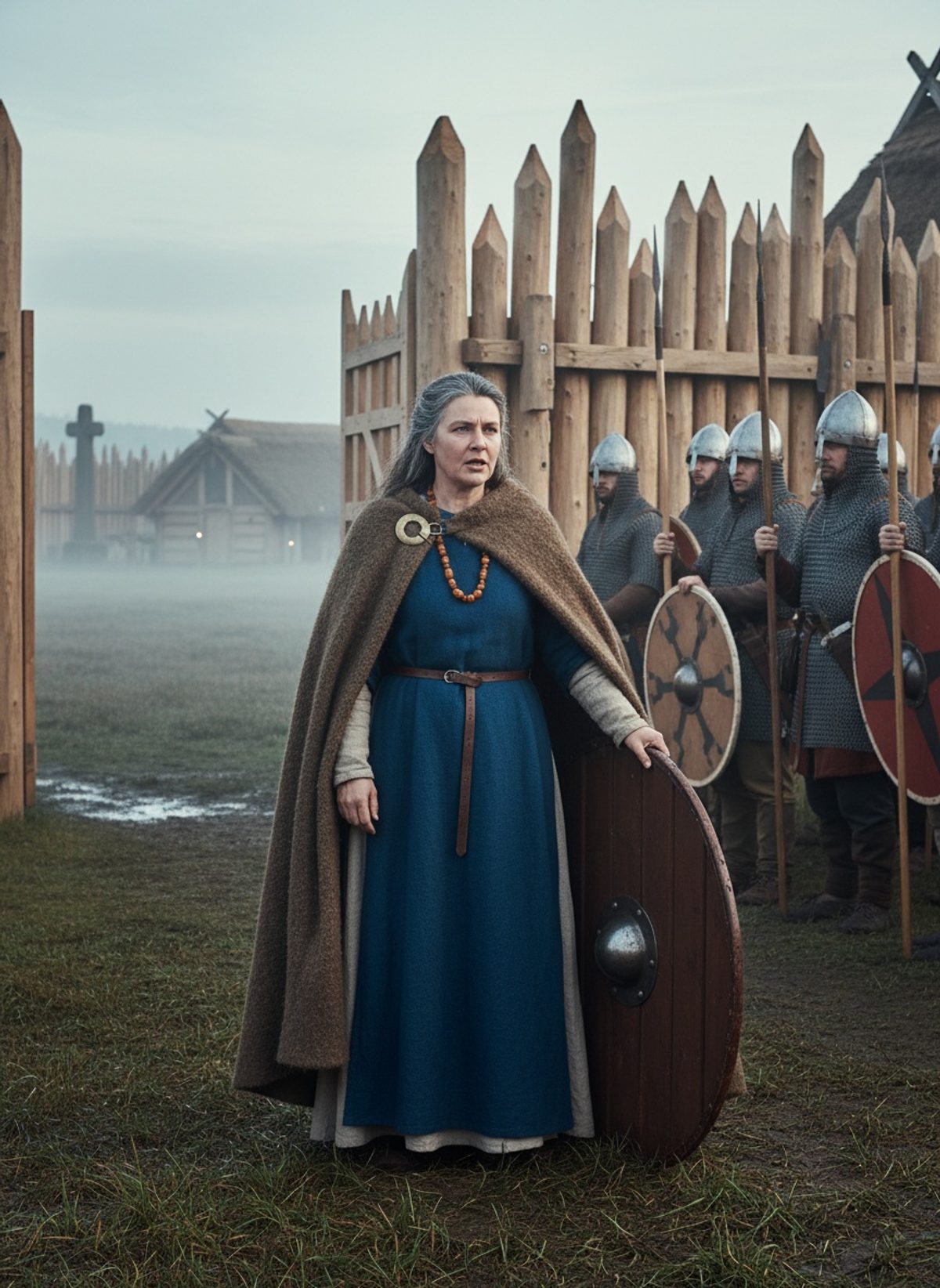
Aethelflaed's endeavors saw her erecting fortified burhs—early medieval strongholds—across the Midlands. These weren't mere defensive structures but the backbone of her military strategy. They served as rallying points for her forces, centers of local commerce, and symbols of resistance. Each fortress stood as a testament to her resolve, their walls echoing with the clang of blacksmiths forging weapons and the drills of soldiers preparing for impending battles.
Read next: The Day a Saxon Noblewoman Freed Her Slaves at the Altar
Her leadership was a beacon. She was not just Alfred's daughter but a sovereign in her own right. Her husband, Aethelred, Ealdorman of Mercia, trusted her implicitly, sharing with her the governance of their realm. Her title, the Lady of the Mercians, spoke to her dual role as both ruler and protector, a figure of inspiration to those who had lost hope in the face of Danish threats.
The Lady in Battle
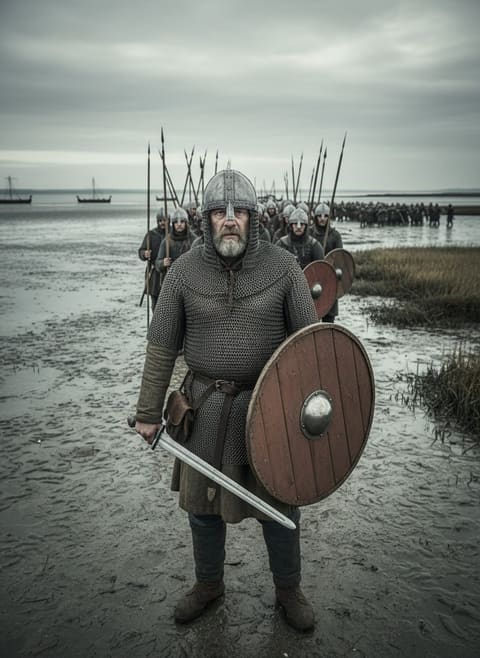
AD 917 was a year that would carve Aethelflaed's name indelibly in history, as she prepared for an audacious assault on Derby, then under Viking control. Aethelflaed, unlike her male counterparts who often observed from the rear, chose to lead from the front. Her presence on the battlefield was one that inspired loyalty, galvanized her troops, and struck fear into the hearts of the Danes.
Such direct engagement was rare, particularly for a noblewoman of her era. The sharp clang of swords, the echo of war cries, and the thundering hooves of cavalry marked the beginning of the conflict. Dragging the malevolent forces from Derby was no small feat, yet Aethelflaed's tactical brilliance shone through. Her mastery of siege warfare was unparalleled, utilizing both traditional tactics and innovative strategies—perhaps secrets passed down from her illustrious father.
Her armies crumbled the defenses of Derby with the precision of seasoned campaigners. She led the charge as infantry clashed, their armored forms lost in a sea of chaos. Her strategies were as piercing as the arrows fired by her archers, her forces enveloping and isolating pockets of resistance. Victory was forthcoming, and when the dust settled, Derby was once more under English control, marking a pivotal moment in their struggle against the Danes.
News of her triumph spread like wildfire, dispelling despair that had loomed over the lands like a relentless storm cloud. Known now as a fierce warrior-lady, Aethelflaed was not just a regent or a steward but a living legend whose exploits would echo through the mead halls and marketplaces of Mercia.
Read next: The Viking Women Who Ruled Britain's Northern Shores
A Legacy of Unyielding Strength
The victories gained under Aethelflaed's leadership were not established solely through military force but were underpinned by a keen sense of diplomacy and statecraft. She intricately wove alliances through both kinship and political expediency, forging connections with Welsh kings and strengthening the ties between Mercia and Wessex. These relationships were vital, reinforcing her position and swelling her ranks.
But Aethelflaed's prowess extended beyond the battlefield. Her reign oversaw a period of architectural and cultural growth, her towns thriving under her careful watch. The rebirth of commercial life in the fortified burhs reflected her commitment to the prosperity and security of her subjects. As a patron of the church, her devotion also ensured the flourishing of monastic sites, sowing the seeds of cultural rejuvenation that persisted long after the last Viking blade clattered to the ground.
Remarkably, Aethelflaed's legacy continued to resonate in the years following her passing. Her daughter, Aelfwynn, briefly succeeded her, though the ever-changing tides of politics and the ambitions of rival rulers soon shifted the landscape once more. Yet, Aethelflaed's contributions remained etched in the annals of history; a woman who not only fought but redefined the idea of rulership in an age where men dominated history's pages.
The tale of Aethelflaed is not just one of military triumph. It is the story of a ruler who envisioned a united land free from the threat of foreign invaders and bravely carved her name into the heart of England's history. Her legacy reminds us that strength and leadership often live in the most unexpected figures, inspiring even today as we grapple with our struggles for sovereignty and self-determination.