657 AD. The North Sea winds howled fiercely over the newly founded Streonæshalch monastery, later known as Whitby. The rugged cliffs stood resolute against the relentless battering of the winds and waves, a fitting backdrop for an event that would transform English literature.
The Unlikely Talent of a Cowherd
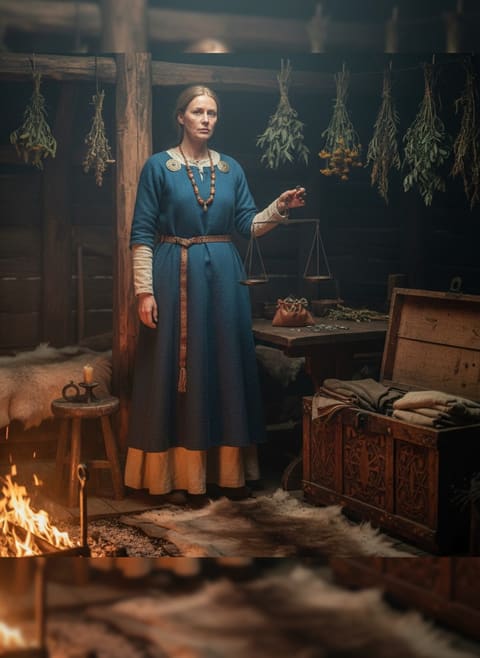
Amidst the austere walls of the abbey, owned and administered by the formidable Abbess Hild, a feast was underway. Imagine tables groaning under the weight of meat and ale, laughter echoing off stone walls, a communion of community and celebration. Hild, a woman of noble blood and vision, presided over the gathering, her keen eyes surveying the room. Her leadership had turned this monastic site into a center of learning and religious devotion, a beacon of light in a turbulent era.
Seated at the edge, subtly out of place, was Caedmon, a cowherd by trade. Known for his humble demeanor and dedication to his duties, Caedmon shied away from the joys others took in singing. When the harp was passed to him, as was custom, to share a song, the color drained from his face. Rather than sing a note, he fled the hall, pursued not by derision so much as his own shame. His inability to sing, he believed, was an affliction that set him apart from his brethren, distant from their joy.
The annals of history seldom note the nocturnal musings of a farmhand, but that night, Caedmon had a dream simple in its appearance yet profound in its impact. An otherworldly presence, perhaps an angel as he later described, called out to him gently, asking him to sing. “Sing about the creation of all things,” the voice implored. Suddenly words flowed from Caedmon, cascading in a torrent of beauty and reverence. As dawn's light crept into his simple quarters, Caedmon awoke, the verses vivid and unforgettable in his mind.
Read next: The Night Caedmon the Cowherd Sang the First English Poem
A Wise Abbess and Her Decision
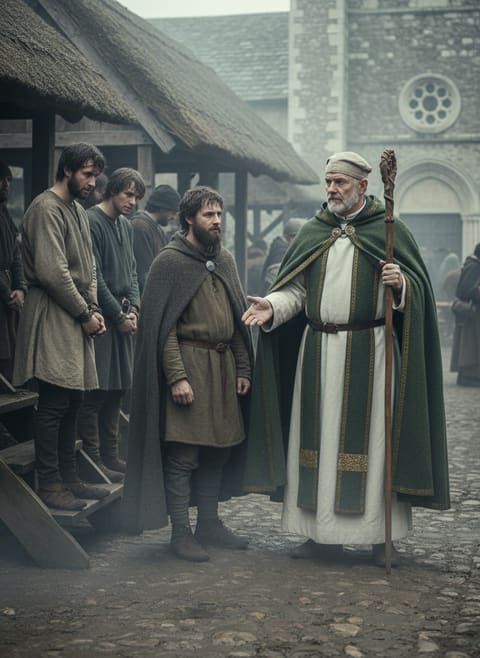
After recounting his dream, Caedmon was brought to Abbess Hild. Her wisdom and discernment were renowned, making her a pivotal figure in the synod of the church and a respected leader of her community. As Caedmon, the once-tongue-tied cowherd, recited his newfound song, a hush fell upon the room. The words — a meditation on the creation, laden with spiritual insight and poetic beauty — captivated those present. Hild recognized the divine touch upon the man standing before her.
Hild, wise and forward-thinking, saw this gift for what it was: a miracle, perhaps, but also an opportunity. She understood the power of the vernacular — the Old English tongue spoken by commoners — to reach the masses. The learned monks of the abbey confirmed Caedmon's inspiration, and Hild made the bold decision to extend this illiterate cowherd’s education. Under her guidance, Caedmon was encouraged to delve deeper into religious teachings and express them through poetry, giving form to thoughts in a lyrical language that resonated with ordinary people.
This step was revolutionary. Caedmon's verses, couched not in the Latin of the scholarly elite but in the language of his people, offered a new way to engage the divine. His story shines as an early chapter in the tale of English literature, marking a shift from oral tradition to recorded verse, a monumental leap in cultural history.
The Birth of English Christian Poetry
With Caedmon’s transformation, a genre was born. Before him, most Anglo-Saxon verse focused on heroic tales or pagan legends. Caedmon's hymns, however, turned people's attention to the sacred teachings of Christianity, binding spiritual beliefs and poetic form. His hymn, often referred to simply as “Caedmon’s Hymn,” stands as the first recorded Old English poem, a mere nine lines that would ripple through the ages.
His compositions, though rooted in scripture, spoke to life’s mysteries with a soulful reverence that was accessible to all. These works provided fertile ground for later Anglo-Saxon poets like Cynewulf, who continued the tradition of ecclesiastical verse. Caedmon’s success also highlighted Hild's foresight; her support of this nascent talent underscores her legacy as a patroness of the arts and an advocate for the educational enrichment of her community.
Read next: The Day a Saxon Noblewoman Freed Her Slaves at the Altar
The abbey at Whitby became a crucible of cultural and spiritual stirring, fostering an environment where creativity could flourish even amid the constraints of monastic life. The ripple effect of this cultural bloom was felt far beyond the abbey’s walls, sowing seeds that would grow into a rich tapestry of English literature.
Caedmon's Enduring Legacy
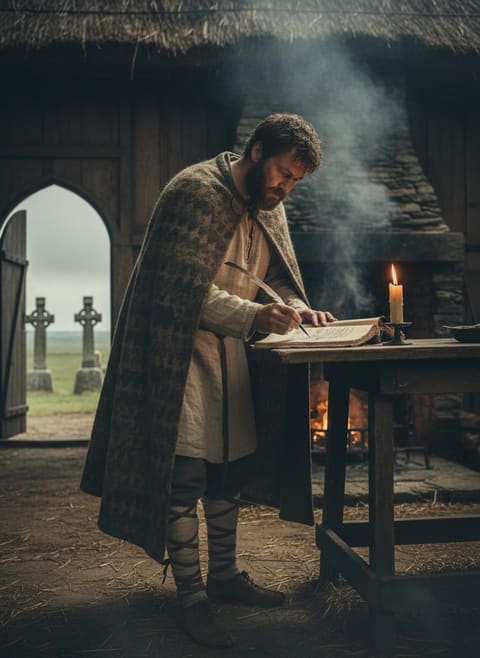
Caedmon’s journey from cowherd to poet offers a poignant reminder of the transformative power of belief and mentorship. It is a narrative about unexpected talent and the role of community support in uncovering and nurturing genius. Caedmon never wrote his own verses — those who could write recorded his words — yet his voice continues to echo through the corridors of history, a testament to how the simplest shepherd can contribute to a cultural revolution.
Abbess Hild's foresight in recognizing and cultivating Caedmon's gift changed the trajectory of English literary history. Her recognition that divine inspiration could come in the humblest of packages underscores the inclusive nature of spiritual and intellectual life at Whitby. In a world where poets are often born into privilege, Caedmon’s story is a beacon of inspiration, showing how talent transcends the boundaries of class and education.
As we ponder the origins of English poetry, let us remember the unnamed angel of Caedmon’s dream, the wise eyes of Hild, and the enduring strength of verse that speaks to something larger than ourselves. The creation of Caedmon’s poetry was not just a singular creative act but the beginning of a movement, a foundational stone upon which much of England’s literary heritage was built.